
Used in a Flex Circuit
The basic materials used in flex circuit include copper and insulators. Conductors allow the electrical current to flow, while insulators separate and protect the conductors. Conductors are typically made of copper, but there are also other choices available depending on the application’s requirements. Insulators are usually polyimide, epoxy or acrylic but may be made of other materials such as polyethylene naphthalene and polyethylene terephthalate (PET).
Typically, flex circuits consist of a polyester or polyimide substrate and a single or multiple layers of copper conductive material. The conductive material is printed on the surface of the substrate and then etched to form the signal traces. A dielectric coverlay is then placed over the traces to protect them from moisture and dirt. The traces and coverlay are then soldered together to create the final product.
Flex PCBs can be constructed in a wide variety of shapes and sizes. This flexibility allows them to fit into a much smaller package than would be possible with a rigid PCB and wired components. In addition to their space-saving benefits, flex circuit are much more resistant to harsh environments than rigid PCBs. This makes them ideal for mobile electronics, medical equipment, industrial control and aerospace/military applications.
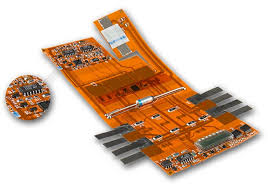
Materials Used in a Flex Circuit
The substrate material used in a flex circuit is important because it will affect how the finished product performs. It can be as simple as a single layer or as complex as a multilayer board, and the material must be capable of sustaining the number of lamination cycles that will occur in each individual flex PCB. The thermal expansion capabilities of the laminate are also an important factor to consider.
A typical flex circuit is constructed of two conductor layers with or without plated through holes. The conductive layers are printed on the base film using photochemical etching, which is then insulated with a coverlay. The conductive layers are then plated with copper, which provides the electrical connection between different areas of the flex circuit.
In some cases, the flex circuit requires stiffeners. These are thin strips of copper that are placed on the back side of the conductive material to provide support during manufacturing processes such as etching, drilling and soldering. The flex circuit is then assembled with the other electronic components. The finished flex circuit can then be used in any desired location.
The materials used in a flex circuit will depend on the specific application, as well as the thickness and number of layers required. For example, a flex circuit that needs to be reflow-welded during assembly will require a high-temperature laminate such as PI/FR4, Aluminum or Stainless Steel and a PSA adhesive such as 3M966 or 3M9079. A flex circuit that is designed for dynamic bending will require a thinner construction to minimize the amount of stress put on it. The thickness of the conductive metal will also determine the minimum mechanical bend radius that the flex circuit can withstand.


