While large, international carmakers are more likely to become household names and carve themselves a place in automotive history, over the decades there have been plenty of small, local companies that never got their big break, but have an equally fascinating story. As a relatively insular car market that imported few models from the rest of the world throughout the 20th century, the Brazilian automotive industry has a history that’s rich with these kinds of small-scale brands.
One such company was called Farus, and it operated for around a decade between the late 70s and the early 90s. At one point, Farus made an attempt to export its cars to the States. Here is the story of what US buyers missed out on.
A Unique Market: Cars In Mid-Century Brazil
The automotive history of Brazil runs somewhat in parallel to the rest of the world; for most of the last century, its car market was confined to its borders, with strict legislation making it very difficult to import cars from the rest of the world.
Some multinational brands, such as Volkswagen and Fiat, managed to break through; an entire industry of local companies sprung up around them, building cars with locally-made bodies around foreign-sourced platforms and components. The results are endlessly creative, with plenty of unique cars being built that remain unknown to the global market. When Fiat arrived in the country in the late 1970s, Farus was one of the companies that took advantage of its presence.
A Family Affair: How Farus Came To Be
In 1976, Fiat opened its first manufacturing plant in Belo Horizonte, the capital of southeastern Brazil’s Minas Gerais state. This marked the start of the Italian brand gaining a foothold in the country, which would become one of its biggest markets outside of Italy. At the same time, Alfio Russo and his son Giuseppe were running a family business, also based in Belo Horizonte: a metalworking company called Italmecanica, which specialized in the production of components for the food industry. However, they shared a love of cars that would soon be translated into their professional direction: a year later, in 1977, they began to look into the possibility of building their own sports car. They decided their new enterprise was to be called Farus (“FAmilia RUSso” or “Russo Family”) and set out to create a prototype.
The Brand’s First Creations: The ML And TS
The first car created by the newly-founded Farus firm was called the ML 929; it got its name from the initials of Alfio’s mother, Maria Luisa. This two-seat coupe had a fiberglass composite body, and borrowed a number of major components from the Fiat 147, including the 1.3-liter engine, four-speed gearbox and suspension of the 147’s Rallye version. The taillights, meanwhile, were borrowed from the Ford Corcel II.
The ML was equipped with disc brakes on all four wheels, which was unusual at the time; it also came with a number of luxury features such as leather seats, air conditioning, electric windows and a sunroof. Interest in the ML was so great that it quickly grew from a one-off prototype to a production model, initially on a small scale and then on a larger one: in 1980, the company acquired a production line which was capable of building up to 15 cars per month.

Add CarBuzz to your Google News feed.
A year later Farus built another, visually similar model: the TS 1.6, which borrowed its 1.6-liter engine, four-speed gearbox and badging from the Volkswagen Passat TS. While the ML’s engine had been mounted transversely, the TS’ was mounted longitudinally. Air conditioning became standard, while on the ML it had been available as an option. Rather than using taillights from the Ford Corcel, as had been the case with the ML, this time Farus opted to borrow them from the VW Voyage (known in North America as the Fox).
Fashion On Wheels: The Farus TS Gucci

In 1982, a year after the introduction of the TS, Farus launched a collaboration with world-famous fashion firm Gucci, creating a special edition of the TS known as the “Farus Gucci”. Rather than being launched at an auto show, as previous Farus models had been, the Gucci was introduced to the world at the FENIT International Textile Industry Fair, one of the main events in the Brazilian textile industry. Gucci had a stand at the show, which proudly displayed the car and described it as the first Brazilian car designed by a fashion designer.
On the mechanical front, no changes were made from the standard TS; the modifications were purely appearance-oriented, in keeping with the car’s fashionable image. Naturally, Gucci’s branding featured prominently throughout the entire car, both inside and outside. Gucci badging was added to the front, rear, side pillars and alloy wheel center caps. While the “regular” TS had a matte black bumper, in the Gucci version this bumper was body-colored.

The interior had also been modified slightly to give the car a more stylish, fashion-oriented look: the Gucci logo was added to the right-hand side of the dashboard, the door trim, and the fabric used on the headrests. A redesigned steering wheel and additional warning lights, which turned on when opening the doors, completed the picture.
A Failed US Breakthrough: The Beta And Quadro

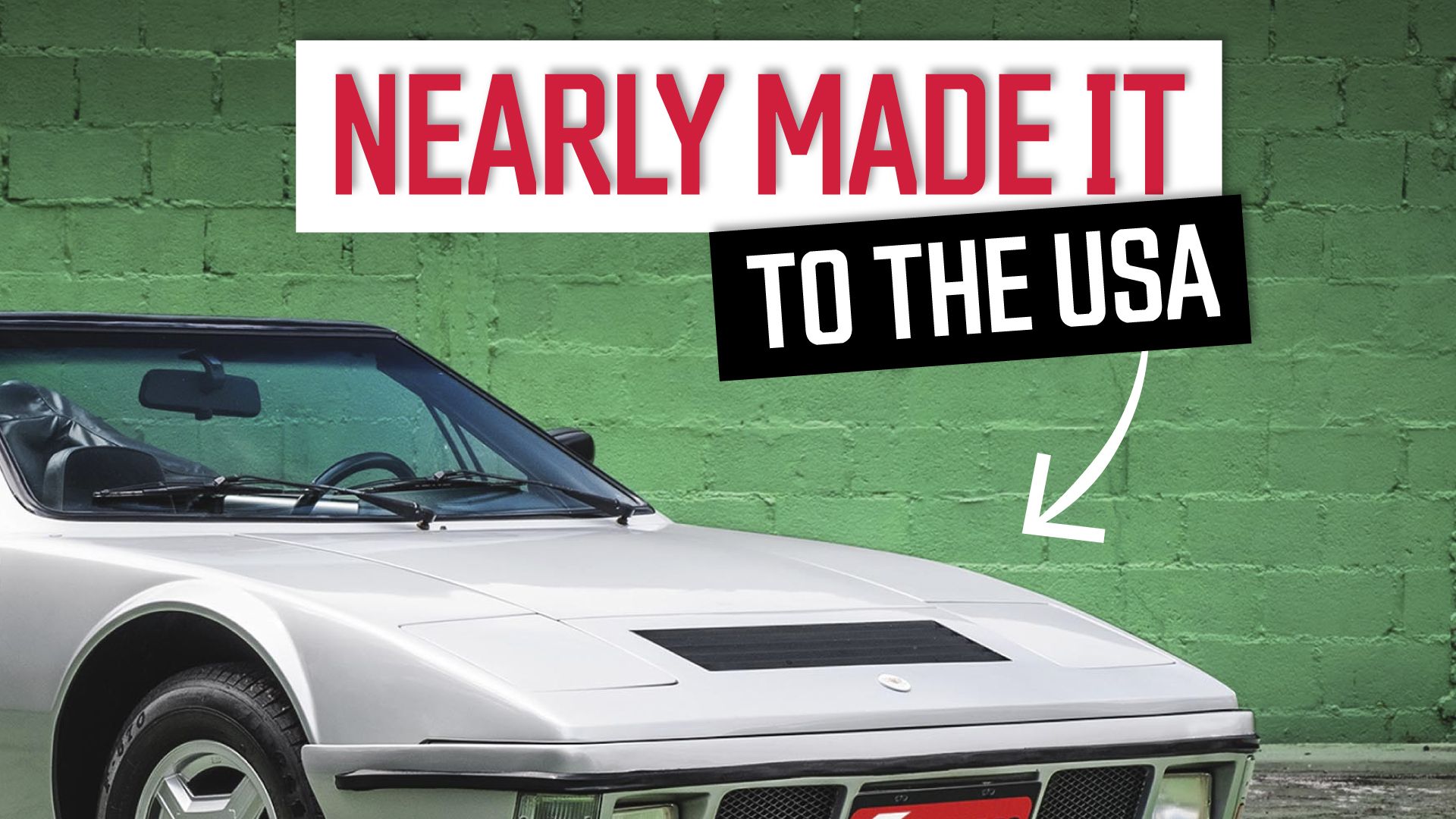
Farus had been trying to break into the US market since 1982; a few years later, when the new Beta model came out, it briefly looked like there might be a chance of a US deal happening. The Beta was available in either coupe or convertible form, with a 1.8-liter engine sourced from the Chevrolet Monza (one of several cars to carry this nameplate; in this case, the Monza was the Brazilian version of the Opel Ascona C sedan). The Beta was released in 1984, and in 1986 Farus began to negotiate with a North American importer; the plan was to change Farus’ engine supplier to Chrysler (building vehicles equipped with a Chrysler 2.2-liter unit) and import around 1,000 vehicles into the States each month. The process got as far as Farus getting their own stand at the 1987 New York Auto Show; the intended US-spec version of the Beta even got 1,500 reservations, but after that the deal collapsed due to excessively high production costs that Farus couldn’t handle.

The next car produced by Farus was called the Quadro, released in 1989. This car represented a departure from Farus’ previous creations, as it opted for a four-seat layout rather than the two-seater coupes the brand had previously focused on. It took heavy inspiration from the Audi Quattro, hence the name; the components were mainly Volkswagen-sourced, including the 2.0-liter engine, the suspension (from a VW Santana) and the taillights (from a VW Gol). The Quadro would remain the last model ever to be built by Farus, as shortly after its release the company began facing difficulties that would ultimately make its survival impossible.
The Plano Collor And Farus’ Demise
In 1990, Brazilian president Fernando Collor de Mello implemented a series of economic reforms dubbed the “Plano Collor” (“Collor Plan”). These measures opened up the Brazilian market to products imported from abroad, including cars: in the wake of an increasingly open economy, where locally built cars no longer had an advantage, Farus began to struggle.

The company was sold to a new owner and its name was changed to TECVAN (“Tecnologia de Vanguarda” or “Vanguard Technology”), but even radical measures were unable to prevent its collapse. Eventually, Farus shut down for good in 1991, with around 1200 cars produced over the course of the previous decade.
Sources:
DBPedia, Brazilian Classic Cars, Garagem do Mardel, AutoEntusiastas, Lexicar Brasil