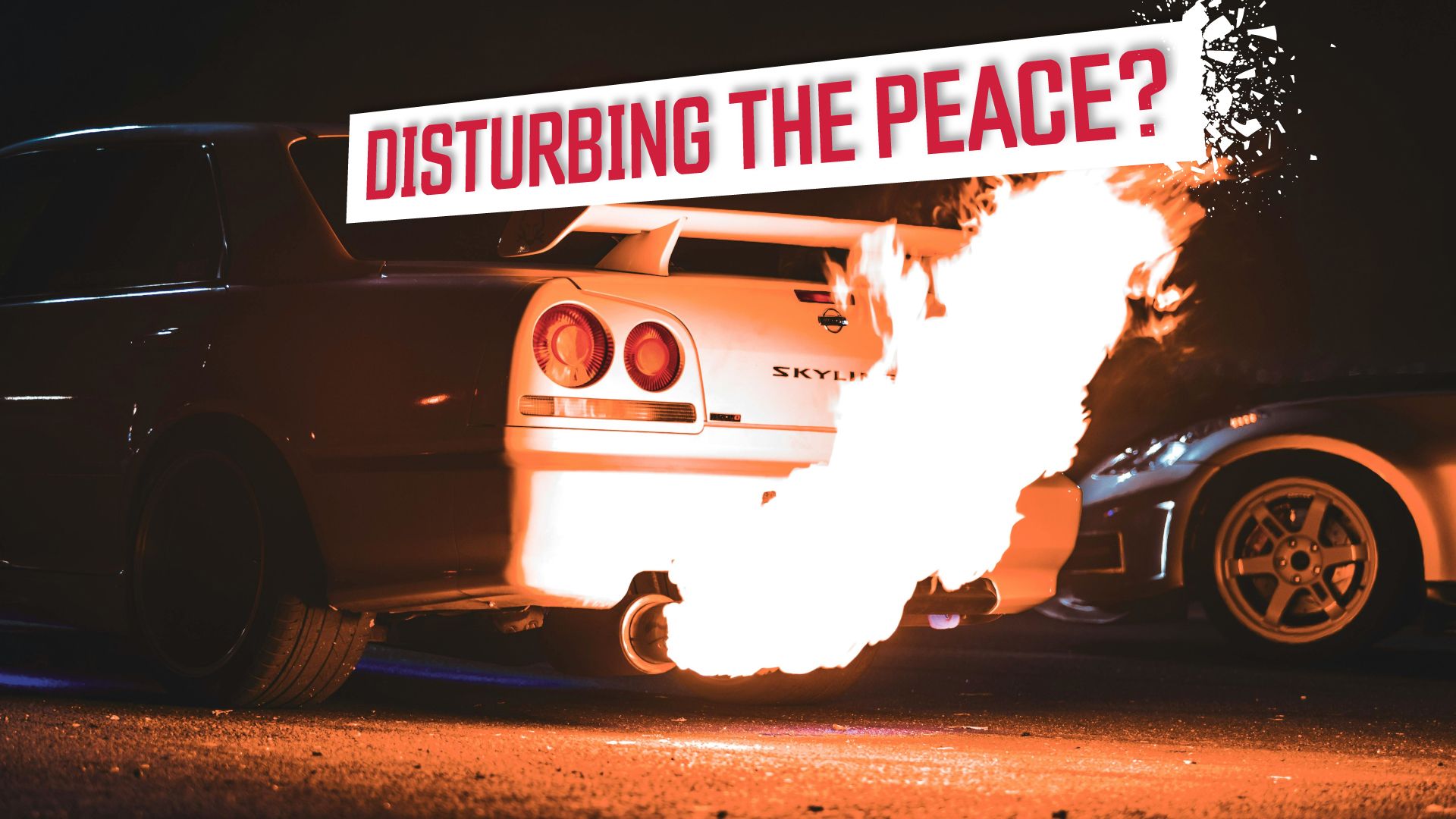
It should be no wonder that on today’s North American campuses, where the so-called woke culture has blossomed in recent years, one researcher has found it imperative to see if there’s a link between enjoying a loud car and trends of psychopathy and sadism.
Of course, with that irritable mindset as the guiding light for the ensuing research, it is no wonder that the conclusion of the Canadian study was that, yes, indeed, the desire to own this type of modified car (with a louder engine and music), could be linked to higher levels of sadism and psychopathy.
These are strong findings. But should we take this at face value, or is the noisy car culture something a bit more complex and intriguing than what the researchers would’ve thought?
SEMA Show
The SEMA Show is an annual trade show hosted in Las Vegas, Nevada by the Specialty Equipment Market Association (SEMA), first held in January 1967 as the High Performance and Custom Trade Show. It is widely considered to be the world’s largest tuner and aftermarket-specific motor show in the world. The show has traditionally been hosted in the Las Vegas Convention Center, attracting over 140,000 visitors annually, with over 2,400 exhibitors present in its current incarnation. Despite its focus on the aftermarket, the show attracts a large number of automakers annually, showcasing everything from concept builds to accessories.
The research was done by Dr. Julie Schermer, from the University of Western Ontario in Canada. It appeared, among other places, in Psychology Today, titled ”
Who wants to own a loud car?
“
Walking The Dog: The Study
 Key Facts To Know About Lowriders
- The term ‘lowrider’ describes a custom vehicle that has been lowered (or ‘slammed’), with the subsequent ride height being considerably and precariously lower to the ground than stock.
- This is made possible through the use of an adjustable suspension system.
- It allows for a wide range of outrageous poses, from ‘bouncing’ the car to a three-wheeled stance or even tilting the body forward, backward, and sideways.
Ah, the days when half your wage would be spent on a new subwoofer for your Vee-Dub – cranked up to ten when you cruise past Hooters on a Saturday evening.
Who would want to do that?
It seems not everyone is akin to those pleasurable memories, though. Or understand the urge to do it at age 20, when the testosterone flows thicker than the Nos in your car’s veins. Psychologist and researcher Dr. Julie Schermer of the University of Western Ontario in Canada, was walking her dog close to campus one summer’s afternoon when a couple of loud, noisy cars came thundering past. Who would’ve liked to do that? And why? Do these kinds of people actually have tendencies of psychopathy in them? And is there a link between both?

These are the questions she posed to the dog in the park, but then also in a proper research article. Schermer surmised there must be a link between the urge to unsettle law-abiding citizens with loud noise and modified mufflers, and psychological traits of psychopathy, where the person shows no regard for the feelings of others. Think serial killers, who often start out by harming animals.
Another type of customization involves the modification of exhaust systems to make vehicles
louder
. As these exhaust modifications are both a disturbance to people and animals and are illegal in some jurisdictions – Dr Julie Schermer
For her research, she handed a couple of questionnaires to a year group of business students at her university – 529 in total – to investigate the relationship between ‘dark’ personality traits and a preference for loud cars with modified mufflers. “Because these exhaust modifications are both a disturbance to people and animals and are illegal some jurisdictions, understanding who wants their vehicle to be loud is an interesting research question,” Schermer wrote in Psychology Today about her study.

Related
Best Car Mods: A Beginner’s Guide To Personalizing Your Ride
From performance and style to functionality, there are dozens of ways to personalize your ride.
The average age of her group of students was 18 years old, and 52% were male. One questionnaire, a ‘car scale,’ asked three questions about participants’ feelings towards loud cars, identification with their own cars, and the potential to modify their mufflers, with higher scores indicating a preference for loud cars. The students then completed the Short Dark Tetrad, a 28-item scale measuring the personality traits of Machiavellianism, narcissism, psychopathy, and sadism. These traits are referred to as dark in psychology because of their characteristics, which include selfishness and taking advantage of others, usually without empathy.
Based on the definitions of the Dark Tetrad scales, I predicted that those who want their cars louder might be trying to get others to notice them—and therefore narcissism – Dr Julie Schermer
Of course, Schermer assumed that people might like loud cars to get more attention, which would align with narcissistic behavior. According to her article, she also expected that people with sadistic or psychopathic traits – associated with criminal attitudes – would be more inclined to desire loud cars with often illegal modifications. And she predicted that younger men would score higher on their preference for loud cars, as this group is associated with enjoying louder leisure activities.

Schermer wasn’t surprised at her findings, after the questionnaires were moderated. Associations were found between higher scores on the car scale and each of the dark tetrad traits, though not significantly in the case of Machiavellianism and narcissism.
“We found that it was sadism and psychopathy predicting who wants to modify their mufflers, who feels more connected to their vehicle, and [who thinks] loud cars are really cool. It seems to be this callous disregard for other people’s feelings and their reactions. That’s the psychopathy coming out, and it’s also that they probably get a kick out of enjoying watching people get startled.”

Add CarBuzz to your Google News feed.
Rolling In My Five-Point-Oh: The Culture
At the start of the 1990s, rapper Vanilla Ice painted the picture so clearly: “Rollin’, in my Five-Point-Oh, with my rooftop down so my hair can blow.” That was the epitome of being young and successful in the street-culture of Miami and Southern California. Cruising, checking things out, listening to loud music and showing off your car. It’s the way you roll, if you’re cool.

Related
Lowrider Cars: Discover The Art Of Riding Low And Slow
The history of these masterpieces on wheels is as colorful as their bodies.
Sub-cultures of this are spinning and high-riders – modified cars with beautiful paintwork and lift-kits that could make a pole vaulter jealous. These scenes have been documented by Hollywood with their Fast and Furious and xXx movie franchises: young people, fast cars, and illegal drag racing.
Sorry, Ma’am, It’s Time To Reset

There is something very predictable about the imagery when a psychologist from a university in Canada gets annoyed by noisy cars when she walks her dog in the park. The difference between culture and social status couldn’t be further apart. One of the ironies, of course, is that, in this age of wokeism on North American campuses, the total opposite is actually happening here.
Instead of acknowledging the cultural differences and uniqueness of the group of people who enjoy their modified cars in public, she views them from her own cultural perspective, finding them wanting, and wants to call them out as having dark traits related to what we would find in psychopathy. The whole woke-ideology is indeed about recognizing and accepting different cultures. Not enforcing your Ivy League background onto others.
It’s OK to be happy with like-minded friends

It is okay to want to walk your dog in the park. But it is also okay to want to modify your car. To celebrate your culture. To be happy with like-minded friends.
One could also look at the research, and dig some holes in it. The sample was only 500 odd people. All of them were 18-year-old students. All of them were also in business school. The sample size and diversity of this study is thus severely hampered. Can you then really apply the findings to broader populations? The survey also only asked about the desire to own loud cars, not actually owning one. And it didn’t explore preferences for other loud vehicles, like Harleys or big trucks.

Related
Lowriders Are Becoming Fully Legal Again!
Whether that’s a good thing or not will be a matter of perspective.
Conclusion

It seems thus that the answer was reached before the study even began. Were the questions tailored to reach that conclusion? And would the answers be the same if we asked kids from a Southern Californian neighborhood, and not business school students from a posh university in Canada?
Young people being young
A disturbing thing is that there seems to be a big frown upon young people being young. Guys and gals who like their cars, and what they can do with their cars. Remember when you were young and your biggest concern of all was saving up for a loud sound system or a spicy exhaust? A car represents freedom, and it’s also a canvas on which you can express yourself.
Should we all conform to one culture? And who decides which culture is that winning one we should all aspire to? A bigger frown should be about a psychologist, of all people, who is blind to differences in how we all live our lives. Who wants everyone to conform to her set of rules, and not tolerate any differences at all? Or even going as far as linking their cultural expressions as having traits of psychopathy.
That’s a big jump, and a dangerous one. Let’s celebrate our differences, and even how our cars sound. There’s room for all of us.
Source:
Psychology Today