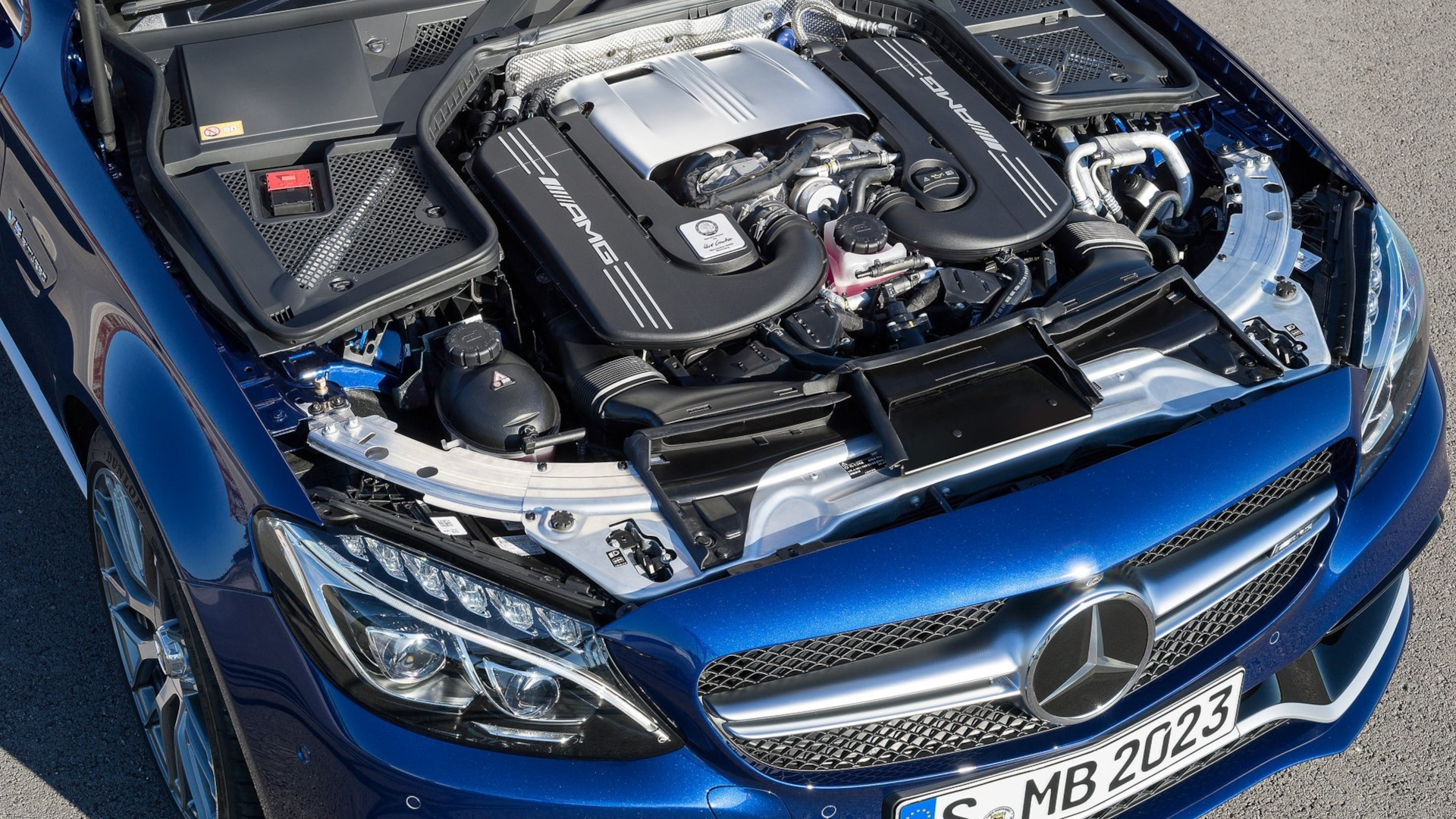
As far as tuning companies go, Brabus is one of the most prolific in the automotive industry. Ever since it was first initiated in 1977, the German outlet has put its own spin on most models that Mercedes-Benz has released to the world, creating viscious versions of the SL, C-Class, and even the boxy G-Class, plus everything in between. It not only specializes in boosting performance, but also tweaking the cars’ interior and exteriors to ensure they stand out from standard versions.
smart
- Founded
-
1994
- Headquarters
-
Ningbo, China
- Owned By
-
Mercedes-Benz/Geely
- Current CEO
-
Tong Xiangbei
- Production Status
-
Discontinued
While it tends to focus on building high-performance models, Brabus has been known to shine a light on Mercedes’ cheaper vehicles, even those without Mercedes badges on the hood. This includes its budget Smart brand, and in the mid-2000s, it designed a factory-offered version of the marque’s new four-door compact car, the aptly named ForFour.
This piece explores the story of the Smart ForFour Brabus, a four-cylinder hot hatch based on a Japanese city car.
Smart Was Looking To Branch Out In The Early 2000s
While Smart, which was founded in 1994 in a partnership between Daimler-Benz and Swiss watch manufacturer Swatch, is best known for the minuscule ForTwo city car, it also cast its net wider as it looked to grab a larger slice of the automotive pie. After the ForTwo was unleashed in 1998, Smart moved into the roadster market in 2003 with a model called, imaginatively, the Roadster.
Alongside the standard variant, Smart also offered a special version tuned by Brabus. It had more power, superior handling ability, and a more aggressive aesthetic. In 2004, its third model, the ForFour, made its debut. To save money on development, Smart cut a deal with Japanese manufacturer Mitsubishi to use its Colt model as the basis for the new offering.

Discussion
What is the best hot hatchback that we don’t get in the US?
Brabus Brought Some Spark To Smart’s Latest Offering
While Smart developed a new interior and body for the ForFour, the underpinnings, including the engine, were purely Colt, which is known as the Mirage in the US. Like the Roadster, Smart wanted to make a splash with its new four-door compact car, and therefore looked at shipping a spicier version alongside the lower-priced trims. Brabus was only too happy to oblige, and it redeveloped the ForFour into a small-but-mighty hot hatch that could go toe-to-toe with some sports cars at the time.
The Brabus ForFour might have been a badge-engineered Mitsubishi, but Mercedes went to great lenghts to give it its own styling inside and out, and its own personality.
The Colt-Sourced Engine Was Given A New Lease Of Life
Brabus decided to keep things simple and utilize one of the engines from the base ForFour range, Mitsubishi’s naturally aspirated 1.5-liter 4A91 inline-four. It acted as the largest and most powerful powerplant available in the normal line-up, but its 107 hp was nowhere near enough for the power-hungry tuning brand. The engine was based on Mitsubishi’s 4G1 engine, which had achieved a stellar reliability record since it was first established in 1977.

Related
Smart’s First Sedan Will Be Serious With More Than 600 HP
For the Brabus model, the slightly smaller 1.47L Mitsubishi 4G15 engine from its Orion engine family was used, equipped with a turbocharger that boosted power to 174 hp. The Mercedes/Smart engine code for this powerplant was M122 E15 AL This grunt was sent to the front wheels via a five-speed manual gearbox, and it felt lively due to the lack of a limited-slip differential.
|
2005 Smart FourFour Brabus Specifications |
|
|---|---|
|
Engine |
1.5L turbo I4 |
|
Power |
174 hp |
|
Torque |
169 lb-ft |
|
0-60 mph |
6.9 seconds |
|
Top Speed |
137 mph |
Thanks to its light body, the ForFour Brabus topped the scales at only 2,403 pounds, which allowed it to sprint to 60 mph in a brisk 6.9 seconds. While not quite as quick as the Volkswagen Golf GTi, it matched the Mini Cooper S of the time. It also felt responsive, as around 90% of its torque was accessible at just 2,300 rpm.
Brabus Also Worked On The ForFour’s Handling
Alongside the boosted engine, Brabus also paid some attention to the Colt foundations. The ForFour’s MacPherson-strut front and torsion-beam rear suspension setup was revised to provide a stiffer platform, sharpening up the ForFour when the time came to throw it into a bend. Not only did the new suspension help to make the car more responsive, but it was also more agile and could hold the road more confidently than the standard model.
The electric steering setup was also tweaked with heavier weighting, which helps to build driver confidence. While it didn’t quite have the poise of rivals like the Ford Fiesta ST and the SEAT Ibiza Cupra, the FourFour Brabus still provided an engaging driving experience.
The ForFour Looked Like A Proper Brabus
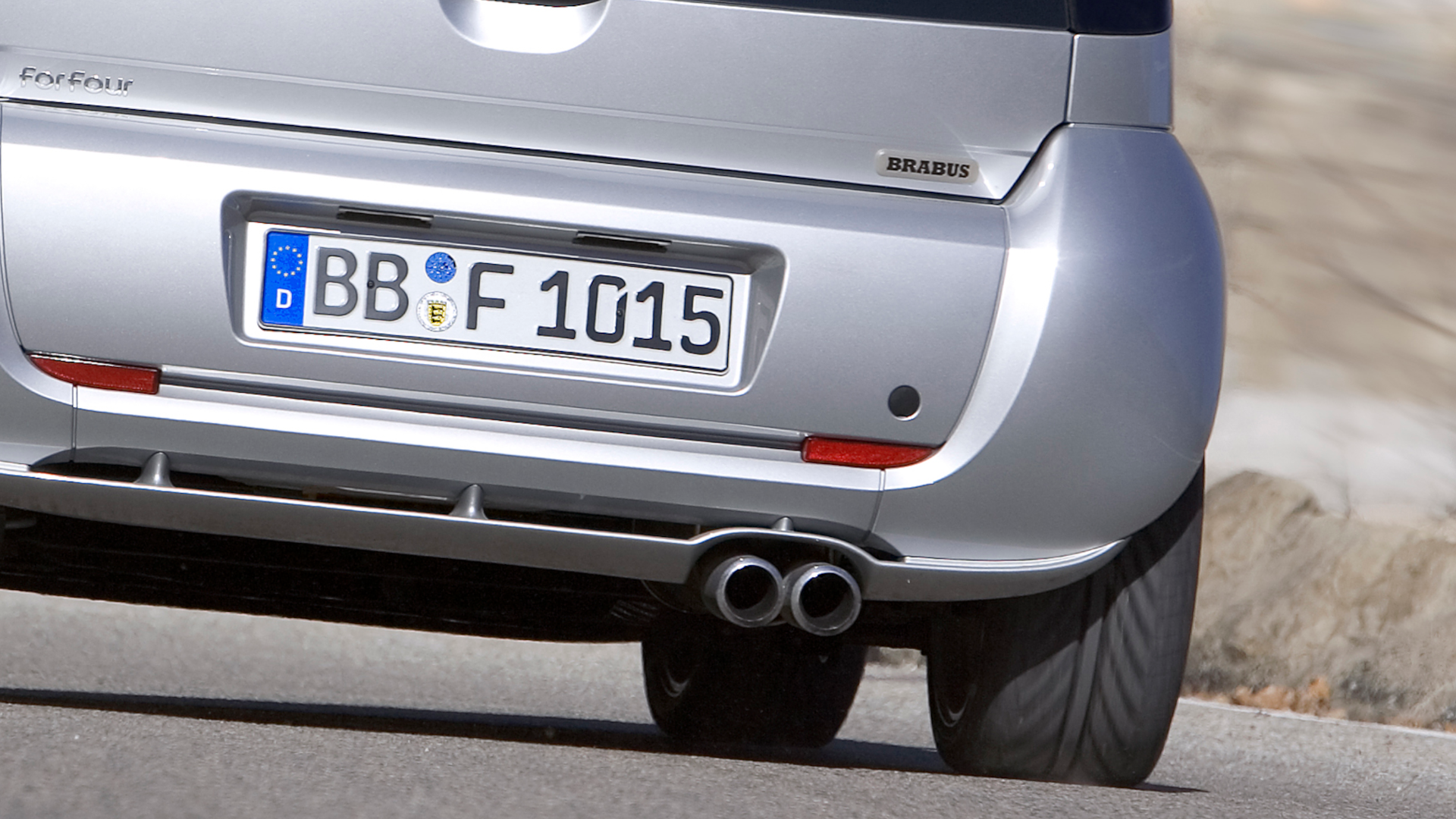
Having sprinkled some of its special sauce to enhance the ForFour’s driving experience, Brabus turned its attention to making it look more exciting. A set of 17-inch Brabus monoblock wheels was supplied, which, when combined with the lowered ride height, gave the ForFour a proper classic Brabus look. This was enhanced by a new body kit, which consisted of new front and rear spoilers, new side skirts, a new radiator grille, and a sports exhaust muffler.
A generous helping of Brabus badges were also dotted around the body, which made onlookers aware that this was not just any Smart ForFour.
The ForFour Brabus’ Interior Was Also Jazzed Up
The tuning company continued its ForFour journey on the inside, kicking off with using up the rest of the badges it ordered. The most prominent was placed on the striking handbrake lever, though the biggest upgrade was the Brabus-designed heated black leather sports seats. It also swapped out the standard dials for Brabus ones, while bringing in new metal pedals, a leather-wrapped sports steering wheel, and some racy silver trim to contrast with the black leather.

Related
Smart ForFour Rally Car Powered By 500-HP Mercedes Four-Pot
The Brabus ForFour has been largely forgotten against a backdrop of widely praised hot hatches like the Fiesta ST, Golf GTI, and Renault Clio 182 that blew up at the time. The Brabus may not have been able to match them dynamically, but its impressive grunt, exclusivity, and striking looks make it an interesting alternative for those who wish to stand out from the crowd.
Brabus Also Worked Its Magic On The Dinky ForTwo
Not wanting to leave anything out, Brabus also worked on bringing some extra sportiness to the tiny ForTwo microcar as well as its Roadster and ForFour siblings. While the turbocharged 700 cc three-cylinder engine used in the standard ForTwo was retained, Brabus tuned it to increase power from 60 hp to 73 hp. This had a positive effect on performance, with the Brabus’ 12.3-second 0-60 mph time blowing the standard model’s 15.5-second figure out of the water, though it’s still very slow by modern standards.
|
2005 Smart FourTwo Brabus Specifications |
|
|---|---|
|
Engine |
698 cc turbo I3 |
|
Power |
73 hp |
|
Torque |
81 lb-ft |
|
0-60 mph |
12.3 seconds |
|
Top Speed |
94 mph (electronically limited) |
It was also given larger wheels and wider tires to help increase stability, which was at a premium with such a narrow and tall design. Aside from the performance enhancements, the ForTwo was also lavished with 16-inch monoblock wheels, as well as a comprehensive body kit that allowed the car to embrace its racier side. Like with the ForFour, Brabus also graced the ForTwo with black leather trim, silver trim, and Brabus’ branded gauges.

Related
Say Hello To The #5: Smart’s Largest EV Is Here To Fight The Tesla Model Y
While the definition of hot hatch was a little overkill for this particular vehicle, the extra grunt available thanks to Brabus at least offered customers a better chance of diving into a parking space quicker than their rival. Just don’t get tempted to introduce it to a racetrack, unless you’re not worried about being taken seriously.
Sources: Smart