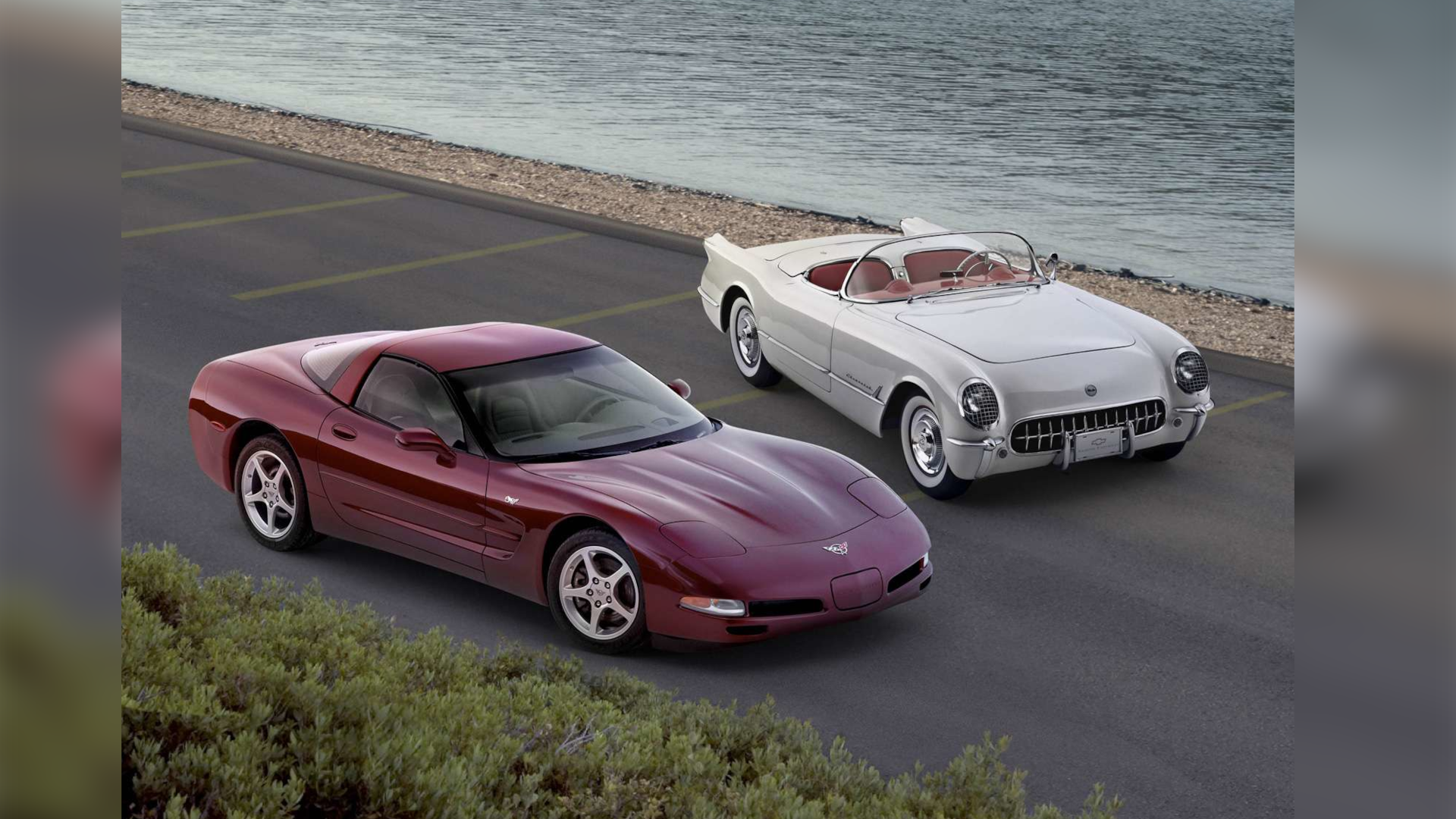
You can’t get more American than a grunty, low-end torque-heavy V8. The Americans have been hard at work creating V8s for over a century now, with the first being made by Cadillac in the year 1914, the same year Europe was plunged into World War I. In short, eight cylinder mills are in our blood, much like the ability to play baseball or the innate need to ogle a passing Chevrolet Corvette.
Having so much V8 heritage in the United States begs the question: What are the most insignificant V8s ever created in the US? This list aims to answer that question with a list of 10 engines that have made their mark in various ways, be it in performance, milestones, or just their sheer hugeness. Remember, it was the US which coined the term “There’s no replacement for displacement”.
2:15
Related
Which American V8-Powered Sedan Is Quickest? These Quarter-Mile Times Will Tell
Let’s look at the V8 sedans made in America that have the quickest quarter-mile times.
The following 10 engines were selected based on their historical significance, performance, or for other reasons such as size and heritage. Specs outlined in the following tables denote the earliest version.
10 Oldsmobile Rocket
|
Displacement |
303 CID (5.0-Liter) |
|---|---|
|
Horsepower |
135 hp |
|
Torque |
253 lb-ft |
|
Production Timeframe |
1949–1990 |
Our first V8 to hit our list gets the top spot because it can be argued it was the engine to be featured in what can be called the first muscle car; the Oldsmobile Rocket 88. It featured an oversquare bore, meaning the motor’s stroke was shorter than its piston heads were wide, making for a more torque-heavy engine. The Rocket V8 got its name from the then-budding Space Race between the United States and the USSR. While it wasn’t the first, we can thank the Olds Rocket V8 for kick-starting the decades of powerful V8s which followed.
9 Chevrolet Small-Block
|
Displacement |
265 CID (4.3-Liter) |
|---|---|
|
Horsepower |
195 hp |
|
Torque |
260 lb-ft |
|
Production Timeframe |
1954–2003 |
One of the longest-running production engines in history, the Chevrolet Small-Block V8 is the icon of icons when it comes to American V8s. Its story begins in 1955, as Chevrolet created the first small-block, also called the Chevrolet Turbo-Fire, as a more powerful engine option for the then-new Corvette. Back then, the Corvette was criticized for its lack of power coming from the straight-six “Blue Flame” engine fitted to it. The small block’s most popular iteration is the 350 CID (5.7-Liter), and is one of the most popular choices for muscle car builds in the US, alongside the LS-based GM small-block engine, which replaced the original.
8 Ford 302 CID
|
Displacement |
302 CID (5.0-Liter) |
|---|---|
|
Horsepower |
220 hp |
|
Torque |
300 lb-ft |
|
Production Timeframe |
1968–2003 |
Next is Ford’s most famous small-block, the 302. The iconic Ford mill enjoyed a tenure lasting 35 years, and was applied to several different vehicle types ranging from pickup trucks, muscle cars, family sedans, and luxury cars. Oftentimes, the 302 will have the word “Windsor” attached to it, which denotes where the motor was built, at Ford’s Windsor, Ontario plant. One of the most famous 302 applications was within the Ford Mustang Boss 302.
7 Cadillac 500 CID
|
Displacement |
500 CID (8.2-Liter) |
|---|---|
|
Horsepower |
400 hp |
|
Torque |
550 lb-ft |
|
Production Timeframe |
1970–1975 |
The Cadillac 500 CID V8 gets a spot on our list chiefly due to its size, which makes it the largest non-special edition, mass-market V8 ever fitted to a production car, second only to the Phase VX I Viper V10. It enjoyed a short life, lasting only five years, with its first year of existence being its most powerful, as new governmental regulations were set in following the 1970, 1971, and 1972 model years, drastically reducing its power output. By 1975, the massive engine only made 190 horsepower and 360 lb-ft of torque.
6 Chevrolet 454 Big Block
|
Displacement |
454 CID (7.4-Liter) |
|---|---|
|
Horsepower |
390 hp |
|
Torque |
500 lb-ft |
|
Production Timeframe |
1970–2000 |
Chevrolet’s big-block definitely deserves a spot on our list, as it’s, arguably, the most coveted big-block to come from any American manufacturer to-date. Several variations have been produced, ranging from muscle car, racing, and pickup truck applications. It was also used in some heavy-duty applications, such as for the CHevrolet C3500HD. Its most powerful version, dubbed the LS-7, puts out 465 horsepower and 610 lb-ft of torque, but was relegated to select dealers throughout the country, and could only be built using parts sourced from said dealers, rather than purchased within a vehicle ready-made.
5 Mopar 440 Six-Pack
|
Displacement |
440 CID (7.2-Liter) |
|---|---|
|
Horsepower |
390 hp |
|
Torque |
490 lb-ft |
|
Production Timeframe |
1969–1971 |
Our first entry from Mopar is the coveted 440 Six-Pack V8, a mill which was only offered for three years. However, within those three years, it was able to make quite a legendary reputation for itself. The “Six-Pack”, as it was called by Dodge for its Challenger pony car, or “6-BBL” as the package was called by Plymouth, featured three two-barrel carburetors sitting atop the engine, allowing for a huge amount of air and fuel to be sucked into the 440 CID’s big cylinders. Today, the 440 Six Pack is one of the most sought-after Mopar motors.
4 Chevrolet LS Small Block
|
Displacement |
5.7-Liter V8 |
|---|---|
|
Horsepower |
345 hp |
|
Torque |
350 lb-ft |
|
Production Timeframe |
1997–Present |
Near the end of the original Chevrolet small block’s life, General Motors was dead-set on replacing it, and not just letting it fade away. So, they drummed up the LS-based small block, which was a clean-sheet engine design. Its first application was in the 1997 Chevrolet C5 Corvette, and boasted things like an aluminum block and heads, along with a modernized firing order, allowing for a smoother operation over the previous small block design.
3 Ford Coyote 5.0
|
Displacement |
5.0-Liter |
|---|---|
|
Horsepower |
412 hp |
|
Torque |
390 lb-ft |
|
Production Timeframe |
2010–Present |
Ford’s second V8 to hit our list is another 5.0-liter, although it’s only very loosely related to the 302 we discussed previously. The story begins in 2010, when Ford decided they’d need a new V8 to replace the 4.6-liter used within their Mustang. The Detroit automotive giant wanted to take on GM’s new 6.2-liter V8 and Chrysler’s new 6.4-liter HEMI. Hence, the Coyote 5.0 was born, and has seen a wide range of uses, though mainly within the Mustang GT and the Ford F-150

Related
The 10 Most Powerful Versions Of Ford’s Modular V8 Engine
Ford’s modular V8 engine is omnipresent within its ranks and has been for years. Here are the most powerful models to ever used the modular V8 enigne.
2 Chrysler 6.2 HEMI Hellcat
|
Displacement |
6.2-Liter Supercharged |
|---|---|
|
Horsepower |
707 hp |
|
Torque |
650 lb-ft |
|
Production Timeframe |
2015–2024 |
We recently said goodbye to one of the most iconic V8s of the 2010s and 2020s; the Chrysler 6.2-liter HEMI Hellcat V8. Sadly, it only got to live a nine-year life before it became a casualty of the times. In that time, however, we got to see some truly high power numbers from the thing, with its most powerful iteration managing to create 797 horsepower in the 2019 Dodge Challenger SRT Hellcat and the 2021 Dodge Charger Hellcat.
1 Ford Voodoo 5.2
|
Displacement |
5.2-Liter |
|---|---|
|
Horsepower |
526 hp |
|
Torque |
429 lb-ft |
|
Production Timeframe |
2015–2020 |
Last on our list is iconic for a bit of a different reason to our other V8s on this list. The biggest reason for the Voodoo V8’s uniqueness is in its bottom end, as it sports a flat-plane crankshaft and, until the Chevrolet LT6 V8 came along a year ago, was the only mass-market production V8 in America to sport one. Normally, flat-plane cranks are seen inside European engines. In fact, to build the Voodoo, Ford purchased a Ferrari California to help with its design. Overall, the Voodoo was in production for five years, and was only installed within the Shelby Mustang GT350 and GT350R.
Sources:
FordAuthority.com