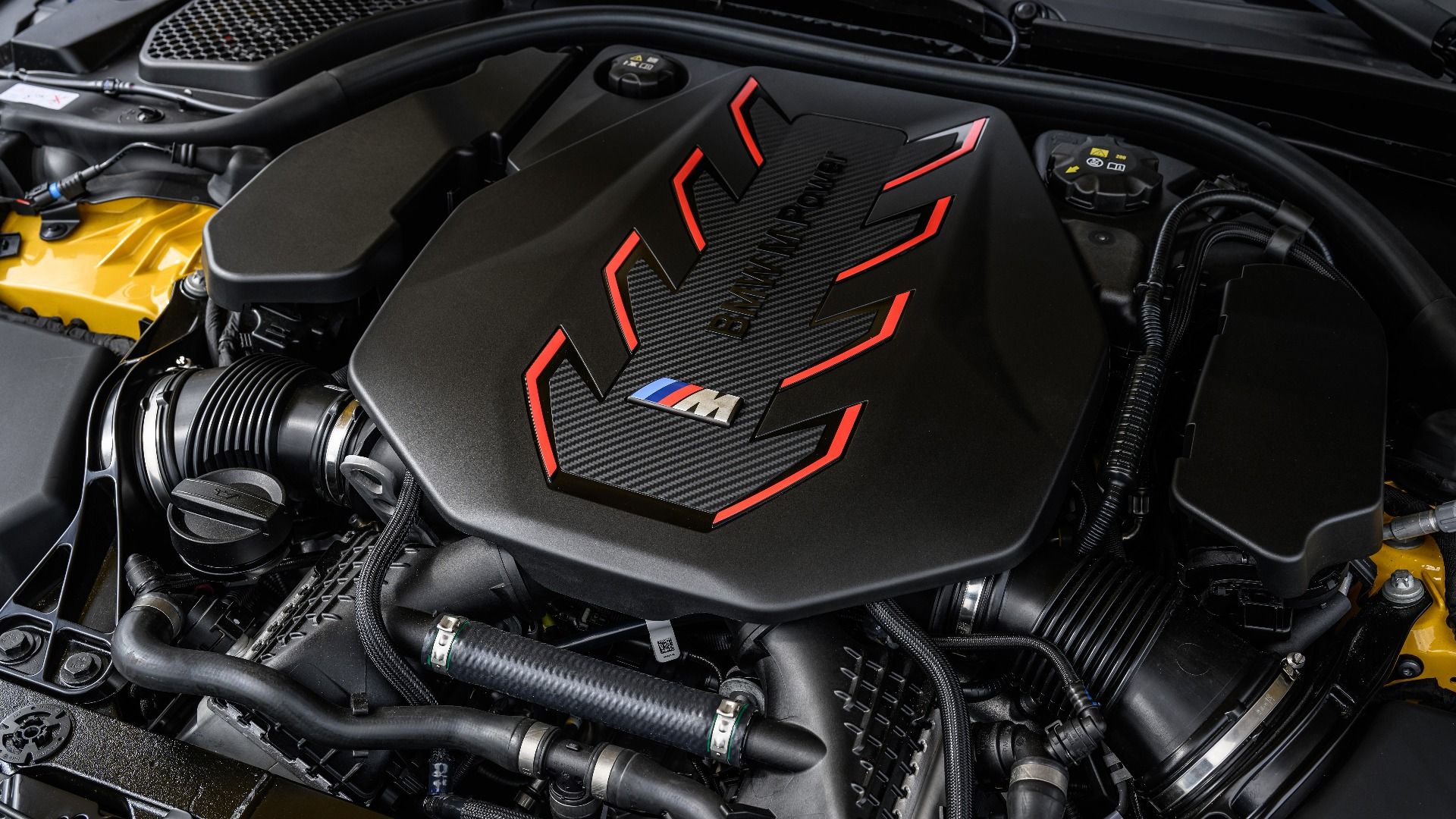
BMW has a long history of producing powerful, reliable engines, which have powered countless models, from sports cars to SUVs, over the decades. While BMW is perhaps most famous for its inline-six engines, V8 engines are also a large part of the brand’s history: BMW has been producing V8s since the early 1950s when it released the OHV V8 after being inspired by designs such as the Oldsmobile Rocket 88. V8s now proliferate a plethora of BMW models, from the M5 to the XM and several more in between.
Several V8 engines produced by BMW have found their way into cars built by other automakers, from little-known small-scale manufacturers to worldwide household names. Let’s explore some non-BMW models that have been powered by a BMW V8 engine over the years.
The article includes a list of cars powered by BMW V8 engines but built by other carmakers, listed in chronological order according to the year they were introduced.
De Tomaso Guarà
1993
|
Engine |
4.0-liter V8 |
|---|---|
|
Horsepower |
282 hp |
|
Torque |
295 lb-ft |
|
0-60 |
5.0 seconds |
The last production car built by the original incarnation of legendary sports carmaker De Tomaso, the Guarà was based on the Maserati Barchetta Stradale, the one-off road-legal version of the Barchetta racing car. However, unlike the car it takes inspiration from, the Guarà was available in three different styles: a coupe, an open-top “Barchetta” version, and a soft-top Spyder. A total of 52 cars were built: 38 were coupes, 10 were Barchettas, and just four were Spyders, created by converting an existing coupe model.
Early versions of the Guarà were powered by BMW’s M60 engine, the German brand’s first V8 in over 25 years. Later on in the production timeline, BMW began to phase out the M60, and De Tomaso switched to a Ford V8 instead. BMW did not just provide the Guarà’s engine, but most of its interior components as well.
Ascari Ecosse
1998
|
Engine |
4.4-liter V8 / 4.7-liter V8 |
|---|---|
|
Horsepower |
300/400 hp |
|
Torque |
317/369 lb-ft |
|
0-60 |
4.1 seconds |
The Ascari Ecosse was the first production car built by short-lived British manufacturer Ascari. It was a modified version of an Ascari race car which had been introduced three years earlier, the FGT. One of the main differences was in the powertrain: while the concept version of the FGT had been powered by a Chevrolet engine and the racing version by a Ford engine, when the time came to turn it into a production car, Ascari opted for a BMW V8 instead. For the first examples of the Ecosse, this was a 4.4-liter M62 engine, however later on Ascari switched to a 4.7-liter unit tuned by German firm Hartge.
Bentley Arnage
1998
|
Engine |
4.4-liter twin-turbo V8 |
|---|---|
|
Horsepower |
349 hp |
|
Torque |
420 lb-ft |
|
0-60 |
6.3 seconds |
One model in Bentley’s history stands out for having a BMW V8 under its hood: the little-known Arnage, a full-size luxury car produced between 1999 and 2010. The Arnage was twinned with a parallel Rolls-Royce model, the Silver Seraph: the Rolls also used a BMW power plant, but this was an M73 V12 rather than a V8. The Arnage, on the other hand, used a modified version of BMW’s M62 V8 engine. The M62 was originally naturally aspirated, but the version used in the Arnage added two turbochargers. The modification of the engine was curated by legendary British firm Cosworth. The Arnage’s lifespan also coincided with Volkswagen’s takeover of Bentley, during which the BMW engine was gradually phased out of the Arnage lineup.
Related
Bentley Vs. Rolls-Royce: How Two Became One And Then Parted Ways Again
A summative history of the world’s eminent luxury automakers.
Wiesmann GT
2003-2014
|
GT MF4 (2003-2009) |
GT MF5 (2011-2014) |
|
|---|---|---|
|
Engine |
4.8-liter V8 / 4.0-liter V8 |
4.4-liter twin-turbo V8 |
|
Horsepower |
362 hp / 414 hp |
547 hp |
|
Torque |
361 lb-ft / 295 lb-ft |
502 lb-ft |
|
0-60 |
4.6 seconds |
3.9 seconds |
The next entry on the list isn’t quite as well known. Wiesmann is a small German manufacturer whose main specialty is custom-built coupes and convertibles, founded in 1988 by brothers Martin and Friedhelm Wiesmann. The GT was one of their main models, with several variants being released over the years, and has been powered by three different BMW-sourced V8 engines. The GT MF4 was powered by the 4.8-liter N62 and the 4.0-liter S65 (in the MF4-S variant), while the GT MF5 was powered by the 4.4-liter twin-turbo S63. The latter wasn’t always in use though, and controversially replaced the naturally aspirated S85 V10 from 2011 onwards.
As of 2022, Wiesmann had plans to release another car powered by a BMW V8, dubbed Project Gecko. However, this was delayed as the company focused on an all-electric car called Project Thunderball.
Ascari KZ1
2005
|
Engine |
4.9-liter V8 |
|---|---|
|
Horsepower |
493 hp |
|
Torque |
406 lb-ft |
|
0-60 |
3.7 seconds |
The Ascari that followed the Ecosse, the KZ1, was also powered by a BMW engine: the S62, the high-performance version of the M62 V8. The S62’s main claim to fame was being the first V8 produced by BMW equipped with the double VANOS system (variable valve timing on both the intake and exhaust camshafts). The version of the S62 used in the KZ1 was tuned to produce an even higher power output (the original “only” produced 394 hp). The S62 engine was assembled at BMW’s factory in Germany, before being shipped to the UK where assembly of the KZ1 was completed. Other cars powered by the S62 include the Z8 roadster and the E39 (third-generation) M5.
Ascari KZ1-R
2005
|
Engine |
4.9-liter V8 |
|---|---|
|
Horsepower |
513 hp |
|
Torque |
406 lb-ft |
|
0-60 |
3.8 seconds |
The KZ1 also spawned an even more obscure racing version, dubbed the KZ1-R. It was created to compete in lower-level sports car championships, such as the GT3 European Championship; the original personality of the road car was preserved and improved upon, with the addition of motorsport-inspired elements such as a new front splitter and a large rear wing. Generous use of carbon fiber made the KZ1-R drop substantial amounts of weight compared to its road-legal counterpart. The S62 engine, which had already been tuned to produce a higher output than the original BMW version in the KZ1, was pushed even further in the KZ1-R, producing an additional 20 hp.
Ascari A10
2006
|
Engine |
4.9-liter V8 |
|---|---|
|
Horsepower |
616 hp |
|
Torque |
443 lb-ft |
|
0-60 |
2.8 seconds |
The very last model Ascari would ever produce was also powered by a BMW V8, like most of its predecessors in the company’s lineup. The A10 combined a newly designed body, courtesy of designer Paul Brown, with a reworked version of the carbon fiber chassis that had already been used in the KZ1-R. The A10 combined elements of road and track, with a factory-installed fire suppression system and roll cage that met FIA requirements. Interior luxuries were scarce, with air-conditioning and the stereo both being removed to save weight. The A10’s engine was a modified version of the S62 with the highest power output ever for this engine: it produced 132 more horses than the version used in the KZ1 (and 231 more than the original BMW version).
Morgan Plus 8
2012
|
Engine |
4.8-liter V8 |
|---|---|
|
Horsepower |
357 hp |
|
Torque |
370 lb-ft |
|
0-60 |
4.2 seconds |
One of the most curious creations to be powered by a BMW V8 is the revised version of the Morgan Plus 8. While the original Plus 8 had been in production from 1968 to 2004, the new version of the same name was introduced in 2012 at the Geneva Motor Show, and remained in production until 2018. The original version had been powered by a Rover V8 which went out of production, prompting the discontinuation of the model; when the new Plus 8 was designed, Morgan opted for BMW’s N62B48, the same variant of the N62 V8 found in the Wiesmann GT and the second-generation BMW X5. The V8-powered Plus 8 was discontinued in 2018.
Land Rover Range Rover/Range Rover Sport
2022
|
Range Rover |
Range Rover Sport |
|
|
Engine |
4.4-liter twin-turbo V8 |
|
|
Horsepower |
516 hp (Range Rover) / 599 hp (Range Rover SV) |
523 hp (Range Rover Sport) / 626 hp (Range Rover Sport SV) |
|
Torque |
553 lb-ft |
|
|
0-60 |
4.4 seconds |
3.6 seconds |
The fifth generation of Land Rover’s Range Rover SUV and the third generation of the Range Rover Sport made their debut in 2022. Both models featured BMW-sourced engine options in their lineup: the P530 and P615 Range Rover are powered by the BMW’s N63 4.4-liter V8 engine, as is the P530 Range Rover Sport, while the Range Rover Sport SV is powered by the S63 (also a 4.4-liter V8). To be precise, the version of the S63 engine you will find under the SV’s hood is the S63B44T4, an updated variant that first made its debut on the 2018 BMW M5.
Land Rover Defender OCTA
2023
|
Engine |
4.4-liter V8 |
|---|---|
|
Horsepower |
626 hp |
|
Torque |
553 lb-ft |
|
0-60 |
4.0 seconds |
Another model in the Land Rover family that has borrowed a V8 from BMW is the OCTA version of the Defender. The modern Defender made its debut in 2019 for the 2020 model year, with two different V8-powered versions in the lineup. The first, simply known as the Defender V8, does not borrow from BMW but rather uses a Jaguar 5.0-liter V8. The second is the OCTA, named after the octahedral shape that gives diamonds their unique properties of durability. The Defender OCTA is powered by the same version of the S63 engine you will find in the Range Rover Sport P530 and SV.
Sources: BMW, Bentley, Land Rover, Morgan, Wiesmann, De Tomaso, Ascari