The Ford Mustang needs no introduction, and in 2024, it is somewhat in a class of its own. It returned for 2024 with its V8 engine intact and even better than before, refusing to follow the Chevy Camaro and Dodge Challenger to the grave. Ford already gave us the Shelby Mustang GT500, it unveiled the GT3 race car and even gave the world the Mustang Dark Horse.
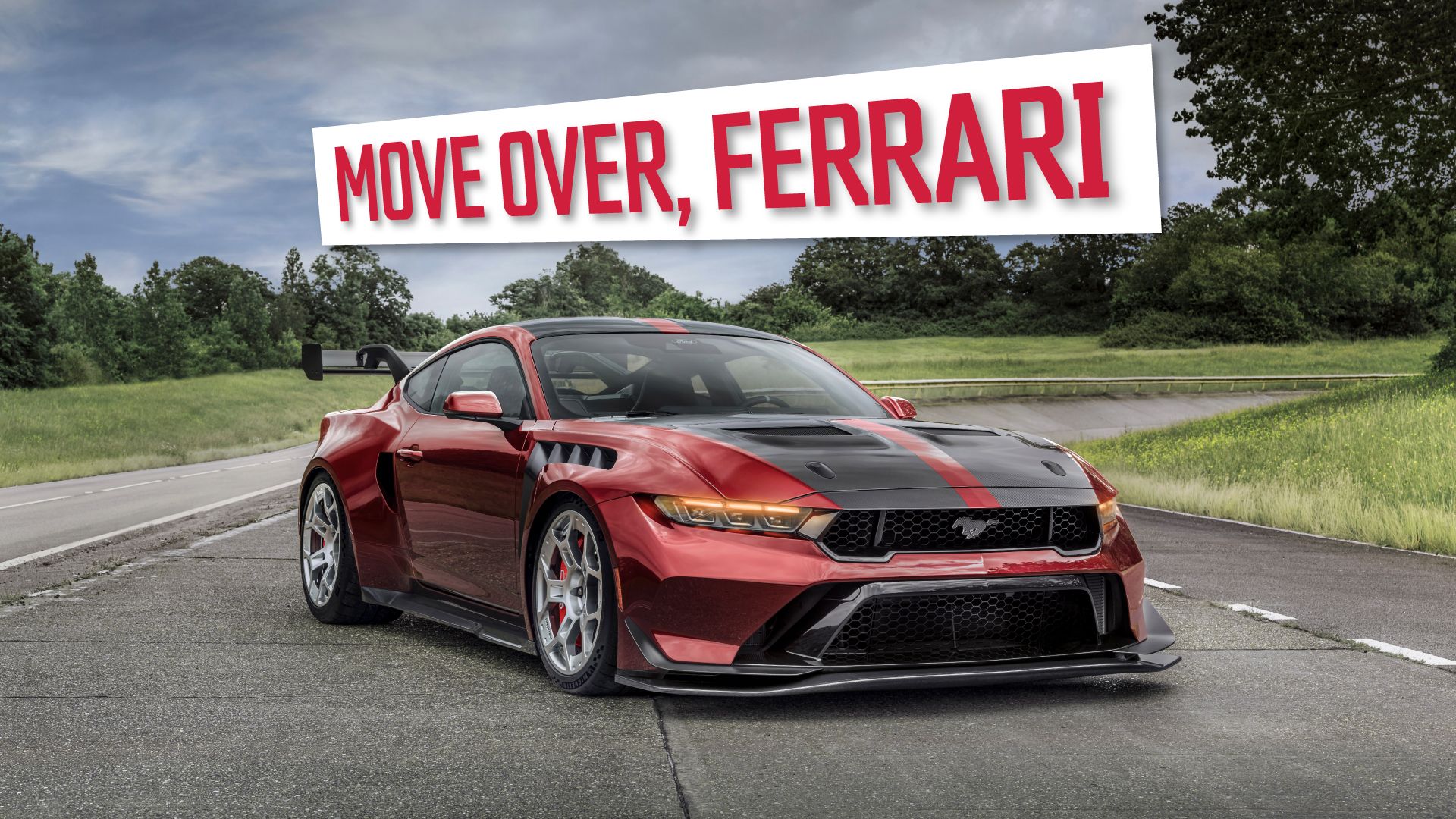
All of those pale in comparison to the Ford Mustang GTD – a perfectly orchestrated exercise in engineering, design, and PR. The GTD is a racing car for the road, taking inspiration and actual pieces of engineering from its racing division and putting them into a road car. It looks like the current-gen S650 ‘Stang on steroids. But a lot is going on under the skin of this muscle car – far more than 800 hp (horsepower) and an aggressive body kit. We take a look at the highlights to see what will make this unlike any other production Mustang before it.
The Design: Everything Up To Eleven
The Design Takes The Mustang To New Heights
Straight away, Ford gave away the ethos of the Mustang in its choice to use the name ‘GTD’ from the IMSA GT3 racing class. This car’s strengths lie in its design and chassis just as much as its power figure of 800 hp. For example, the Dodge Challenger SRT Demon from 2018 made up to 840 hp but will not likely see which way the Mustang GTD went on a track. Fundamental to the GTD’s cocktail of features is the lightweight body, featuring an almost exclusive use of carbon fiber panels. It is 4″ wider than the standard S650 Mustang.
It’s easy to see where Ford went wild with the design compared to the car upon which it is based, including the lowered stance, the front splitter, the side sills, and the vented rear panel. Every feature is designed to be functional for cooling, downforce, or speed. Its front fenders feature vents for cooling the car’s carbon ceramic brakes. There are active aerodynamic elements built-in (more on that later), including the huge hanging rear wing.
Surprising Features As Standard
Materials play a big part in keeping weight down and there is more going on than the simple use of carbon fiber panels. Optional magnesium wheels further help reduce weight, while the GTD also comes with a titanium Akravopic exhaust. As mentioned earlier, 6-piston Brembo carbon ceramic brakes also come fitted, along with 325-mm and 345-mm Michelin Pilot Sport Cup 2 tires. The front tires are as wide as the rear tires on a Ford GT, which goes some way to illustrate how the GTD is focused on handling and grip over simple raw power.
Related
The Ford Mustang GTD Might Not Be Street Legal Everywhere
The Ford Mustang GTD is a powerful sports car, but depending on where you live, it might not be street legal.
Despite being a racing car for the road, the Mustang GTD will also feature some nice touches on the inside for its customers, who will be paying its hefty price. Recaro seats are standard. The designers also used leather, Alcantara, and carbon fiber for the interior, as well as 3D-printed titanium shifter paddles. There is even a 12.4″ digital gauge cluster alongside the 13.2-inch infotainment screen running Ford’s SYNC 4 OS, both of which will be tailored to the GTD.
The Mustang GTD’s Powertrain Is A Race-Bred Cocktail
Under the aggressive exterior is a powertrain and drivetrain combination that packs a punch, combining power with agility. The secret to the GTD’s design is in its racecar setup – inspired by the Mustang GT3. This extends to the carbon fiber panels, rear-mounted gearbox, and trick suspension. The latter helps give the GTD a 50:50 weight distribution. Its special Multimatic suspension also promises to make this the best-handling Mustang ever.
The Engine

|
Ford Mustang GTD |
|
|---|---|
|
Engine |
5.2-liter, supercharged V8 (Predator) |
|
Power |
800+ hp |
|
Torque |
TBA |
|
Drivetrain |
Front-engine, RWD |
|
Transmission |
8-speed automatic (rear-mounted) |
|
Top Speed |
190+ mph |
While the Mustang GT3 racecar used a 5.4-liter, modified Coyote engine, at the heart of the GTD is the 5.2-liter, supercharged V8 that most will know as the engine from the Shelby Mustang GT500. In that car, the engine produced 760 hp / 625 lb-ft of torque, but the GTD’s target output is at least 800 hp. This version of the Predator engine uses a dry sump oiling system for reliable lubrication and cooling on the track. While the GT3’s engine is racing-spec, Ford stuck with the Predator for this machine, hoping to offer reliability and durability over time: essential for track day usage. It works alongside the rear-mounted, 8-speed dual-clutch automatic transmission for quick shifts. Specific outputs are not yet released, but 800 hp is the target, while torque figures are a mystery.
The Drivetrain
The Ford Mustang GTD’s drivetrain is arguably where many of its strengths lie, with adaptive dampers and racing-style pushrod suspension technology. The key to the design is in its use of Multimatic’s DSSV (dynamic suspension spool valve) system, which is also used in the GT3. Multimatic was involved in the construction of the Ford GT. At the push of a button, the system can lower the car by more than 1.5″ for improved aerodynamics and handling on the track. The advanced rear suspension subframe can be seen in the images above, which are shown off behind a window in the car. It is a far cry from the leaf-sprung technology of Ford Mustangs of the past. The engine and gearbox are separated by a carbon fiber driveshaft, which gives the car its ideal weight distribution, while on each corner, carbon ceramic brakes provide stopping power.
The Aerodynamics
Aerodynamics is another cornerstone of GTD’s design. Active aerodynamics play a part in increasing downforce but also decreasing drag where needed. Like the Porsche 911 GT3 RS, there is an optional package that includes dynamically adjustable flaps under the front bumper along with a carbon fiber underbody tray, which can adjust airflow to optimize downforce balance and drag. It’s the same for the rear wing, which also features a DRS (drag reduction system) that can reduce drag. Other areas that optimize airflow include the front splitter, side sills, and front bumper-mounted canards. Those vents in the front fenders aren’t just for cooling, either – they allow high-pressure air to escape and further help to decrease drag and lift. Ford says that the GTD’s target is a Nürburgring lap time of less than 7 seconds – so the aerodynamic kit and chassis setup are key to this Mustang as much as power. For reference, the Rimac Nevera lapped the famous track at 7:05 – an electric car with 1,914 hp.
The Mustang GTD: High-Price And Exclusivity Come As Standard

With so much tech, expensive materials, and engineering going into the GTD, it’s no surprise that the car will be expensive and rare. Designed as a limited-production halo car capable of taking on exotic sports cars, the GTD is expected by most to retail from $325,000 – it is likely a starting figure since bespoke interior options and packages like aerodynamics kit or magnesium wheels will push up the price even more. The issue isn’t necessarily the cost, either: getting hold of one will be hard. Only around 1,000 examples are expected to get built, and the application method involves getting approval from Ford, which is already underway since the application process closed on May 20, this year.

Related
Ford Mustang GTD Carbon Series Revealed With Supercar Interior
When you’re entering the elite world of supercars, you need more than just performance to attract big checks.
To put its price in perspective, the Ferrari 296 GTB starts at over $340,000. The 296 doesn’t just offer 819 hp – it offers all the heritage that comes with the Ferrari badge, something the Blue Oval lacks.
Either way, what makes the GTD special is that Ford decided to make it road-legal, combining race-bred tech, an iconic engine, and exotic features with a car you could – but probably shouldn’t – drive every day. Its exclusivity will make sure that examples eventually flip onto the used market for crazy sums, just like the Ford GT, which was also sold with a restriction on flipping examples to the used market.
The Mustang GTD Is Great PR For The Blue Oval

Of course, the Mustang GTD is meant as a halo car, a great product that will provide good PR for the brand as a whole, not just its Mustang range. The exercise shows that the world’s favorite muscle car can also be a track weapon that can take the fight to the best of them. It shows that the Blue Oval has race-bred expertise and know-how that can also trickle down into production cars.
The Mustang has seen some incredible highs throughout its career, with the Shelby Mustang GT350 offering a flat-plane crank engine. The GT500 offers insane power – over and above the F-150 Raptor R. Ford’s GT3 racing car also showed how the ‘Stang can be a real racing machine, with a bespoke, 5.4-liter version of the iconic Coyote V8 under its hood. If the GTD is anything, it is a combination of the GT3 and the GT500, a literal racing car for the road, a perfect exercise in PR, and a swan song for the V8-powered Mustang when its day finally comes.