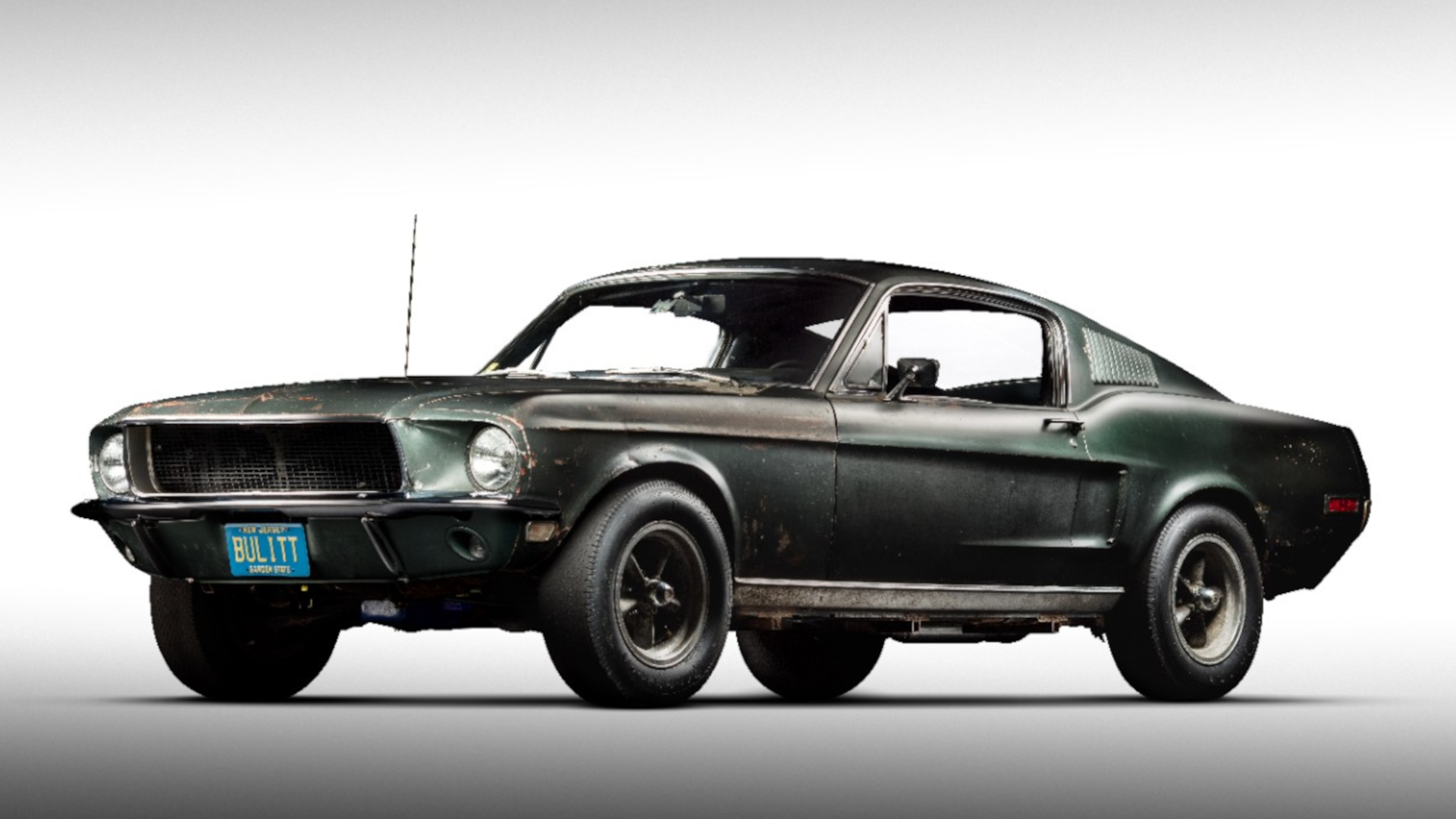
Ask most people what their dream car is, and they’ll name something they saw in a movie or on TV. Maybe James Bond had given them a love for Aston Martins, or Miami Vice had them saving up for a Ferrari, or Death Proof sent them down the rabbit hole of classic muscle car movies, and they fell in love with the cop-spec Dodge Polara seen in Dirty Mary, Crazy Larry. And who can forget the indelible role the Ford Mustang played in movies such as Bullitt or Gone in 60 Seconds?
-
Ford
Ford is one of America’s oldest automakers and one of the oldest in the world, popularized for being the first to effectively mass produce the automobile under Henry Ford with the Ford Model T. In over 120 years, Ford has become a sales leader in a variety of segments, with popular nameplates like the Ford F-150, Transit, and Mustang.
- Founded
-
June 16, 1903
- Founder
-
Henry Ford
- Headquarters
-
Dearborn, Michigan, USA
- Owned By
-
Publicly Traded
- Current CEO
-
Jim Farley
-
Aston Martin
Aston Martin is a luxury sports car and supercar manufacturer from Britain with a history spanning more than 110 years. Famous for models including the DB series, Vantage, and Vanquish, the brand’s current lineup includes the DBX SUV, DB12, Vantage, Vanquish, Valkyrie, and Valhalla. Though Aston Martin has gone through a number of ownership changes in its century-long history, it’s found stability currently as a publicly traded entity, with Canadian businessman Lawrence Stroll owning a controlling stake in both the road car and Formula 1 divisions.
- Founded
-
15 January 1913
- Founder
-
Lionel Martin, Robert Bamford
- Headquarters
-
Gaydon, United Kingdom
- Owned By
-
Publicly Traded
- Current CEO
-
Adrian Hallmark

Movies and television offer automakers an opportunity to show the public what their products can do, and landing a starring role can help to put a new car on the map or turn attention to an overlooked cult favorite. But, the process of actually selecting a car for the screen is more complicated than you might guess.
The following overview is based on various news articles pertaining to cars featured in movies, with any opinions or conclusions provided thereupon being those of the author.
A Brief History Of Cars On Film
Thomas Edison’s 1900 short Automobile Parade is just what it sounds like, a parade of automobiles filmed in Rhode Island. Where things start to get fun is in the very first car chase ever put to film, which was probably in Marriage by Motor, or The Runaway Match, a 1903 silent short that follows a young couple eloping while the bride-to-be’s father gives chase, a plot line roughly similar to that of Fury Road, with Immortan Joe chasing after his escaping wives. But, Fast and Furious it ain’t. The entire chase scene consists of five shots, with the characters boarding their vehicles, the father’s car breaking down, and the happy couple driving off to the wedding.
The father’s car breaking down out of nowhere in Marriage by Motor is the kind of thing that would put the kibosh on a product-placement deal in this day and age, but for the first half of the 20th century, cooperation between film studios and automakers was fairly limited. The idea of working with producers directly in order to get your cars featured in their movies likely started in the 1960s, when the automakers in Detroit started providing Hollywood with free cars.
Modern Brand Deals First Kicked Off In The 1960s
It’s a great idea. The studio gets a bunch of cars, and the automaker gets to advertise in a major motion picture, all without either company having to pay the other a dime. The problem was these cars were given away or loaned out with no real oversight of how they would be used. In some instances, the cars never even made it to the screen, with executives using them as their daily drivers or even gifting them to their mistresses. When cars were loaned out, they might have come back in pieces after being featured in a spectacular stunt sequence.

Related
10 Cool Cars From The Marvel Cinematic Universe
A quick guide to the coolest Marvel cars.
By the 1980s, American and European automakers had gotten to be a little more careful about the who, when, where, what, and how of doing business with Hollywood, giving rise to a whole industry of agencies working to strike a deal between filmmakers and carmakers.
Let’s Make A Deal
Product placement for automakers involves a lot of data analysis and boardroom negotiation that the public isn’t privy to. It’s almost like determining which name goes first on the movie poster and whose face is bigger: if they don’t let us take a look at the contracts to determine exactly how those choices are made, our knowledge of the process will always remain limited. But, the people who make these deals have let a few details slip over the years.

Related
Vin Diesel Confirms LA And Awesome Cars For Fast & Furious XI
Welcome back to some of the OGs, in their OG setting.
What Are The Rules?
Speaking to Yahoo! last year, John Kellaway, a product placement specialist at Brand Infusion, shared some interesting insights on how entertainment and automotive companies might come to an arrangement:
- The deals almost never involve cash payments. It’s almost always an exposure-for-use trade.
- Producers typically have to guarantee a certain amount of coverage. That is, if Alfa Romeo loans you a 4C Spider, you can’t just have the hero sprint past it during a foot chase.
- Auto manufacturers usually do some pre-release marketing of their own to tie in with the movie, usually for around three weeks leading into the premiere. The marketing rollout is usually handled independently on the automaker’s side and on the studio’s side, but the effort is mutually coordinated.
- Scripts are carefully studied before agreements are made. It might not even be anything that reflects poorly on the car, but an association they don’t want people to make. Kellaway cites a TV scene where a major character is put in the trunk of a car and then killed off by the bad guys, stating that this nixed the entire deal simply because they didn’t want the car to remind potential buyers of a favorite character’s grisly demise.

Related
Jurassic Park Cars: 9 Best Cars From The Iconic Dinosaur Film Franchise
We all know the Jeep Wrangler YJ from the original wins.
While automakers generally prefer that their cars go to the heroes of a movie, and not the bad guys, exceptions can be made if the bad guy steals the car. According to Frank Devaney in an older Los Angeles Times interview “I would say no to a drug dealer or a kidnapper(…) But if a bad guy steals the car, why not? It’s not his car.”
The filmmakers, meanwhile, generally run the cars through their own audition process, just like actors. There will be screen tests to make sure that Vin Diesel actually looks cool behind the wheel of a 1987 Buick Grand National, and to ensure that the car can meet the necessary performance requirements, and simply match the look and vibe of the film.
Sometimes, It’s Simply Up To The Director
All of this stuff about brand deals and product placement applies when the studios and the automakers are willing to do business. Sometimes, that’s completely beside the point, because, at the end of the day, freedom of speech tends to trump trademark claims, at least as far as American civil liberties and intellectual property laws are concerned. This means that if Steven Spielberg has an ax to grind with Ford, and he wants to make a movie about how the Ford Escape is the worst SUV ever made, there’s nothing Ford can do to stop him. The only catch is that Amblin Entertainment will have to foot the bill for their own vehicles.
For many filmmakers, product placement doesn’t even come into the equation. Quentin Tarantino has made his share of car movies, and the vehicles he showcases are frequently chosen for completely aesthetic or sentimental reasons. The 1964 Volkswagen Karmann Ghia seen in Once Upon A Time In Hollywood, for instance, was selected simply because that’s the car his stepfather used to drive.

Related
How The Tucker Torpedo Influenced The Automotive Industry Decades After Its Demise
This forgotten hero never made it to large-scale production but left a very important legacy behind.
A movie like Tucker would be exempt from the product-placement conversation entirely, as the movie follows the rise and fall of an automaker who went out of business decades before the film started shooting. This was another car chosen for sentimental reasons, as director Francis Ford Coppola’s own father had actually invested in the fledgling Tucker Corporation back in the 1940s, and Coppola saw a lot of himself in Preston Tucker, going on to call Tucker his “most personal film.”
Being among the most expensive things to produce, movies and cars both sit at the intersection of art and commerce, with the final product in both industries depending on countless creative and financial decisions. But, sometimes you have Jeff Bridges drive a 1973 Ford Torino just because it suits him – and because John Goodman couldn’t fit in the Chrysler LeBaron the Coen Brothers planned for Bridges to drive in The Big Lebowski.
Sources: LA Times, Yahoo!, Slant Magazine.