The 2025 Hyundai Santa Cruz is the only Hyundai truck, and so the base model, with an MSRP of $28,750, is the cheapest Hyundai pickup on sale. This makes it significantly less expensive than most other pickup trucks on the market today. But then the Santa Cruz is already a bit of an oddity in the world of pickups, due to the compact size and unibody construction it shares with the Tucson crossover. While the Ford Maverick is an obvious rival to the Santa Cruz, Hyundai’s cheapest equivalent car has a lot to offer at a similar price.
Hyundai
Hyundai Motor Company was founded in 1967 by Chung Ju-yung, 20 years after the birth of the Hyundai Engineering and Construction Company. The automotive marque’s first model was the Cortina, birthed with the help of Ford in 1968, while its first self-developed car arrived the year after as the Pony. Since then, the company has found success with affordable cars and has consistently become known for reliability and value. Nowadays, its ventures vary from combustion, hybrid, all-electric, and hydrogen mobility solutions to robotics.
- Founded
-
29 December 1967
- Founder
-
Chung Ju-yung
- Headquarters
-
Seoul, South Korea
- Owned By
-
Hyundai Motor Group
- Current CEO
-
Jae-Hoon Chang
Therefore, it makes more sense to compare the cheap base models of these two – priced within a whisker of each other – to find out whether, in the world of cheap Hyundai cars, the car-like truck or the more conventional crossover is the smarter buy. The comparison also makes sense when you consider that Hyundai doesn’t even refer to the Santa Cruz as a truck, preferring to call it a Sports Adventure Vehicle. In the end, the least expensive Hyundai Santa Cruz and Tucson are more similar than they appear at first glance, so let’s delve into the differences between them.
This is an on-paper comparison looking solely at the base models of the Hyundai Santa Cruz and the Hyundai Tucson and comparing them to see which is the smarter buy. All facts and figures have been sourced from the Hyundai website.
Design: The Same But Different
While the Santa Cruz is, in one sense, a Tucson with a truck bed instead of a traditional closed trunk, Hyundai has done a good job of styling them both to look like distinct models. The 2025 update saw both models gain a more purposeful, square-jawed front end, but the Santa Cruz has circular wheel arches and softer lines along the side, with the name stamped onto the rear tailgate, giving it a more simple, utilitarian look.
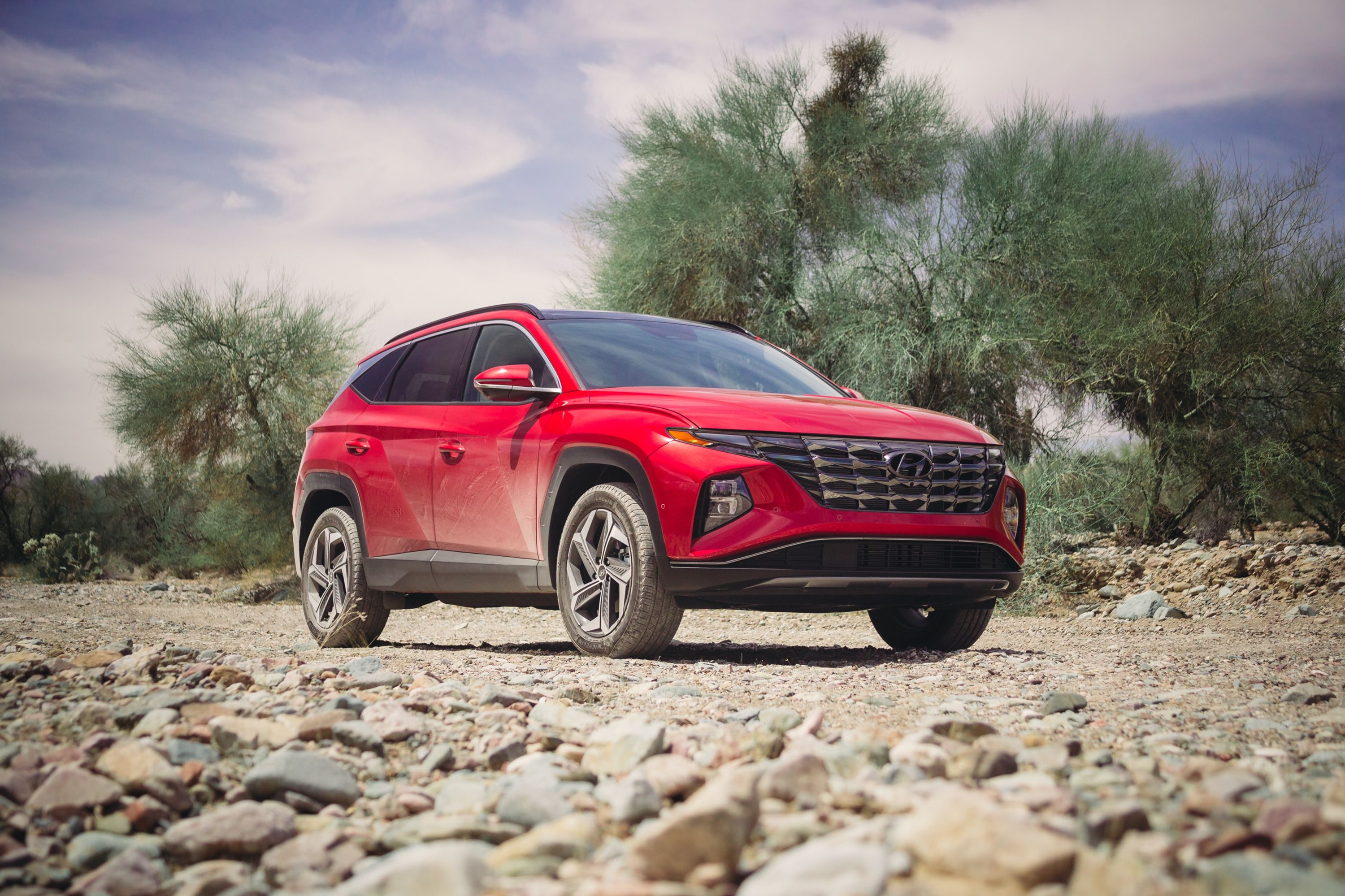
The Tucson, while also benefitting from the 2025 visual upgrades, remains a stylish choice in the competitive small SUV segment with sharp angles, chrome accents towards the rear, and striking front and rear lights. The geometric design of the wheel rims also marks out the Tucson from its pickup sibling.
Santa Cruz Is For Standing Out
Which vehicle has the better design largely depends simply on whether you’re looking for a pickup or an SUV. However, the two cars being a similar size means they both work in an urban environment. The fact that the Santa Cruz is a pickup that’s the same size as a car is bound to make it stand out, making the Tucson a better choice for those who want to blend in with everyone else.

Related
There Are Only 2 Pickup Trucks Left In America For Under $30k
We’re down to just two pickups in the US available under the $30,000 mark.
-

2025 Hyundai Santa Cruz SE FWD
- Year
-
2025
- MSRP
-
$28,650
- Engine
-
2.5L Smartstream I4 ICE
- Horsepower
-
191 HP @6100 RPM
- Torque
-
181 lb.-ft. @ 4000 RPM
- Maximum Towing Capacity
-
3,500 lbs.
-
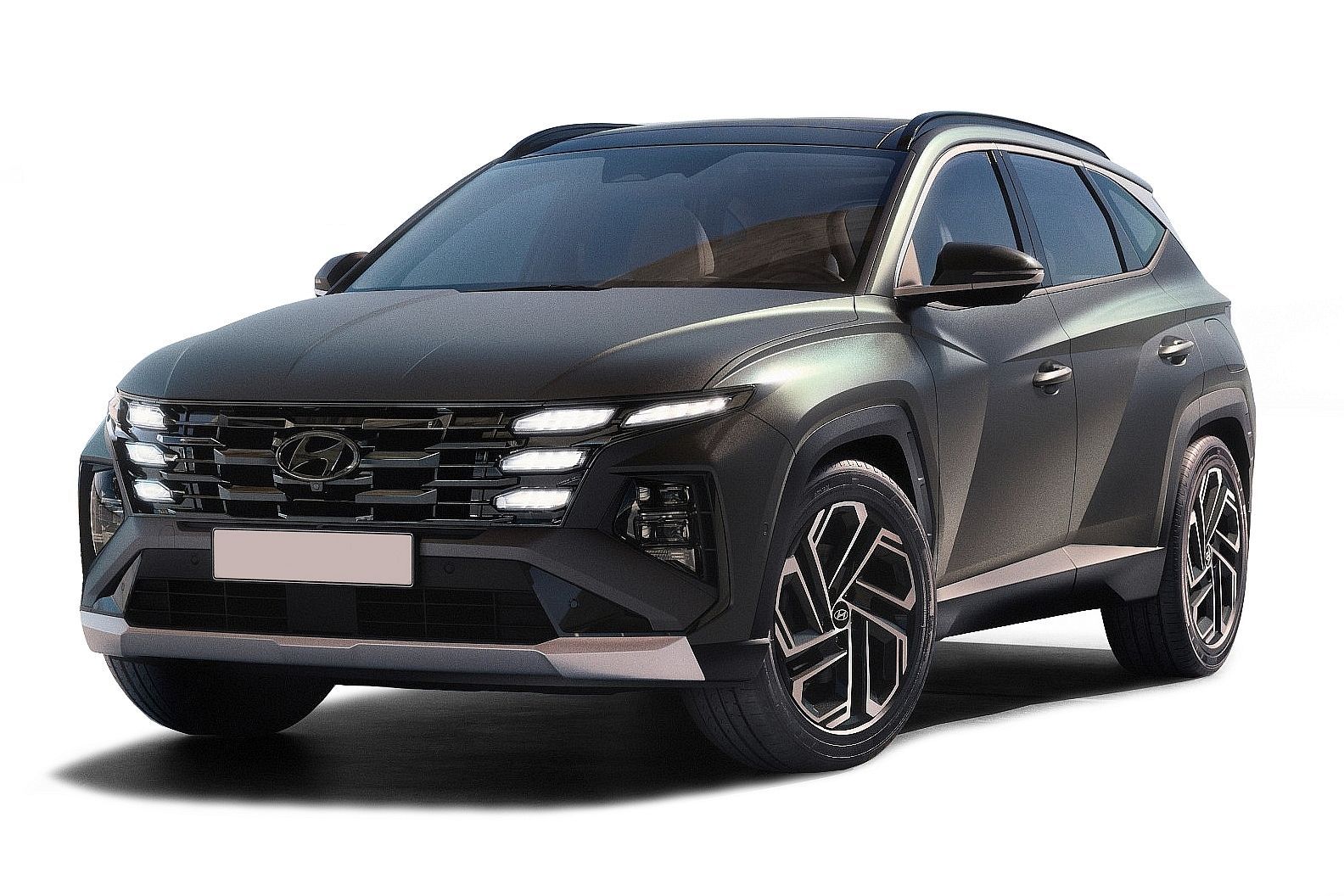
2025 Hyundai Tucson SE FWD
- Year
-
2025
- MSRP
-
$28,605
- Engine
-
2.5L Smartstream I4 ICE
- Horsepower
-
187 HP @6100 RPM
- Torque
-
178 lb.-ft. @ 4000 RPM
- Maximum Towing Capacity
-
2,000 lbs.


Performance And Powertrains: Both Share The Same Lackluster Base Engine
While both the Tucson and Santa Cruz are both available with different powertrains, including hybrid options for the Tucson, for the purposes of this comparison, we will just be looking at the base engine they both come with. It is a 2.5-liter non-turbocharged four-cylinder engine which, in the Tucson develops 187 horsepower and 178 lb-ft of torque, but in the Santa Cruz, it is tuned to make 191 hp and 181 lb ft.
This engine is fine for driving around town but when you venture beyond city limits, the engine runs out of steam, making it less than ideal for hauling along the freeway or, in the case of the Santa Cruz, heavy pickup work. In either car, it will get you from zero to 60 mph in not much less than nine seconds and, in the case of the Santa Cruz, the towing capacity is 3,500 lbs – much less than the 5,000 lbs of the available turbo petrol engine.
“Handling stood out with a smooth, quiet ride and minimal wind and road noise, even at higher speeds. It’s not a sporty vehicle, but it does handle well.”
– Nicole Wakelin, Editor-at-Large, CarBuzz (2025 Hyundai Tucson test drive)
Overall, this engine works better on Hyundai’s cheapest Tucson model, it being a crossover and therefore less likely to be bought for heavy-duty use. It is still sprightly around town and gas mileage is 28 mpg on the combined cycle with front-wheel drive, bettering the FWD Santa Cruz’s combined figure of 25 mpg.
“What we weren’t surprised about, having spent quite a bit of time in Tucson and Santa Fe models on dirt roads, is how well the [Santa Cruz’s] suspension deals with a bit of rough and tumble – specifically as you pick up speed and the suspension is operating at higher frequency. Add that stability and the suspension’s ability to control the body, and the new tires finish the equation.”
– Ian Wright, Senior Road Tester, CarBuzz (2025 Hyundai Santa Cruz XRT first drive)

Related
Now Is The Perfect Time For A Hyundai Santa Cruz N
The arrival of the Maverick Lobo could signal the resurgence of street trucks – and we have our fingers crossed!
Interiors And Space: New Design Meets Usual Car-Truck Tradeoffs
Step inside and the benefit of choosing the 2025 version of either of these cars immediately becomes apparent. Both cars got the same redesign of the interior which features higher-quality materials, and a welcome return of a volume knob and physical climate controls. Standard tech includes USB-C charging, a rearview camera, and a 12.3-inch curved touchscreen with wireless smartphone mirroring.
In terms of passenger space, the front of both vehicles has a lot of it, but the need for a pickup bed in the Santa Cruz does eat into rear passenger space just slightly. As you might have guessed, cargo space is one of the biggest differences between the two cars. The Tucson has a trunk offering 38.7 cubic feet of cargo space with the rear passenger seats folded up and 74.8 cubic feet with them folded down.
“Time spent inside the Santa Cruz feels essentially like being in a Tucson. And that’s a good thing. There’s more space than you think a compact truck would have, particularly in the back.”
– Ian Wright, Senior Road Tester, CarBuzz
While the Santa Cruz only offers 27 cubic feet of cargo space with the tonneau cover closed, there is far more space for taller items and the maximum payload is 1,411 lbs. There are also clever cubbyholes underneath the floor of the bed and in the sides.
Overall, unless you need to store large, particularly long items and need lots of closed cargo space, the Santa Cruz offers the most versatility for cargo storage and can carry more outdoor equipment you wouldn’t normally put in the trunk of a car. Then again, the Tucson will be more secure for valuables when the cars are parked.
|
Total Interior Volume |
|
|---|---|
|
Santa Cruz |
101.8 Cu. ft. |
|
Tucson |
146.9 Cu. ft. |
|
Passenger Interior Volume |
|
|
Santa Cruz |
101.8 Cu. ft. |
|
Tucson |
108.2 Cu. ft. |
|
Closed Cargo Space |
|
|
Santa Cruz |
27.0 Cu. ft. |
|
Tucson |
Rear Seats up 38.7 Cu. ft. |
|
Rear Seats down 74.8 Cu. ft. |
|
1:06

Related
Video: Hyundai-Badged Chevy Pickups Could Soon Be A Thing
Hyundai wants something bigger than the Santa Cruz, and GM needs Hyundai’s vans. Win-win.
Verdict: Tucson Is Great Value At Any Price, Santa Cruz Needs Fleshing Out To Become A Proper Pickup
It’s plain to see that there is almost as much that is the same between these two base model cars as what is different. They both have the same platform, interior design, and engine, and they have similar styling cues.
Either the Tucson SUV or the Santa Cruz truck are great value, starting under $30k, and they can both be specified to end up costing over $40k.
Overall, if we are just comparing the cheapest Hyundai Truck and comparable car, the Tucson looks like the better option, and it is because you have to spend a lot more money to really get the best out of the Santa Cruz. The more expensive versions can tow more, have chunkier tires, and can do more off-roading if fitted with the optional all-wheel drive.
Base Tucson Is The Best Buy
The Tucson, meanwhile, being a small SUV, is a great buy no matter what your budget is, as even the base model looks smart and has a good amount of standard equipment. While the turbocharged engine offers more grunt and the hybrid and plugin hybrid powertrains offer more efficiency, the base engine should be fine unless you need to do lots of overtaking on the interstate.
At this price point, the car on which the Hyundai Santa Cruz is based does edge it.
Source: Hyundai