Once a niche for enthusiasts, classic cars have soared in popularity over the past decade. It could be that the inundation of software and hybrid systems in new cars (and the complexity those bring) is turning buyers more and more toward classics. It could also be that classic cars have proven to be an excellent hedge against inflation, with many investors having entered the space, especially when we’re talking Porsche 911s or anything with a Ferrari badge attached.
Lamborghini
- Founded
-
1963
- Founder
-
Ferruccio Lamborghini
- Headquarters
-
SantÁgata Bolognese
- Owned By
-
Audi
- Current CEO
-
Stephan Winkelmann
Whatever the case, classic cars today are big business, and automakers are either establishing or expanding official classic car departments to cater to them. Lamborghini is no exception, having launched Polo Storico in 2015 to not only offer restoration services for owners of its classics, but also to help preserve the brand’s historical heritage for decades to come.
Lamborghini’s Official Classic Car Department
In the past, restoration work or maintenance on classic cars traditionally involved specialist firms that often focused on a single brand or vehicles from a specific region. Today, however, classic car owners can go directly to the automaker that originally built the car. This shift offers numerous benefits – chief among them the fact that the automaker is likely to have access to the original plans and designs, and may also have spare parts or established relationships with the original parts suppliers.
This last point is especially important to collectors, who often strive to keep their classic cars as close to their original state as possible. That’s what makes official classic car departments, such as Lamborghini’s Polo Storico – located at the automaker’s headquarters in Sant’Agata Bolognese – so vital in the classic car world. The desire for authenticity goes beyond just parts and specifications, as it even extends to the original methods and processes used during restoration in many cases. Think aluminum body panels being hammered and rolled into shape.
Lamborghini considers any model no longer in production to be a classic, and its Polo Storico department oversees a vehicle restoration center capable of handling all types of restoration and maintenance. It can even recreate a classic car from scratch – as it did in 2021, when it reconstructed the very first Countach: the Countach LP500 prototype that debuted at the 1971 Geneva Motor Show. The original car was used for crash testing around 1974, after which it fell off the radar.
Multiple Services On Offer
The operations of the Polo Storico department can be grouped into four main areas:
- Maintaining the company archives,
- Conducting inspections and certification,
- Performing restoration and maintenance, and
- Supplying spare parts.
In addition, the department occasionally organizes owner meets, often held in locations known for scenic driving routes or at famous racetracks around the globe.
The archives are central to many of these operations, as they contain not only sketches and original technical drawings, but also detailed production records for every car Lamborghini has ever built, and insights from former staff. This allows owners to discover the exact specifications their vehicle had when it left the factory. The archives sometimes also include invoices and correspondence, providing a historical record of each car.

Related
The Truth About Classic Car Ownership
Is owning a classic car really worth it, or are you signing up for trouble?
An additional service offered is the certification process. Owners can have the authenticity of their classic Lamborghini and its parts evaluated by a team of specialists. If the vehicle meets the required standards, Polo Storico will issue a certificate verifying its originality. Such certification is especially valuable when selling a car, as it provides official documentation of provenance.
Lamborghini also draws on its archive materials to develop new spares for its classic models. The company says that it currently offers components covering over 65 percent of its historic fleet – a figure that continues to grow each year. Every model is supported, from the original 350 GT to the Huracán and Aventador, the most recent vehicles to join Lamborghini’s classic car lineup. These parts are available for purchase at any authorized Lamborghini dealership.
Polo Storico’s Greatest Hits
Over the past decade, Lamborghini’s Polo Storico department has handled numerous restoration and certification projects. Among the most notable is the aforementioned recreation of the original Countach LP500 prototype that debuted in 1971. To celebrate the car’s 50th anniversary, Polo Storico was commissioned by a loyal customer to essentially rebuild it from scratch. The team conducted 3D scans of the first production Countach to guide the reconstruction and collaborated with original suppliers, including paint manufacturer PPG, to recreate the correct shade of yellow, known as Giallo Fly Speciale. They also consulted several individuals who had worked on the original prototype, ensuring the recreation was as authentic as possible.
Another standout project was the full restoration of a 350 GT, Lamborghini’s first car. The specific car restored was the 15th example off the line. Polo Storico retained the original chassis, body panels, and engine, bringing them all back to optimal condition. Complicating things was the fact the car was one of the earliest examples built. It meant it had features that were shared with the original prototype but not used on later examples.

Related
The Liberty Walk Lamborghini Miura Takes Sacrilege To New Lows
There’s one less original example of the world’s first supercar.
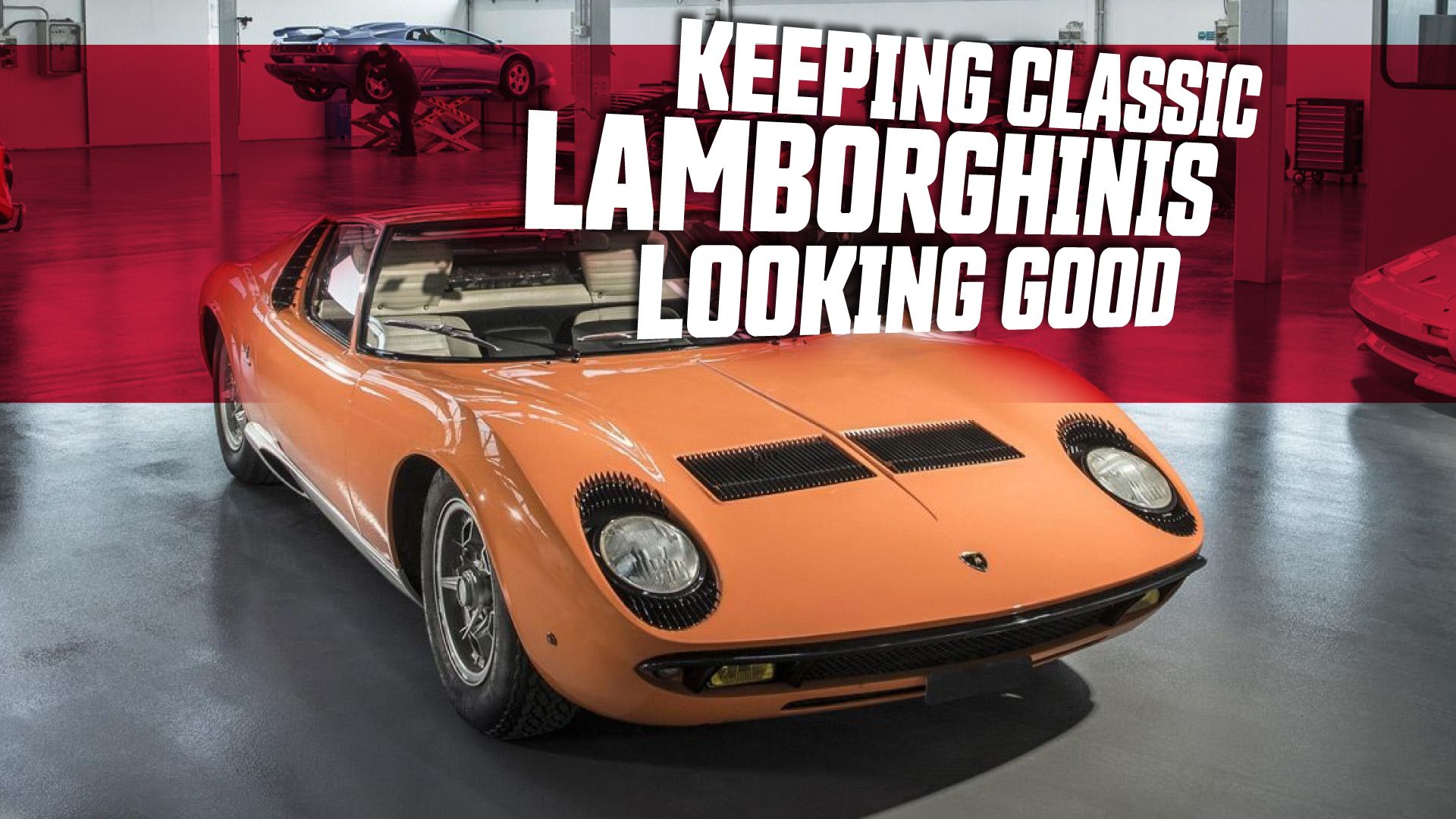
Polo Storico has also restored several iconic Miuras, including a 1972 Miura SV owned by former FIA President Jean Todt. Another high-profile project was the restoration of the orange Miura P400 featured in the opening scene of The Italian Job. A certification process confirmed it as one of two Miuras used in filming. Interestingly, the second car, which had been damaged before filming began, was used for the dramatic crash scene. A close look reveals the absence of the engine as the car tumbles down the mountain road – proof it was already stripped down before the shoot.
Equally impressive is the restoration of the Miura SVR, a unique car that began life as a Miura S. In 1974, it was transformed into the one-off SVR, inspired by the legendary Miura Jota developed by Lamborghini test driver Bob Wallace. The original Jota, created in 1970 as an experimental racing version, was destroyed in a crash the following year.
Polo Storico Won’t Do Recreations And Restomods

Although Polo Storico built a recreation of the original Countach LP 500 prototype for a loyal customer, don’t expect a repeat. A recreation, or continuation car, is when an automaker builds new versions of its classic models, sometimes using previously unused VINs or continuing the original sequence.
This is something Polo Storico won’t pursue, its chief, Giuliano Cassataro, revealed in an interview with The Drive published earlier this year. Cassataro explained that Polo Storico’s mission is to preserve Lamborghini’s history, not alter it.

Related
Evanta Aston Martin DB4 GT Zagato Recreation is a Stunning Piece of Work
Two-year project transformed DB7 Vantage supercar into a vintage Zagato.
Regarding the Countach project, Cassataro noted that it was a one-off case, justified by the fact that the original prototype had been lost. The recreated vehicle was an exact replica, down to specific details like non-functional features, for example the air intakes and pop-up headlights, which were purely esthetic. (Editor’s note: Perhaps that opens the door for a recreation of the long-lost Miura Jota one day.)
Cassataro also confirmed that Polo Storico has no plans to engage in restomod projects, despite the growing popularity of the trend. Restomodding involves modifying classic cars, typically to enhance their performance, esthetics, or technology, with modern components. Notable examples include Singer’s reimagined Porsche 911s and Everrati’s electric conversions of vintage vehicles. That said, Polo Storico is not entirely opposed to making modifications to classic Lamborghinis, provided those changes are period-correct and in line with the car’s original spirit.
Demand For Classics Continues To Flourish

As new car prices continue to soar – including in the high-end segment where even wealthy buyers aren’t immune to feeling the pinch – classic models are becoming increasingly attractive. This trend is only set to grow as automakers continue the shift away from internal combustion engines. For many enthusiasts, a classic car provides a reminder of a more visceral, analog driving experience that new cars, despite being more advanced, often lack.
In response, more manufacturers are investing in dedicated classic car departments. Ferrari Classiche and Porsche Classic helped set the standard, but now even mainstream brands like Toyota, Nissan, and Renault are recognizing the value of heritage, with in-house parts programs and full restoration support.
By keeping old bulls on the road, Polo Storico isn’t just preserving Lamborghini’s history, it’s ensuring future generations can taste the raw driving experience that helped make the brand iconic in the first place. And that’s a good thing.
Sources: Lamborghini, The Drive