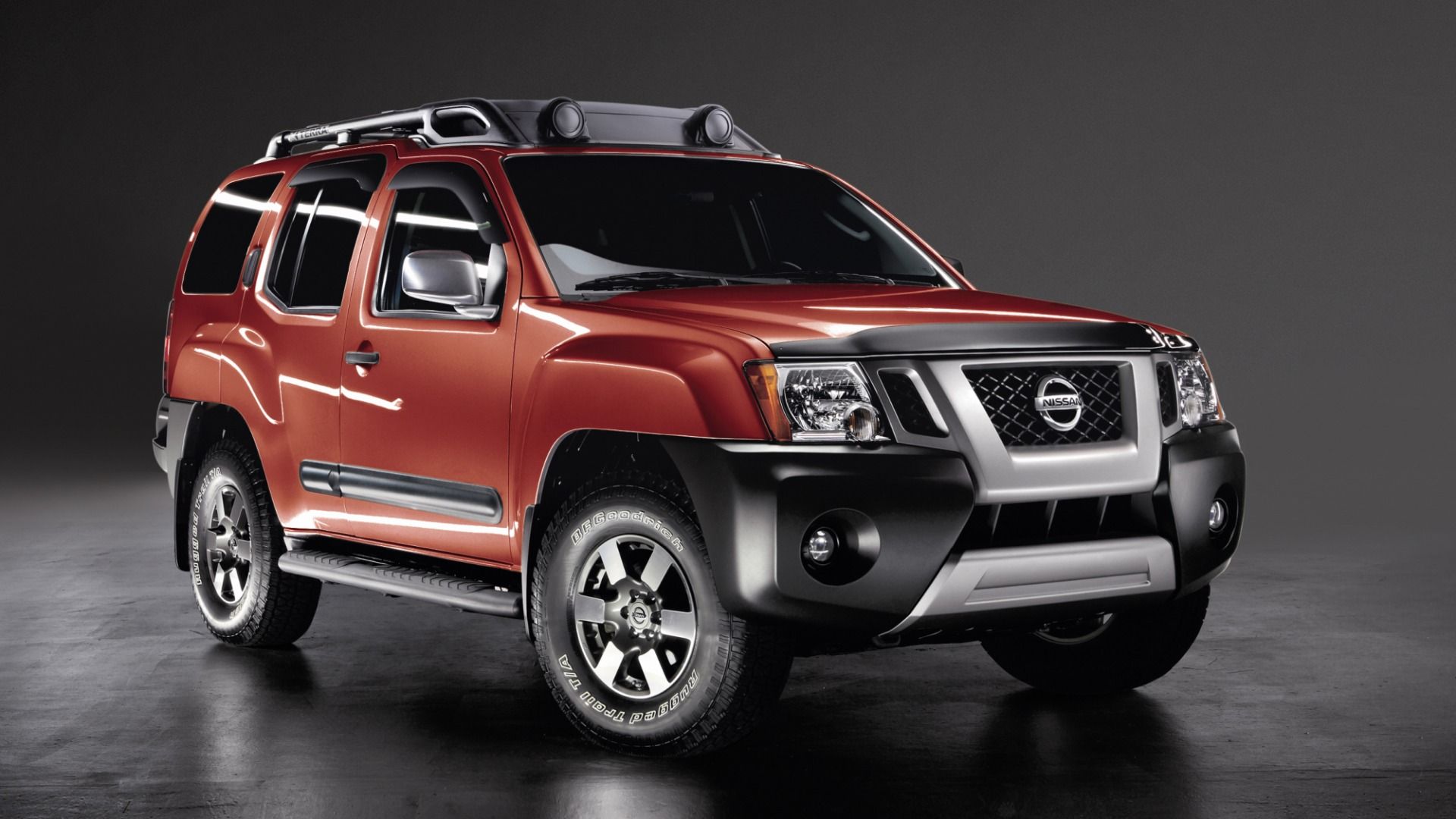
The Nissan Xterra was one of Nissan’s success stories from the 90s and 2000s – serving as the first Nissan vehicle fully developed, made, and sold in the United States. Whereas other Nissan SUVs like the Nissan Pathfinder evolved to become more luxury and on-road focused, the Xterra was designed to remain true to its utilitarian, off-road roots – prioritizing ruggedness over comfort, yet remaining fairly affordable.
Nissan
Nissan Motor Corporation is a Japanese automaker founded in 1933 and the parent automaker of Infiniti and formerly Datsun. Nissan produces a wide variety of mass-market vehicles, including popular SUVs like the Rogue, sedans like the Sentra, and trucks like the Nissan Frontier, but is also responsible for iconic sports cars like the Nissan Z and GT-R. Since 1999, Nissan has been part of the Renault-Nissan-Mitsubishi alliance (the name changed when Mitsubishi joined in 2016).
- Founded
-
26 December 1933
- Founder
-
Yoshisuke Aikawa
- Headquarters
-
Nishi-ku, Yokohama
- Owned By
-
Publicly Traded
- Current CEO
-
Ivan Espinosa (as of 1 April, 2025)
Though it no longer remains in production, the Nissan Xterra remains a beloved vehicle among 4×4 enthusiast crowds and owners. As adventurous types may be eyeing a Nissan Xterra to serve as their next workhorse, the following piece will aim to highlight the Nissan Xterra’s best years, as well as the most troublesome.
Reliability data has been sourced from the NHTSA. Recalls and complaints listed, as well as feedback from consumer surveys, have been taken into account. Authoritative sources are listed at the end of the article.

Related
How The Nissan Xterra Was Designed In One Hour
Sometimes great design is the work of a moment.
Nissan Xterra History
With a name taken from the triathlon series of the same name, the Nissan Xterra first debuted for the 2000 model year. The first generation, known as the WD22, used a combination of underpinnings and body styling from the Nissan Frontier pickup truck, to form its own five-door SUV model. Engine options included a 2.4L inline-four cylinder and a 3.3L V6, mated to a four-speed automatic transmission or five-speed manual. Later models added the option of a supercharged V6 for additional pulling power.
The second-generation Nissan Xterra arrived for the 2005 model year. It was built on on Nissan’s F-Alpha truck platform shared with the Armada and Titan, and styling cues were shared with the third-generation Pathfinder. Engine choices were now reduced to one option, a 4.0L naturally-aspirated V6, paired to either a manual or automatic transmission. The second generation also introduced a ‘Pro-4X’ variant that brought additional equipment to improve the off-road ability of the Nissan SUV – including an electronic lockable rear differential, Bilstein suspension, and additional ground clearance compared to the standard Xterra models.

Related
Nissan Xterra Generations: Everything You Need To Know In One Place
Talk a look back over the Nissan Xterra’s 15-year production run by visiting each generation and facelift.
The N50-gen Xterra remained relatively unchanged throughout its entire production run, with minor updates within its later years to introduce more up-to-date connectivity features and styling tweaks. The Xterra was retired from Nissan’s product lineup by the 2015 model year, as more stringent emission and average gas mileage requirements, combined with slowing sales, made it hard to justify keeping the nameplate alive.
|
Nissan Xterra Generations and Key Specs |
||||
|---|---|---|---|---|
|
Generation |
Model Years |
Engine Options |
Transmission |
Key Features |
|
1st Generation (WD22) |
2000-2004 |
2.4L I4, 3.3L V6, 3.3L supercharged V6 |
4-speed automatic, 5-speed manual |
|
|
2nd Generation (N50) |
2005-2015 |
4.0L naturally-aspirated V6 |
5-speed automatic, 6-speed manual |
|
The Best Nissan Xterra Years
As a product of a Japanese company, build quality is expected to be one of the Nissan Xterra’s many strengths. We believe these specific model years are the most trouble-free. To decide what we believe are the best years for the Nissan Xterra, we’ve reviewed owners’ complaints, NHTSA recall data, in addition to reputable sources like J.D Power, CarFax, and RepairPal.
We recommend doing as much due diligence as possible when shopping for a secondhand Nissan Xterra – even among those that display low mileage or claim to have a detailed service history. This could extend to having a pre-purchase inspection performed by a qualified service technician or mechanic, which will allow you to get as much transparency about the true condition of the Xterra you intend to purchase.
2003 Nissan Xterra (WD22)
For those eyeing some of the least expensive Xterra examples available, the 2003 first-generation Xterras are some of the best years they can buy. Though the cabin tech and features may be quite outdated, the mechanical state of the running gear of this Nissan SUV is reported to be robust, even as some are now more than 20 years old, with minimal complaints from owners. Three recalls issued according to NHTSA that surround the build quality of drivetrain components are worth checking up on, but any serious issues should be a very rare occurrence.
The late model first-gen Xterras not only should have better build quality compared to made during the first-gen’s initial production years, but also have beneficial improvements like optional side airbags, Nissan’s Vehicle Dynamic Control (VDC) with Traction Control, and a redesigned instrument cluster. First-gen Xterras also have the most flexible powertrain options, from the base four-cylinder up to the supercharged V6.
2003 Nissan Xterra Reliability Overview
- NHTSA Number of Recalls: 3
- NHTSA Total Number of Complaints: 72
- CarComplaints Total Number of Complaints: 12
- RepairPal Reliability Rating: 4/5
- J.D. Power Quality and Reliability Rating: N/A

Related
10 Used Luxury SUVs That Won’t Be A Maintenance Nightmare
These Are The Best Used SUVs For Reliability From $9,000 to $90,000
2013 Nissan Xterra (N50 Generation)
We would also recommend the 2013 Nissan Xterras as one of the better years to buy. No serious complaints or recalls are reported according to NHTSA, and CarFax states these examples should have a minimal likelihood of requiring significant repairs. With the 2013 Xterra, equipment such as Bluetooth Connectivity and a reversing camera began making their appearance on the Nissan SUV, especially on the top spec and off-road oriented Pro-4X models that also brought in their performance enhancements like raised suspension, 16-inch alloy wheels with BF Goodrich T/A-grade tires, and Hill Descent Control (with Hill Start Assist on automatic transmission models). Xterra buyers are guaranteed to get a solid and well-built example from this model year.
2013 Nissan Xterra Reliability Overview
- NHTSA Number of Recalls: 0
- NHTSA Total Number of Complaints: 4
- CarComplaints Total Number of Complaints: 2
- CarFax Likeliness of Repairs: 20%
- RepairPal Reliability Rating: 4/5
- CarFax Estimated Annual Cost of Repairs: $340 per year
- J.D Power Quality and Reliability Rating: N/A

Related
Best Nissan SUVs If You’re On A Budget
Discover the best Nissan SUVs under $40K that tick all the boxes for practicality, frugality, and safety.
2015 Nissan Xterra (N50 Generation)
The 2015 Xterra is the best pick of the bunch. This model has a high J.D. Power quality and reliability rating of 79/100 and a very low likelihood of requiring repairs, according to CarFax. These late second-gen models boast a healthy reliability and owner satisfaction record, in addition to the latest series of revisions Nissan did to the Xterra before the SUV was retired altogether from their lineup. This included a more up-to-date (at the time) touchscreen NissanConnect infotainment with Mobile/Bluetooth connectivity, the option for heated front seats, and steering wheel-mounted volume controls.
Buyers of 2015 Xterras also have the option of enjoying one of the few remaining SUVs that could be paired with a desirable manual transmission. This is easily one of the best Xterra years to consider.
2015 Nissan Xterra Reliability Overview
- NHTSA Number of Recalls: 0
- NHTSA Total Number of Complaints: 10
- Car Complaints Total Number of Complaints: 8
- CarFax Lilkelihood of Repairs: 14%
- RepairPal Reliability Rating: 4/5
- J.D. Power Quality and Reliability Rating: 79/100

Related
Best V6 SUVs Of 2025
Whether with or without turbocharging and electrification, the V6 engine isn’t going anywhere anytime soon.
Nissan Xterra Years To Avoid
Though it is a solid SUV, the Xterra is not without some known issues and faults it has encountered throughout its entire production run. Hence, we would avoid these specific model years of the Nissan Xterra due to the severity of the reported recalls or issues.
2008 Nissan Xterra (N50 Generation)
If you want a dependable example of the Xterra, we recommend avoiding those made in 2008. This year of the first-gen Xterra was subject to a potential hazard affecting the safety restraint system – namely the emblem on the driver’s airbag cover that could become a projectile when the airbag inflated, possibly injuring occupants.
“Nissan North America, Inc. (Nissan) is recalling certain 2008-2011 Titan, Frontier, Xterra, Pathfinder, Armada, and 2008-2009 Quest vehicles. The resin emblem on the driver’s air bag cover may develop cracks and detach during air bag deployment.” – NHTSA Campaign Number 23V067000
An earlier recall was issued to address a potential issue affecting those sold or registered in certain US states that used road salt, causing the non-deployment of the driver’s and passenger front airbags in a crash due to inoperative impact sensors. Though the Xterra was one of the Nissan models that escaped the infamous Takata airbag inflator recall, we would advise you to check if these airbag-related issues have been addressed.

Related
Nissan Recalls Over 400,000 Vehicles Due To Airbag Emblems Detaching
It could detach when the airbag deploys.
2005 Nissan Xterra (N50 Generation)
From data available on NHTSA and CarComplaints, the 2005 Xterras are the most troublesome out of all years, and are best to be avoided. These examples made during the beginning of the second-generation Xterra’s production run, being very early models, are more susceptible to issues that would normally be resolved by revisions made in later years.
“The 2005 Nissan Xterra has the most overall complaints, & we also rate 2005 as the worst model year, ranked on several factors such as repair cost & average mileage when problems occur.”
One of the most reported complaints from owners is transmission failure due to radiator fluid exposure (rooted in cracking/damage of the radiator unit itself), which usually calls for a full replacement unit. Overall, Car Complaints report that this issue occurs at an average mileage of 106,250 miles and can cost almost $4,000 to fix. Other complaints from owners include timing chain failure that could lead to complete engine failure, sporadic interior accessories problems (from non-functioning fuel gauges to cruise control and door locks working intermittently), and the exterior paintwork starting to peel off.

Related
Toyota’s Most Reliable SUV On Sale Today … And The Least
We crunched the numbers and found the most and least reliable Toyota SUVs for 2025.
Summary: An Overlander’s Best Friend
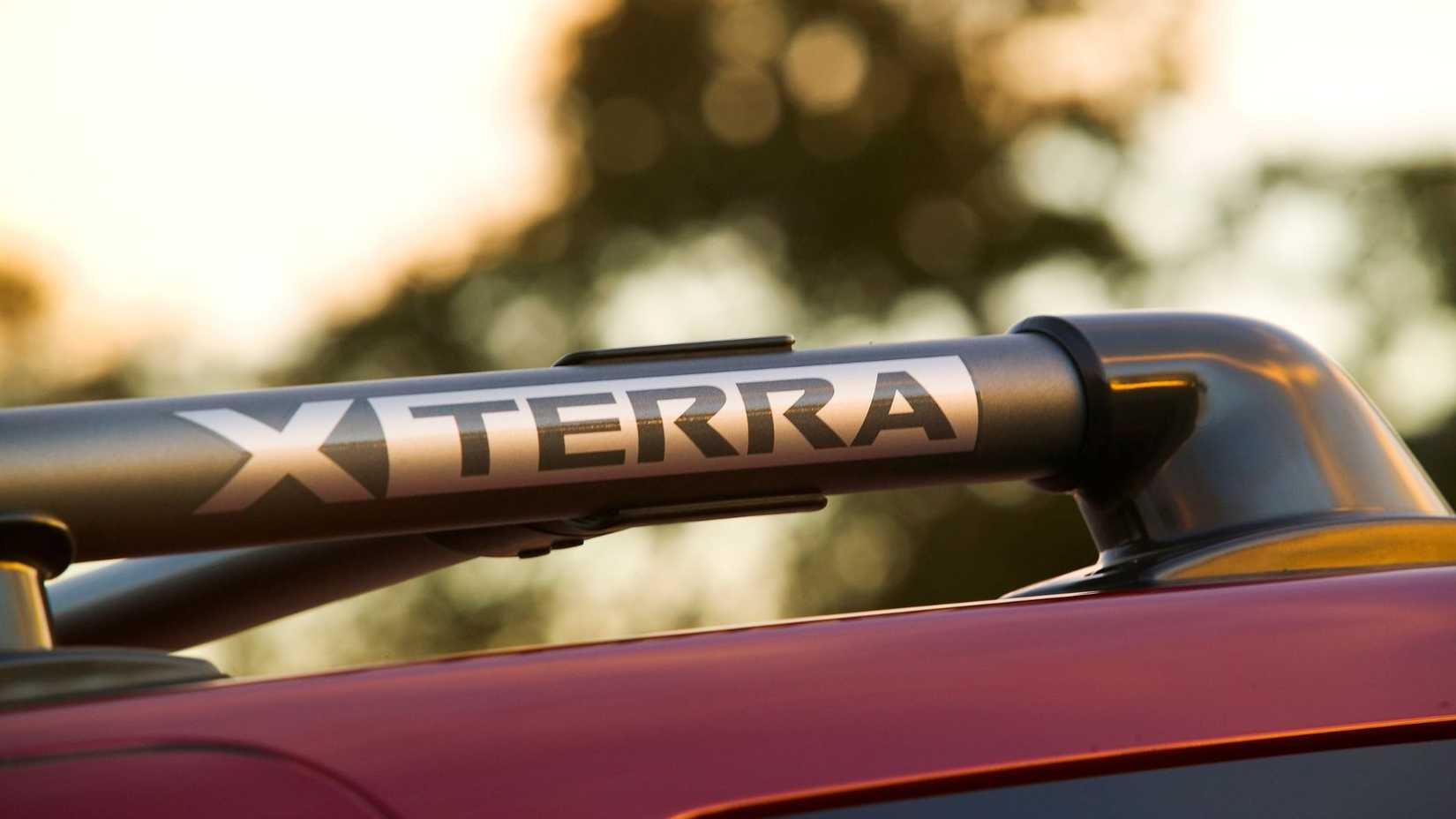
Today, most compact SUVs are crossovers with unibody construction. More rugged body-on-frame SUVs are typically reserved for larger, more expensive models, which is why the compact Xterra is missed. It’s possible to spend very little on a used Xterra in 2025, and maintenance costs shouldn’t be prohibitive for well-maintained examples.
Our recommendation is to go for late second-generation models, especially top-line Pro-4X Xterras, which benefit from more up-to-date equipment, better quality control compared to their earlier counterparts, and come with additional features onboard to improve their off-road ability. Whatever Xterra you may choose, there is no denying you will receive a very reliable vehicle suited for the outdoors.
Sources: Nissan, JD Power, NHTSA, Car Complaints, CarFax, RepairPal