Chevrolet has made some of the greatest engines ever to grace the highway, like the twin-turbo LT7 V8 found in the 2025 Corvette ZR1, and the LS engines that have powered any number of Camaros, Stingrays, and Pontiacs over the years. But, Chevy has also made some real clunkers.
One powerplant that may be able to claim the dubious title of worst Chevrolet engine ever made would be the Chevy 2300, a malaise-era inline-four that ran through the mid-seventies before being put out of its misery in 1977 for the Iron Duke, a more reliable motor that was known for its less-than-pleasing engine notes. The 2300 was innovative for its time, but in the same way that a failed experiment is innovative. Here’s why you don’t hear a lot of gearheads singing this engine’s praises.
Chevrolet
Founded in 1903, Chevrolet is one of America’s oldest remaining legacy automakers. Acquired by General Motors in 1918, Chevrolet is the core GM brand responsible for the bulk of GM’s US sales. As a mass-market manufacturer, Chevrolet competes in multiple key segments, primarily the SUV and truck segments, but also sports cars and mainstream sedans and hatchbacks (until recently). Core models for the brand include the Silverado, Colorado, Suburban, Camaro, and Corvette.
- Founded
- November 3, 1911
- Founder
- Louis Chevrolet, Arthur Chevrolet, William C. Durant
- Headquarters
- Detroit, Michigan, United States of America
- Owned By
- General Motors
- Current CEO
- Mary Barra
Why Nobody Wants A Used Chevy Vega
|
1971 Chevrolet 2300 Engine Specs |
|
|---|---|
|
Engine |
2.3-Liter 4-Cylinder |
|
Power |
90-110 hp |
|
Torque |
136-138 lb-ft |
|
Bore x Stroke |
3.501 x 3.625 inches |
|
Compression Ratio |
8:0.1 |
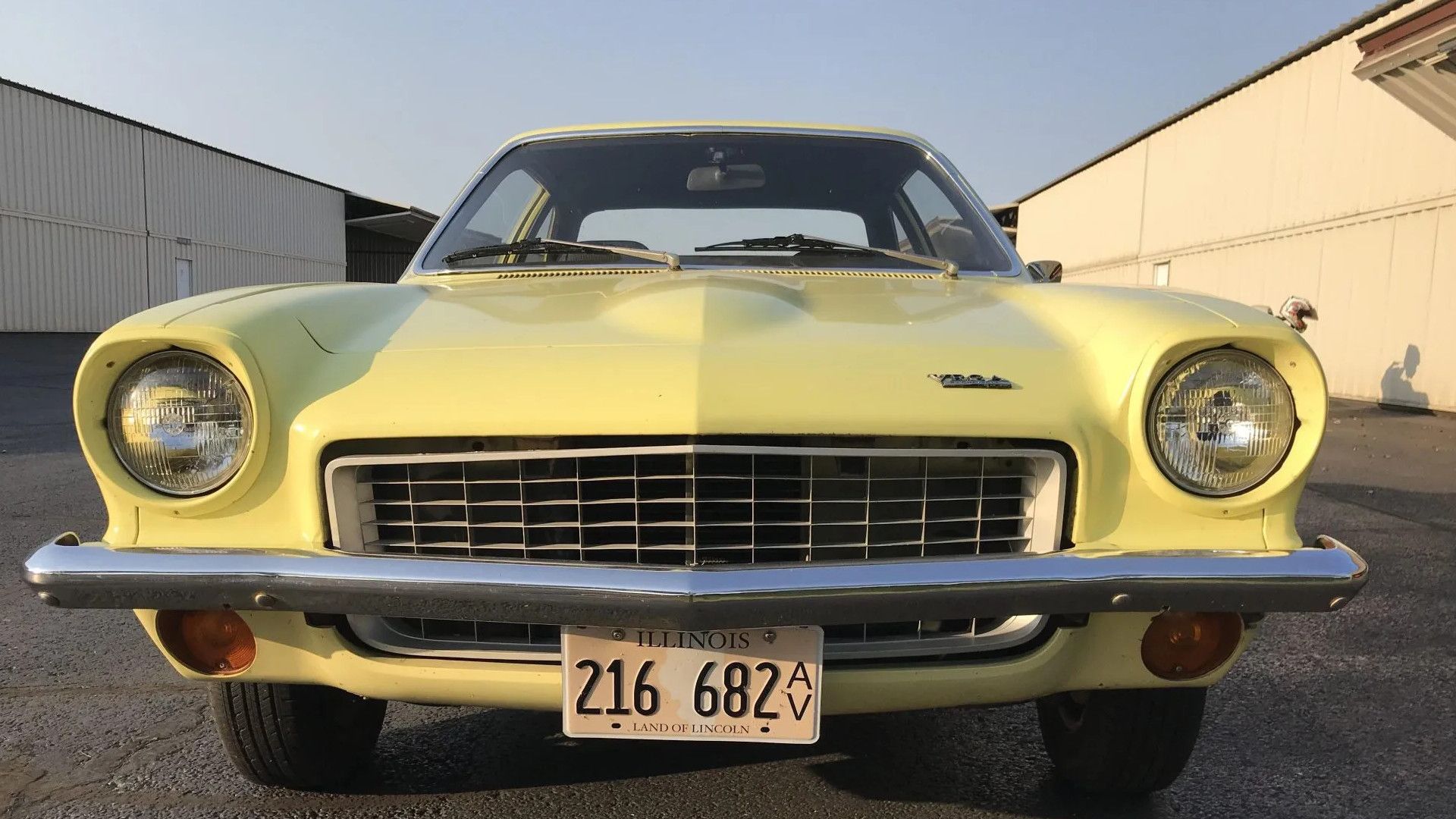
To take a glance at the 1971 Chevrolet Vega’s engine specs, the 2300 looks like a decent early-seventies four-cylinder. A base power output of 90 horses wasn’t bad for a two-door coupe in 1971. To be clear, the 2300’s issues have nothing to do with performance. It was a capable engine for its time, but you couldn’t count on it, and the 2300 was known for overheating and early breakdowns, with many Vega owners reporting their engines totaling at well under 50,000 miles. Recalls covered around six in seven of these early models, with drivers being equipped with all-new engines.

Related
8 Most Disappointing Muscle Cars Ever Made
From the ugliest muscle car ever made to the ones that forgot to include muscle.
The 2300 uses an aluminum block engine and cast-iron cylinder heads, a weird combination to begin with. The blocks were produced with an A-390 alloy, made up of 17% silicon, for faster, cheaper engine production. This was paired with some unusual engineering decisions, and low-quality parts, including:
- The early 2300s had no water-cooled radiator.
- When GM added a water-cooled radiator in 1974, it was totally insufficient to cool the engine.
- Valve stem seals were known to break early, resulting in the engine burning oil.
- The engine had no coolant recovery tank.
- The engine was mounted low in the bay, resulting in poor air circulation for an already heat-prone engine.
Add that all together and there’s no nice way of putting it: the engine was a piece of junk, doomed to become a 285-pound paperweight after just a few years on the road. The early 2300s were known for “melting.” They wouldn’t literally melt, but they would get so hot that the cylinders would actually deform.
For the 1976-1977 engines, Chevrolet gave the 2300 a significant overhaul with redesigned water pumps and thermostats, improved coolant pathways, high-quality valve-stem seals and a host of other tweaks and adjustments. They even sold the car with a 60,000-mile warranty, and renamed the engine the Dura-Built 140, but it was too late. The Vega had a reputation as a clunker by now, and it would be silently retired after the 1977 model year.
If you track the sales numbers for the Chevy Vega, you’ll see a strong peak of 460,374 units sold in 1974, and then, as the car’s problems became apparent, that number would drop significantly year after year, until Chevy was only able to sell 78,402 units in 1977. That’s enough units to keep you alive in a niche segment, but it can’t support the subcompact that was supposed to redefine the American auto industry.
Can It All Be Blamed On The Engine?
The 2300 was a lousy engine, but, to be fair, there was a lot to dislike about the Chevrolet Vega itself, and there’s a reason that the late-stage improvements made to the 2300 weren’t enough to save this mid-seventies clunker.
One issue with the Vega was that it was prone to corrosion, especially in the wheelwells, rocker panels, suspension, doors, and under the front fenders, owing to defects in the Vega’s new rust-proofing system, and Chevy rejecting plastic fender liners in order to cut costs. Additionally, the Vega’s rear axle shaft could separate, resulting in wheels falling right off the car.
The problems with the Chevy Vega really come down to a production level. The plant at Lordstown was tasked with producing one Vega every 36 seconds, when the going rate was more like one car per minute. The resulting quality was considered “acceptable,” but not without defects.
Innovation is a good thing. But the Chevy Vega is a clear illustration of what happens when you try to innovate and cut corners at the same time. Chevy was in a hurry to rush a segment-leading American subcompact out the door to keep drivers out of Hondas and Toyotas, and the result was a pretty spectacular failure of a car stretched over seven model years.

Add CarBuzz to your Google News feed.
Was The Development Of The Chevy Vega Cursed?
Like any new nameplate, the Chevy Vega had its share of development hiccups along the way to market. For instance, the Chevrolet Engine Group had been working on an L-11 prototype engine since 1968, a lighter, smaller engine than the 2300, with hemi combustion chambers and better performance specs. The engine got all the way to the point of manufacturing tooling being built before GM scrapped it.
A Wankel rotary engine was proposed next, a development project costing GM $50 million in 1970 dollars. This, too, was scrapped, owing to the engine’s meager fuel economy potential.
Ultimately, the failure of the Vega has less to do with a run of bad luck or scrapped development ideas, and more to do with bad management. You can afford to go through some trial and error when you have a reasonable development deadline and clear production goals. The Vega was supposed to be made fast and cheap, only after burning through tens of millions of dollars in development costs.
Are The Cosworth-Powered Chevy Vegas Any Good?
Head out to a classic car show, and you might actually see a Chevy Vega in very good condition. That may come as a shock if you know these cars as the rust-buckets with the melting engines, but they didn’t all pack a 2300. Besides the 1976 and 1977 models with their Dura-Builts, Chevy also packed 3,508 of these with 122 cid Cosworth inline-fours from 1975 to 1976. If you see a Vega humming along without black smoke billowing from under the hood, it’s probably running on one of these 2.0-liter four-pots (that, or a total engine-swap for an LS).
The Cosworth found in the Vega was based on the 260-hp racing engines that powered Chevron and Lola cars to a series of wins, lacking only that engine’s dry sump lubricating system. The Cosworth produced a respectable 110 hp and 107 lb-ft of torque, and proved to be a far more reliable engine than the 2300.
Cosworth Vega buyers still had rust and loose wheels to worry about, but with an engine that wouldn’t burn out at a mere 50,000 miles.

Related
The Most Potent Engines Cosworth Ever Produced
Cosworth has developed many engines for Formula 1, IndyCar, track-only hypercars, and more, but what are the most powerful engines they’ve made?
Sources:
Popular Mechanics
,
Department of Transportation