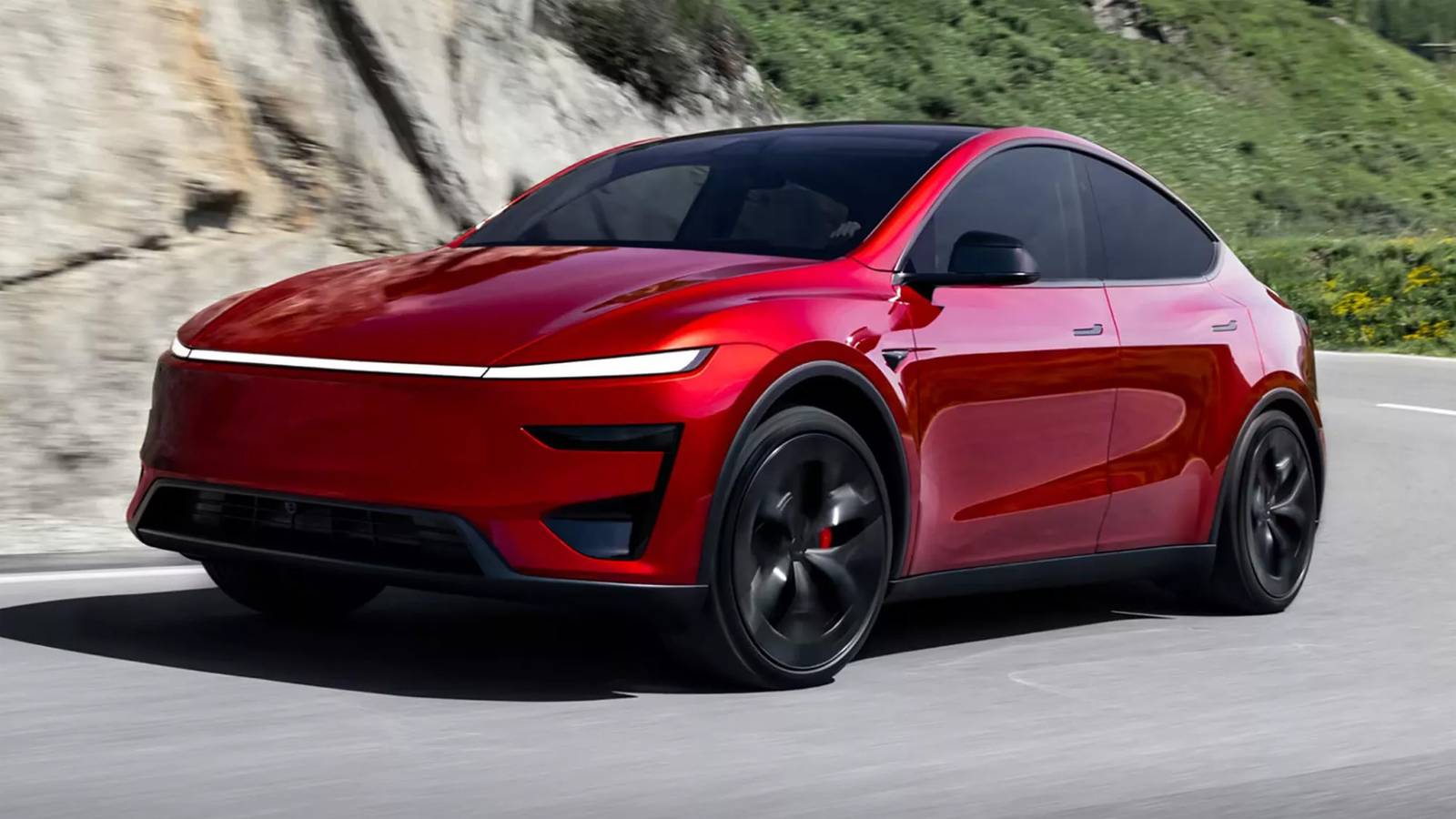
Tesla and Hyundai are emerging as the real heavyweights in the high-performance EV crossover world. With the latest Model Y Performance and the Ioniq 5N, these dual-motor, all-wheel-drive vehicles now have acceleration figures that you would once only get from exotic supercars. However, there are some quite sharp differences between these two cars and, as such, it’s good to take a closer look at both of them to see what type of customer the companies are trying to attract.
The Tesla Model Y Performance was unveiled in Europe last week. The figures in this feature are based on the Euro-spec model, and may change once the car arrives in the USA.
Two Big Performers And Two Different Philosophies
|
Specifications |
2026 Tesla Model Y Performance |
2026 Hyundai Ioniq 5N |
|---|---|---|
|
Engine |
Dual electric motors |
Dual electric motors |
|
Transmission |
Single-speed automatic |
Single-speed automatic |
|
Drivetrain |
All-wheel drive |
All-wheel drive |
|
Power |
460 hp (est) |
601 hp |
|
Torque |
487 lb.-ft (est) |
568 lb.-ft |
|
0 – 60 mph |
3.3 secs |
3.3 secs |
|
MSRP: |
$52,490 |
$66,100 |
Tesla has updated its Model Y Performance to help the company refine its bestselling EV SUV. The “Juniper,” according to its internal name, now has upgraded suspension and some chassis revisions to make it much sharper. However, the interior still remains quite minimalist, even with some revisions, and the company is clearly placing its focus on practicality, good integration, and effortless performance. On the other hand, Hyundai doesn’t want to be minimalist or subtle at all, and it’s going all in with its 5N. The company clearly wants to make its top-of-the-range EV as fun as possible with some outrageous features and performance tweaks.
Performance And Driving Dynamics

The 2026 Model Y Performance now delivers a zero to 60 time of 3.3 seconds due to chassis refinements and software tuning. It’ll cover a quarter mile in about 12.2 seconds and deal with any undulations or corners along the way with great effect. It now has an adaptive suspension, which is a significant improvement over the previous fixed suspension approach. And for the 2025 iteration, the company has taken its already impressive performance persona and polished it with good results.
Meanwhile, at Hyundai, designers are not so much concerned about outright speed but certainly want drivers to have fun along the way. The 5N and its dual motors now churn out 601 hp as standard, but you can get an additional 40 horses if you push the bright blue N Grin Boost button. You’ll get to 60 mph in 3.25 seconds with some testers showing figures below the three-second mark. Your 5N should get you to 123 mph in about 11.1 seconds, which is faster than the Tesla in that respect, but the really big difference comes in the journey.
Tesla’s Model Y Performance may feel well composed along a twisty backroad with its new adaptive dampers and if you choose “track mode” you’ll get more granular control. It’s very precise with little in the way of drama, and it’s very capable, giving you some surgical speed with guardrails in place. By contrast, the Ioniq 5N has features like a rear electronic limited slip differential that can dynamically shift power when in motion. There’s a rear-bias torque split, an electronically controlled adaptive suspension setup, and massive 15-inch front brakes. If you can get to a nearby track, you can engage a “drift mode” to hold some ludicrous angles while the electronic differential keeps the power flowing to compensate. There’s also a simulated gear shift feature and steering paddle capability, while you can get synthesized engine notes through the N Active Sound+ feature. So, the Model Y should be more silent and efficient as it demolishes the road ahead, while the Ioniq 5N wants to turn every twisty canyon road into a stage.
Real World Usability

In the range and charging fields, Tesla wins hands down. The Model Y Performance has a very energy-dense battery pack, so you should get more than 277 miles of EPA range, which will be an improvement over the outgoing car. You’ll only get about 220 miles with the Ioniq 5N though, which may be due to a lot of those trick performance features. When it’s time to charge, the Model Y Performance supports up to 250 kW on the company’s renowned Supercharger network, so you can easily get about 150 miles within a quarter of an hour with very little mess around. Still, the Hyundai Ioniq 5N has its own 800V electrical architecture, which means that you can get charging speeds of up to 250 kW through compatible DC fast chargers. It ought to be able to charge up to 80% in around 18 minutes, but you still have to find a third-party charging station from the likes of EVGo or Electrify America.
From a practical view, the Model Y Performance offers 76 cubic feet of cargo space with a roomy frunk and an optional third row with limited capacity. The Ioniq 5N only offers 59 cubic feet of cargo space with no third-row option, although it does have a handy Vehicle to Load capability. Tesla can’t match that as yet and the Model Y is unable to power your campsite on your next weekend adventure.
Interior Experiences

Tesla is famous for its minimalist tech approach, and you’ll immediately get that impression when you step aboard the Model Y Performance. New for this version are a larger 16-inch display, sport bucket seats, and carbon fiber trim, which give the vehicle a slightly more premium feel, but again, without adding any clutter. Pretty much everything runs through the touchscreen, which you either love or hate as Tesla seems to prefer its tightly integrated ecosystem. Some people say that this is like driving a high-speed iPad on wheels and, if you’re new to the Tesla world, you may have to spend some considerable time to feel it all out.
Hyundai doesn’t like that approach at all. The 5N has its twin 12.3-inch display for infotainment and some readouts, but there are also plenty of physical controls, with bright N Mode toggles on the steering wheel. Up front, the dashboard has Alcántara wrapping, and you’ll find bolstered heated and ventilated seats. It seems that Hyundai wants to make its Ioniq 5N as modern as possible while displaying its cutting-edge tech and presenting everything in a usable package.
Values and Pricing

For many people, the checkbook will make the decision and here, Tesla may win big. The 2026 Model Y Performance is expected to start at roughly $53,000 if we follow Tesla’s pricing patterns in the USA. Before destination fees and, for a very limited time, it still qualifies for the full $7,500 federal EV tax credit. However, buyers will need to sign a contract and make a deposit before the end of September this year to lock these savings in, even if the delivery happens later. We’re not sure if the USA will get the opportunity, as the 2026 Model Y Performance was not live on Tesla’s website at the time of publishing.
The 2025 Ioniq 5N starts at $66,100 before destination and, because it’s an import, the EV tax credit doesn’t come into the picture. So, if you’re buying right now, there’s a huge difference in price between the two.
The Final Verdict

The 2026 Tesla Model Y Performance is very pragmatic. It’s incredibly fast, spacious, and efficient, and you’ve got an unrivaled charging ecosystem to back everything up. The new model with its adaptive suspension and refreshed chassis is sharper than ever and its value proposition, especially before the tax credit deadline, is clear. Meanwhile, the 2025 Hyundai Ioniq 5 N is for you if you’re a driving enthusiast. It may not go so far on a charge, and it does cost a lot more, but this electric crossover is a bit of a throwback to a world where people could chase their thrills behind the wheel. So, in many respects, you could classify the Tesla as the silent assassin and the Hyundai as the wild hooligan. And if you’re a performance EV buyer, you can pay your money and make your choice.
Sources: Tesla, Hyundai.