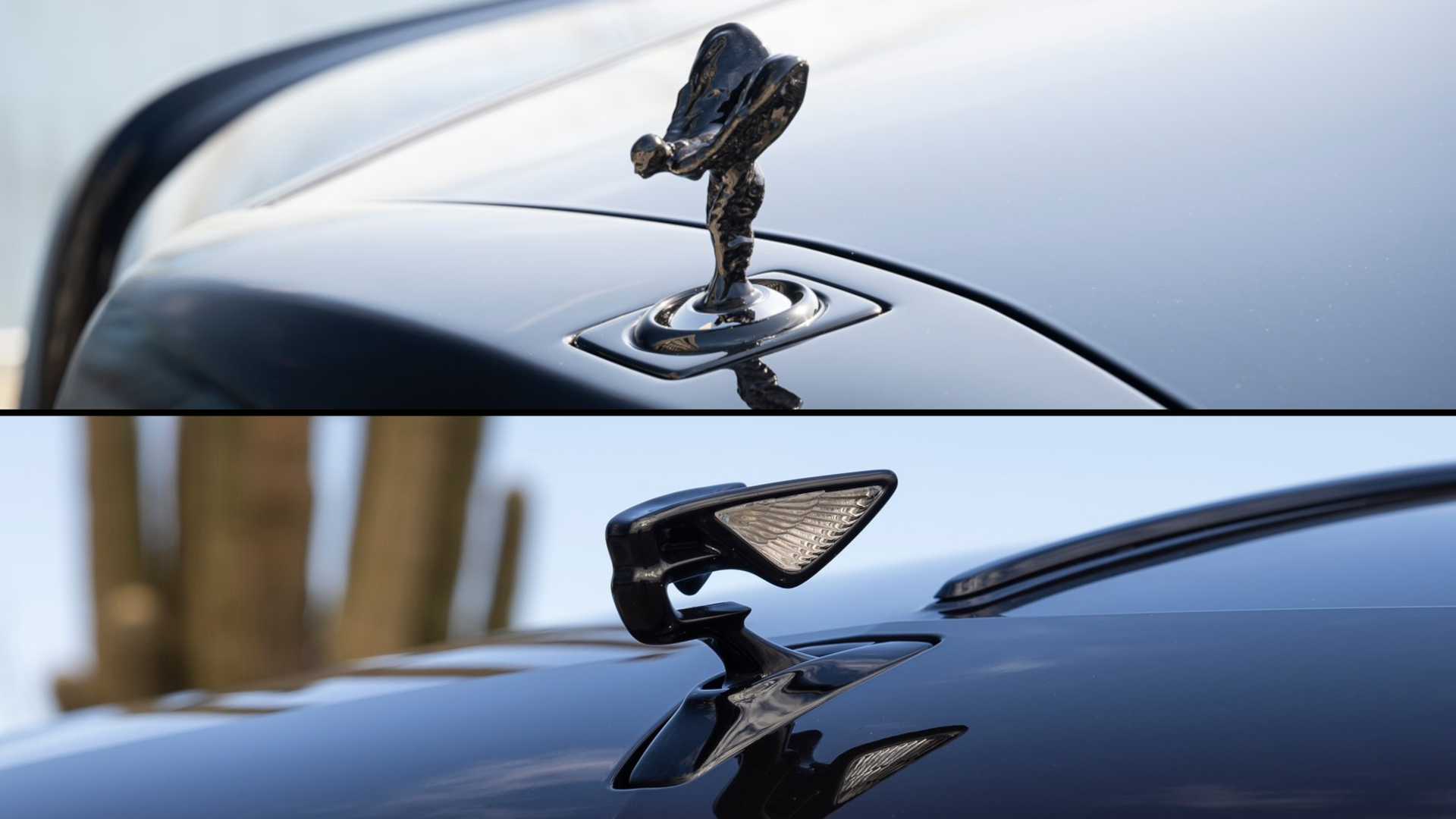
If you’re searching in the ultra-luxury automotive sector, Rolls-Royce and Bentley may be vying for your attention. After all, these two British manufacturers represent the pinnacle in terms of craftsmanship, prestige, and exclusivity and each one can make a powerful play for your dollar. However, if you’d rather not buy new and would prefer a used model, you may want to know which brand is likely to retain its value better over time. So, for this story, we compared two vehicles from each camp with a 2015 vintage to see what their resale values are like today. This allows us to assess just how good each manufacturer is when it comes to value retention and, crucially, to see who comes out on top.
- Base Trim Engine
-
6.6L Twin-Turbo V12 Gas
- Base Trim Transmission
-
8-Speed Automatic
- Base Trim Drivetrain
-
Rear-Wheel Drive
We wanted to know who would come out on top of a depreciation battle between Rolls-Royce and Bentley over a ten-year span. For this article, we referenced the manufacturer websites for original MSRP figures, turned to Kelley Blue Book for depreciation figures and cross-checked with other data sources where necessary. The figures in each table relate to a 2015 Rolls-Royce Ghost from our first comparison duel and a 2015 Bentley Continental-GT from the other. Any opinions in the article are those of the author.
Crowning a Winner
|
2015 Rolls-Royce Wraith Specifications |
|
|---|---|
|
Engine |
6.6-liter twin-turbo V12 |
|
Transmission |
Eight-speed automatic |
|
Drivetrain |
Rear-wheel drive |
|
Power |
624 hp |
|
Torque |
590 lb.-ft |
For the purpose of comparison, we looked at the 2015 Rolls-Royce Ghost and Wraith against their Bentley counterparts in the shape of the Flying Spur and Continental GT. So, we are comparing two luxury sedans in the first exercise and two grand tourers in the second. We looked at 2025 resale prices against original MSRPs to calculate depreciation rates, while considering market dynamics.
Based on the data, the 2015 Rolls-Royce models retain a slightly higher percentage of their original value than the Bentley equivalents after ten years. For example, the 2015 Rolls-Royce Ghost had a base MSRP of $295,850 and a 2025 resale value between $125,000 and $135,000, depending on condition. This indicates that the Ghost retains between 42 and 46% of its MSRP. Meanwhile, the Bentley Flying Spur went on sale at $195,100 and resells today for between $70,000 and $80,000, which is the equivalent of between 36 and 41%.
|
2015 Bentley Continental GT Specifications |
|
|---|---|
|
Engine |
4.0-liter twin-turbo V8 |
|
Transmission |
Eight-speed automatic |
|
Drivetrain |
All-wheel drive |
|
Power |
500 hp |
|
Torque |
487 lb.-ft |
Turning to the Wraith and Continental GT battle, the Roller again comes out on top. Its original price was $294,025, and it goes on sale today for between $130,000 and $140,000, which is a retention rate of between 44 and 48%. The Bentley Continental GT started at $198,500, fetching between $68,000 and $78,000 today and its percentage rate is between 34 and 39%.

Related
Who Is The King Of The Ultra-Luxury Segment: Rolls-Royce vs. Bentley
Both of these British brands boast an enviable reputation when it comes to handcrafting luxury cars – but which does it best?
Looking Closely at Methodology
To ensure that we made a fair comparison, we first focused on the market segment. The Rolls-Royce Ghost and Bentley Flying Spur are both ultra-luxury sedans, although the Ghost is generally seen as the company’s entry-level sedan, while the Flying Spur is probably Bentley’s flagship. Moving to the other segment, the Rolls-Royce Wraith and the Bentley Continental GT are both two-door grand tourers that combine a dynamic driving experience with opulent luxury. Here, the Wraith is Rolls-Royce’s driver-focused coupe, while the Continental GT is that company’s sportier offering.
We sourced the MSRP details from each manufacturer’s data and looked at Kelley Blue Book (KBB) for the current resale values. We wanted to reflect KBB’s fair purchase price approach and tried to normalize the data to vehicles with approximately 100,000 miles on the clock. We also targeted vehicles in average condition for the year, with standard specifications and no bespoke customizations. Still, there’s always going to be a spread in second-hand car costs which will vary based on a range of different criteria.
Depreciation Trends and Market Dynamics
Ghost Versus Flying Spur – the Luxury Sedan Showdown
The Rolls-Royce Ghost has lost an average of around $165,000 over this ten-year span, which gives it an annual depreciation rate of around 5.6%. Meanwhile, the Flying Spur has shed around $120,000 in value, with an equivalent rate of about 6.2%. The Ghost may win out in the head-to-head battle due to its limited production run or higher MSRP. After all, Rolls-Royce only produced about 1000 of these units per year versus several thousand over at Bentley. Lower mileage Ghosts, and especially those under 50,000 miles, will definitely fetch a premium, but values tend to stabilize as their odometer creeps up.
The Ghost definitely appeals to buyers who are looking for prestige, and it’s probably the ultimate luxury sedan. Rolls built each one by hand, and you could choose a variety of bespoke options, like wood veneers or custom leather, to enhance its desirability. On the other hand, the Flying Spur is not quite on the same level as the Ghost and, while opulent, it would often compete with rivals such as the Mercedes-Maybach S-Class. Bentley produced far greater numbers to reduce its exclusivity level, and while it was slightly quicker in performance terms than the Ghost, this doesn’t save it in the depreciation battle.
When it comes to ownership, high maintenance costs affect both models, as you’ll generally need to choose a certified dealer and budget for specialized parts. Your component bill may be lower on the Bentley side, but insurance and upkeep will still remain high.

Related
The Ultimate Twin-Turbo V12 Coupe Can Be Yours For Less Than A 2025 Mercedes-AMG GT
Could a used Rolls-Royce Wraith represent a great value proposition alongside a 2025 Mercedes-AMG GT63 Coupe?
Wraith Versus Continental GT in the Grand Tourer Clash
The Rolls-Royce Wraith loses around $160,000 of value over a decade, returning a depreciation rate of about 5.4% per year. Meanwhile, the Continental GT loses about $125,000, which equates to a rate of about 6.4%. Again, the stronger retention rate for the Wraith may be down to its relative rarity, with fewer than 500 units annually. Bentley produced thousands of the Continental GT per year, which increased market supply and would typically accelerate depreciation.
The Wraith is certainly in demand among collectors and has considerable bespoke appeal. Features such as coach doors and starlight headliners tend to enhance value. Meanwhile, the Continental GT also has to compete with models such as the Aston Martin DB11, and previous owners may tend to rack up the mileage, which could also lower resale prices. As with the previous pairing, both vehicles are relatively costly to own, although it’s a little easier to access parts for your Bentley. Each car will attract high insurance costs.
Why Rolls-Royce Holds the Edge
There’s a much tighter used car market for Rolls-Royce vehicles compared to Bentley, which is generally down to annual production figures. Demand for used Rolls-Royce models will often exceed supply, which will support higher resale numbers. Rolls-Royce also has a strong bespoke program offering customers unique features from embroidery choices to custom paint jobs. Bentley’s Mulliner customizations are also luxurious but may be somewhat less iconic and buyers seem to value that R-R individuality.
Although there’s plenty to admire about both brands, Rolls-Royce is probably the ultimate luxury badge, particularly in emerging markets. Bentley tends to have a slightly sportier image which could appeal to a broader audience, but perhaps less exclusive to slightly weaken ongoing values.

Related
Best Luxury Cars Of 2025
These cars do an exceptional job of pampering the driver and passengers.
Some Caveats
It is difficult to make generalizations and assess exact figures in this type of side-by-side exercise. Resale values will certainly vary by mileage, region, and condition and low mileage examples of these models will definitely fetch premiums. There again, special trims such as the Ghost V specification or Continental GT Speed would tend to hold their value better, when standard models tail off.
Rolls-Royce Takes the Top Step of the Podium
In 2025, ten-year-old Rolls-Royce models tend to outperform Bentley in terms of value retention. This may be down to limited production, bespoke craftsmanship, and perceived prestige, although the customer demographic may also be a little different. Original buyers may love the performance appeal of a Bentley if they are traditional driving enthusiasts, while those who simply want quality, luxury, and prestige may visit the Rolls-Royce dealer instead.
Sources: Rolls-Royce, Bentley, Kelley Blue Book, Mecum.