
Megtron 7N Improves Data Transfer Rates in PCBs
If you’re designing high-speed PCBs, one of your biggest challenges is ensuring that signals transfer with minimal loss and interference. A single lost signal could throw off the whole system, and that’s why it’s important to select a PCB material that’s engineered for maximum precision. Panasonic’s Megtron series of laminates are specifically designed to tackle this issue head-on. Think of them as the bodyguards for your signals, preventing interference from compromising signal integrity and allowing your circuits to operate at peak performance.
Megtron 7N is an advanced printed circuit board (PCB) substrate that offers a host of benefits for electronic designs, including superior electrical performance and reliability. It is ideal for use in cutting-edge consumer, automotive, and industrial electronics, as well as medical devices, owing to its exceptional signal transmission properties and robust mechanical strength.
Using Megtron 7N PCBs helps to improve data transfer rates by reducing circuit losses. The material’s low transmission loss minimizes current leakage, which can reduce the overall power consumption of the device and help to improve its energy efficiency. In addition, megtron 7n excellent thermal stability enables it to withstand extreme temperatures and harsh environments.
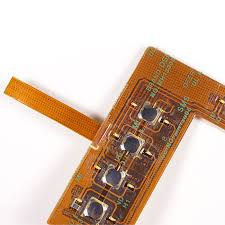
How Megtron 7N Improves Data Transfer Rates in PCBs
Megtron 8 is a multi-layer circuit board material that features the industry’s lowest transmission loss for this class of materials, which contributes to larger capacity and higher speed data communication. It also provides improved heat resistance and insulation reliability, which can reduce the power consumed by the equipment.
To achieve this level of performance, MEGTRON 8 utilizes Panasonic’s proprietary resin design expertise and material compounding technologies to combine ultra-low dielectric dissipation factor glass cloth with low-profile copper foil. This helps to improve the conductivity of the material and reduce transmission loss. It also possesses an excellent glass transition temperature and thermal decomposition temperature, providing good reliability in high-temperature environments.
In addition, MEGTRON 8 exhibits the same manufacturability and processability as Panasonic conventional product (*4) and can be manufactured with standard general multi-layer circuit board processes. It is ideally suited for high-performance, high-layer-count PCBs used in routers, switches, optical transmission equipment, servers, semiconductor test equipment, base stations, and probe cards.
Insertion loss is affected by temperature and humidity, so you should consider these factors when selecting a PCB material. In a typical FR-4 application, insertion loss can increase up to 8% when temperature increases by 2%. Megtron 7N has significantly lower insertion loss than other FR-4 laminates, such as Nelco N4000-13 EPSI and FR408HR, even in the same temperature range.
The key to optimizing a multi-layer circuit board is careful layer stackup planning. This ensures that the right amount of power is delivered to each component without overloading it. To maximize the performance of Megtron 7, it is recommended that you use controlled impedance layers. This will enable you to take advantage of the material’s superior electrical properties, including high voiding density, low dielectric constant, and low dissipation factor, while maintaining precise impedance matching.


