For many people these days, the Cold War is just a subject taught in school. The fact is, though, that it dominated the minds and hearts of nearly the entire globe for nearly five decades. The threat of nuclear annihilation weighed heavily on the majority of the global population until 1991, when the Soviet Union was finally dissolved, freeing several nations from the grasp of the communist Russian government.
Porsche
Porsche is a German sports car manufacturer and part of the broader Volkswagen Group since August 2012. Founded in 1931 by Ferdinand Porsche, the brand is most famous for the 911 line of sports cars, which first launched in September 1963. But it was the Porsche 356 that came first, and subsequently, Porsche has expanded its model lineup to include a variety of sports cars, supercars, SUVs, sedans, and even EVs. Porsche has a rich history in motorsport, with 19 outright Le Mans victories to its name, among various other titles.
- Founded
-
1948
- Founder
-
Ferdinand Porsche
- Headquarters
-
Stuttgart, Germany
- Owned By
-
Volkswagen
- Current CEO
-
Oliver Blume
While we don’t mean to make light of a dark time in modern history, the Soviets and Soviet-adjacent governments were hard at work creating cars for the East – cars many of us in the West never saw with our own eyes in person. There are loads of cars that were considered ordinary over in the Soviet Bloc. After all, citizens of the Soviet Union needed to get from point A to point B just like we all did in the free world, they just couldn’t do it in something like a Ford Escort.
The following 10 entrants were chosen based on the relative rarity in the West, not necessarily their rarity in their countries of origin. Specs outlined in the tables below denote each model’s base powertrain.
1
Lada Riva
|
Engine |
1.3-liter inline-four |
|---|---|
|
Horsepower |
65 hp |
|
Torque |
68 lb-ft |
|
Production Timeframe |
1979–2012 (Russian Production) |
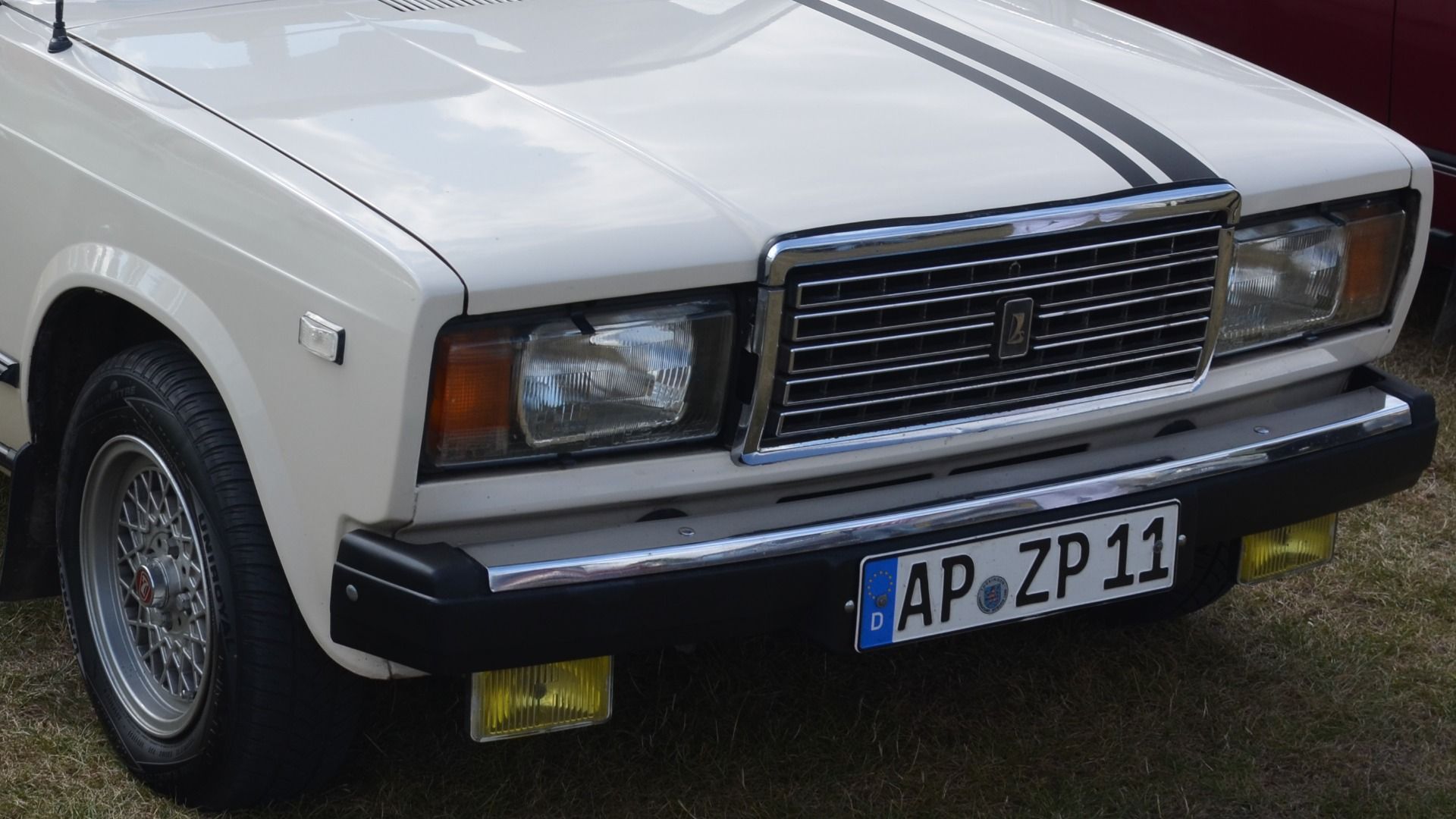
First on our list is the Lada Riva, a car that went by many other names, depending on which Soviet or Western market it was sold in. The Riva was based on the Fiat 124, and built under license from the Italians using a design quite close to the original. However, the Russians made their own tweaks to the design so that it would better cope with the harshness of Russian communist roadways.
2
GAZ-24 Volga
|
Engine |
2.4-liter inline-four |
|---|---|
|
Horsepower |
95 hp |
|
Torque |
137 lb-ft |
|
Production Timeframe |
1970–1978 |
If you were a bit better off in the USSR, you may have had the chance to pick up a GAZ-24 Volga, an executive car built for the middle-class masses. Folks such as Moscow-based bankers, politicians, and the like would have driven one of these. While it lacks the same flair as some more Western executive cars such as the ones coming out of BMW or Cadillac at the time, it was one of the crème de la crème models in the Soviet Bloc during the 1970s.

Related
How Porsche Helped The Soviets Build Cars During The Cold War
The story of an the unlikely collaboration between Porsche and Lada.
3
Lada Oka

|
Engine |
0.6-liter inline-two |
|---|---|
|
Horsepower |
33 hp |
|
Torque |
N/A |
|
Production Timeframe |
1988–2008 |
The Lada Oka, another car to go by several different names depending on the market it was destined for, was designed during the time of the Soviets, but it lasted long after the Union’s dissolution. It was a simple city car, meant for the masses in towns such as St. Petersburg or Moscow. It took advantage of an engine with just two cylinders, a mill you’d more likely find in a motorcycle rather than an entire car. Still, the Oka became popular due to its affordable price tag, and soon became the “people’s car” in it’s home country.
4
Lada Niva
|
Engine |
1.6-liter inline-four |
|---|---|
|
Horsepower |
75 hp |
|
Torque |
89 lb-ft |
|
Production Timeframe |
1977–Present |
One of the longest-lasting nameplates without a redesign, the Lada Niva, was introduced in 1977, or 48 years ago. It was meant to be a car for those who lived off the beaten path, without access to a repair center, or even a town to purchase spare parts in. The Niva’s mission was to be as ruggedly simple as possible, and require the least amount of specialty tools or parts to continue running. It’s no surprise that it’s been in production for so long, as it’s one of the more sought-after Ladas.
5
UAZ-452
|
Engine |
2.4-liter inline-four |
|---|---|
|
Horsepower |
75 hp |
|
Torque |
110 lb-ft |
|
Production Timeframe |
1965–1985 |
This military-styled Hippy Van, the UAZ-452, wasn’t as much about “Peace and Love” as it was about rugged, dependable transportation for your family – or the army. The UAZ-452 offered anyone a simple motoring experience with enough room to haul whatever you needed through those frozen, Siberian winters. Having four-wheel drive didn’t hurt, either. It was designed to run on very poor quality fuel, as gas found out in the Russian sticks was typically not the best quality. Like the Niva, the UAZ-452 is another popular Russian nameplate you’d be surprised that many people know about.
6
Melkus RS 1000
|
Engine |
1.3-liter V6 |
|---|---|
|
Horsepower |
110 hp |
|
Torque |
133 lb-ft |
|
Production Timeframe |
1969–1979 |
An unexpected sight on this list, we’re sure. The Melkus RS 1000 was meant to be the Soviet Lamborghini Miura, if the Miura had a two-stroke motor with barely more than 100 horsepower on tap. The RS 1000 is an exceptionally rare model, as only 101 were produced over the span of its 10-year production run. The Melkus was produced in East Germany, and featured sporting accouterments such as gullwing doors and fog lights.
7
FSO Warszawa

|
Engine |
2.1-liter inline-four |
|---|---|
|
Horsepower |
49 hp |
|
Torque |
N/A lb-ft |
|
Production Timeframe |
1951–1973 |
The Warszawa, pronounced “Varshava”, was a Polish sedan produced for over 20 years by FSO. The FSO company – full name Fabryka Samochodów Osobowych – was a Polish automobile manufacturer active from 1950 to 2011. The Warszawa, named after the Polish capital of Warsaw, was one of the first models offered by FSO, and was aimed for the Polish masses who resided in the cities and had access to reasonably-smooth roads.

Related
This Is Poland’s Answer To The Toyota AE86
Like the real AE86, these rides are becoming quite rare.
8
Polski Fiat 126p
|
Engine |
0.6-liter inline-two |
|---|---|
|
Horsepower |
23 hp |
|
Torque |
29 lb-ft |
|
Production Timeframe |
1973–2000 |
Another Polish-Soviet creation, the Polski Fiat 126p, was built under license from Fiat. It was closely related to the normal tiny 126, although subtle changes were made to suit it to the needs of the Polish masses. Changes included a raised ride height for better off-road performance and revised bumpers. It was such a popular car in communist Poland that it earned the nickname “maluch“, which means “the small one” or “toddler”.
9
ZAZ 956a Zaporozhets
|
Engine |
0.7-liter V4 |
|---|---|
|
Horsepower |
23 hp |
|
Torque |
N/A |
|
Production Timeframe |
1960–1969 |
The ZAZ 965a was meant to be one of the Soviet Union’s first super-minis, or cars that are, as the name suggests, super tiny. The purpose was, as usual, to bring the Soviet population the ability to get from point A to point B in the cheapest and simplest way possible. The ZAZ 965a was initially meant to utilize a 17.5-horsepower mill from a motorcycle, but the engine was deemed “totally unsuitable” for the car’s weight, and a 23-horsepower air-cooled motor was quickly sourced instead. Not exactly a massive upgrade, but it was enough to remain on sale for nearly a decade.
10
SMZ SIL1 S3D

|
Engine |
0.3-liter inline-two |
|---|---|
|
Horsepower |
18 hp |
|
Torque |
N/A |
|
Production Timeframe |
1970–1997 |
Perhaps the silliest-looking car on our list, the SMZ SIL1 S3D, also known as the SMZ Cyclecar, was more of a motorized shopping cart than a car. It was offered as part of the Soviet Union’s social welfare system, where qualified applicants could receive one for free, or at a steep discount. It was also known as the “motor-wheelchair” to Russian citizens due to its ownership being relegated mainly to disabled people. Those who owned one “leased” it from the government for five years, after which the car had to be returned.
11
Sources: Carfolio.com, SovietCars.com, Tachanka.com, AutoClassics.us