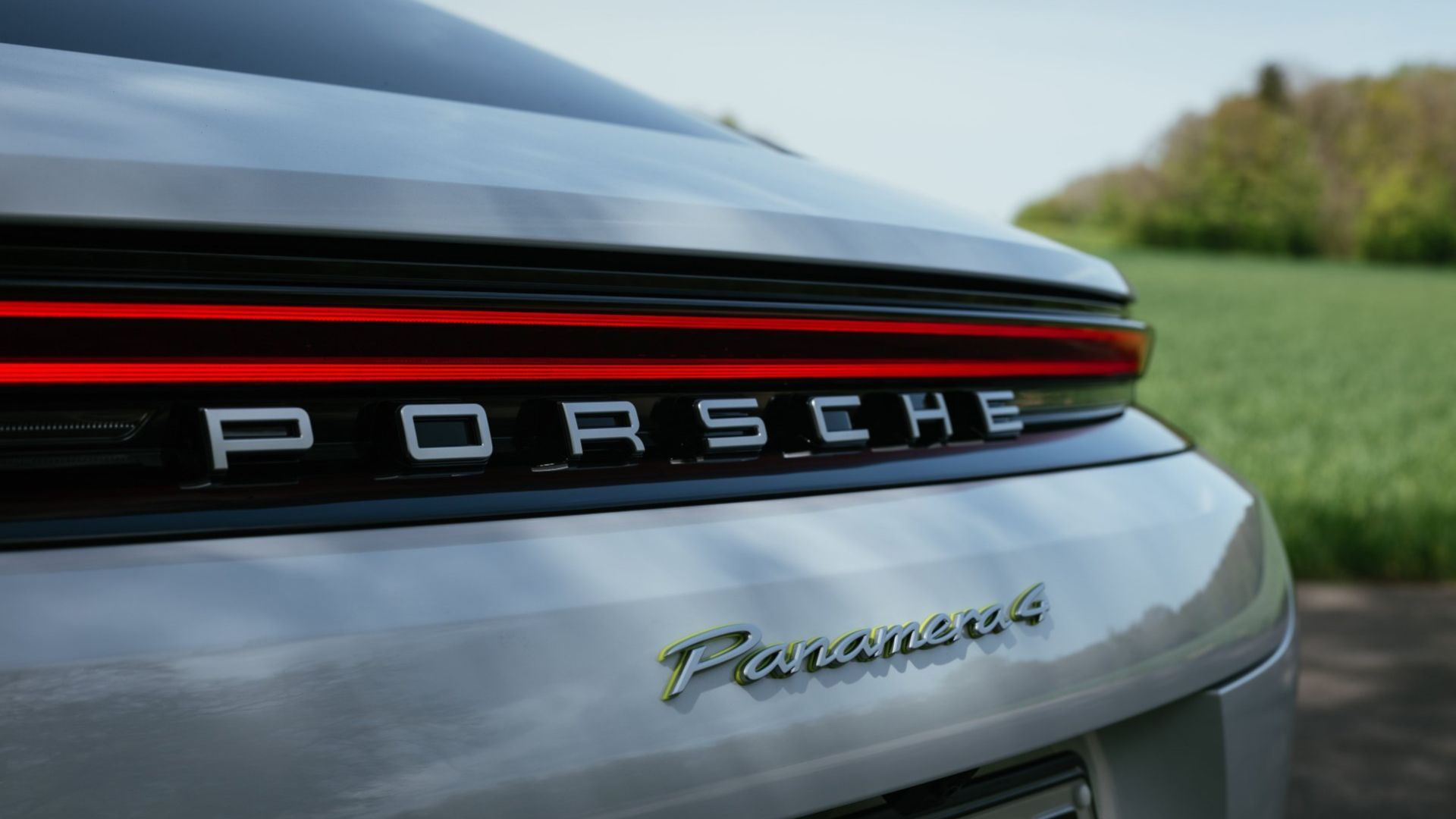
The Porsche Panamera has redefined the luxury performance sedan segment since its debut in 2010. It blends Porsche’s sports car heritage with four-door practicality, evolving across three generations, each better than the one before. The Panamera is a car that challenged the status quo of what buyers can expect from a four-door sports car since its inception, yet it demands a firm hand as far as its maintenance is concerned – if you want the best from the ownership experience, that is.
Porsche
- Founded
-
1948
- Founder
-
Ferdinand Porsche
- Headquarters
-
Stuttgart, Germany
- Owned By
-
Volkswagen
- Current CEO
-
Oliver Blume
This article explores the three Panamera generations available in America, unearthing which is the most reliable and what some of the common problems you can expect to come across are.
|
Porsche Panamera Overview: 1st to 3rd Generations |
|||
|---|---|---|---|
|
|
1st Gen |
2nd Gen |
3rd Gen |
|
Model Years |
2010 – 2016 |
2017 – 2023 |
2024 – Present |
|
Engines |
3.0L V6, Turbo, Gas 3.6L V6, Gas 4.8L V8, Gas 4.8L V8, Supercharged, Gas |
2.9L V6, Turbo, Gas 3.0L V6, Turbo, Gas 4.0L V8, Turbo, Gas |
2.9L V6, Turbo, Gas |
|
Transmission |
7-Speed Auto |
8-Speed Auto |
|
|
Drivetrain |
RWD AWD |
||
This analysis includes all generations of the Porsche Panamera. We have consulted a variety of reputable sources, including J.D. Power, NHTSA, and Car Complaints, while also taking into account the number and severity of consumer complaints/recalls. It must be noted that J.D. Power ratings are an assessment of initial reliability, not long-term reliability; recalls, complaints, and all accompanying data are accurate as of the date of publication, but are subject to change. The generations below are ranked from least to most reliable.
3
Third-Generation Porsche Panamera (2024 – Present)
Placing the third-generation Porsche Panamera as the “least reliable” comes with a caveat. See, this generation of the Panamera was launched in 2024, which means that it is still brand-spanking new. It arrived with a refreshed design, advanced technologies, and hybrid powertrains. While the first and second generations have a proven history, this one does not. The lack of long-term data means that reliability is still unproven, and the lack of owner feedback makes it nigh impossible to make a definitive and just assessment of the car. Rating it higher than the other generations will mean that we are not looking at the third-gen Panamera through an objective lens.
However, if we were to hypothesize what potential buyers should look out for, we can only do so by concluding from the previous generations of Panamera, as well as issues arising from the modern technologies in play on the car. These may include, but are not limited to, the complex hybrid systems that could impact battery degradation and software glitches, and the infotainment systems and advanced driver assistance systems (ADAS) experiencing teething problems. These are not uncommon on new vehicles, especially because the systems are fine-tuned and made more sophisticated when a new vehicle enters the market.
Our designation of the third-generation Panamera as the “least reliable” is based on the fact that reliabillity data has yet to be cmpile – it could still be the best iteration of the Panamera in a couple of year.
“There really is no such thing as a bad Porsche. But what really determines whether the 2025 Panamera is good or not is how it manages to combine the elements of a sports car with those of a family sedan. The Panamera is an impressive vehicle and being a rarity in the segment will only add to its appeal.”

Related
Porsche Panamera Maintenance Costs And Common Problems
The Porsche Panamera is an impeccable luxury saloon. Here’s what to know if you want one!
2
First-Generation Porsche Panamera (2010 – 2016)
Porsche ventured into the luxury saloon space with its Panamera in 2010. The car was a game-changer for the German automaker and introduced a new audience to the brand. The Panamera was endowed with the classic Porsche driving traits, while catering to buyers who wanted practicality without settling for the Cayenne. Importantly, it had enough shove to put some sports cars to shame. Think of the Panamera, then, as a 911 with a usable back seat. Despite it having one of the most unique aesthetics on the market (sleek design, elongated hood, low roofline), it polarized opinions, especially because the proportions did not necessarily ‘respect’ the 911.
The 2010-2016 Panamera had a diverse engine lineup, comprising V6 and V8 models, available with either rear-wheel drive (RWD) or all-wheel drive (AWD). Over the first generation’s lifespan, the engines powering the Panamera consisted of the 3.6-liter V6 at the base, producing 300 horsepower, followed by the naturally aspirated 4.8L V8 with 400- and 430 hp, and 500- and 550 hp in the supercharged V8 that powered the GTS, Turbo, and Turbo S. Power was regulated via Porsche’s seven-speed dual-clutch gearbox, named Porsche Doppelkupplung (PDK) transmission.
Common Issues: First-Gen Panamera
- Camshaft Bolts Shearing Off
- Defective Radiator Pump
- Unintended Acceleration
- Faulty Air Con
- Porsche Communication Management (PCM) Self-reboots
- Engine Cooling
The breadth of engines made the Panamera one of the most versatile sedans on sale in the USA, which made it appealing to many. According to the automaker, 42,783 units of the first-gen Panamera found homes in the USA, with the highest single-year figure – 7,741 – coming in 2010. However, the successes on the sales board did not come without complaints.
Among the most common issues were engine coolants leaking, particularly in the V8 models. Along with this were faulty thermostat housings and water pumps failing, leading to coolant seepage, resulting in the engine overheating. Expectedly, if not caught in time, the repair costs can become costly. Porsche’s PDK transmission was in its infancy during these years and was not immune to problems. Common signs of impending troubles – or existing ones – include rough shifting, jerky gear changes, or the transmission just failing altogether. The gearbox troubles are mostly on the 2010-2013 models, with the facelift addressing and mitigating them.
A look at the J.D. Power website reveals that although many first-gen Porsche Panamera models were ‘Consumer Certified’, only the 2011 model-year received a ‘Quality & Reliability’ rating. The 78/100 is rated as ‘Average’, which is a shame given that all the other scores for that year were in the 80s. Despite the generally strong ratings, the 2011 model, along with 2012, also received the highest number of recalls – five – and the most complaints. 2011 is one of the Panamera model years that consumers are warned to avoid.
Reliability Overview: First-Gen Panamera
- Highest J.D. Power Quality and Reliability Rating: 78/100 (2011 model)
- Highest No. of Recalls: 5 (2011, 2012 models)
- Highest NHTSA Complaints: 32 (2011 model)
1
Second-Generation Porsche Panamera (2017 – 2023)
Having been on sale in the USA between 2017 and 2023, the second generation lays claim to the title of the most reliable Panamera at this point in time. It isn’t without fault, but it addressed many of the concerns of its forebear and made the sedan a better product than before. Fewer problems were reported, but it still demanded a hands-on-deck approach to maintenance to avoid costly repairs.
When the car launched in 2017, it came with several engines – all gasoline, like its predecessor. The initial engines were:
- 3.0L turbo V6
- 2.9L twin-turbo V6
- 2.9L twin-turbo V6 Hybrid
- 4.0L twin-turbo V8
The GTS treatment made a return to the Panamera lineup and came equipped with a 453 hp version of the V8 engine. The Turbo S E-Hybrid, combining the V8 with the 2.9L’s plug-in hybrid system, developed a total system output of 677 hp. Like the other engines in the range, the GTS and Turbo S E-Hybrid also received power upgrades when the facelift was introduced to now develop 473 hp and 690 hp, respectively. The 3.0L V6 was discontinued and the 2.9L acted as the new entry point to the range. All engines were mated with the eight-speed automatic transmission, sending power to either the rear wheels or all four.
Common Issues: Second-Gen Panamera
- Malfunctioning Stop-Start System
- Air Suspension Failure
- Glitches in the Porsche Communication Management (PCM) system
While the second iteration of the Panamera was miles better than the first, it did not skip the queue when gremlins were handed out. The stop-start system would fail to restart the car after activating, or the car would switch off completely. This was due to either battery sensor or software issues, or something else entirely. The air suspension would fail prematurely because of degrading rubber components. Signs of imminent failure include an uneven ride height or the car sagging.

Related
2025 Porsche Panamera Expands Hybrid Lineup With 4 and 4S E-Hybrid
New non-Turbo plug-in hybrids are now available.
The Porsche Communication Management (PCM) system has been improved in this generation Panamera, but still not perfect. Screen freezes, navigation failing to update, or issues with smartphone connection were some of the reported issues. Admittedly, the issues were not as widespread as those of the first generation, but they underline why meticulous maintenance remains crucial to the car’s running.
The 2018 model year was the second-generation Panamera’s most challenging year. Though scoring 81/100 in that year’s J.D. Power Quality and Reliability ratings, it also received the most complaints and the highest number of recalls. The latter were for, among others, brake line corrosion, intermittent loss of power steering assist, no visual warning of brake pad wear, and the external coolant pump being susceptible to short-circuiting. On the coolant pump, the NHTSA noted:
“Humidity may enter the external coolant pump for the climate control system and cause an electrical short circuit. Dealers will replace the external coolant pump and inspect and replace the plug-in connection, if necessary, free of charge.”
Reliability Overview: Second-Gen Panamera
- Highest J.D. Power Quality and Reliability Rating: 81/100 (2018 model)
- Highest No. of Recalls: 7 (2018 model)
- Highest NHTSA Complaints: 8 (2018 model)
Sources: Porsche, CarComplaints, Good Car Bad Car, J.D. Power, NHTSA,