When it comes to getting your hands on a practical runaround, some form of small or medium-sized hatchback is a popular choice. Unlike traditionally popular sedans, which feature a separate loading area that features a trunk lid that lifts on its own without the rear window and protrudes behind the main cabin, hatchbacks instead have a lid and back window that lift as one unit. This layout makes access to the trunk area easier, ensuring it’s more straightforward to load and unload.

- Base Trim Engine
-
2L I4 Hybrid
- Base Trim Transmission
-
2-speed CVTi-S CVT
- Base Trim Drivetrain
-
Front-Wheel Drive
- Base Trim Horsepower
-
150 HP @6000 RPM
- Base Trim Torque
-
139 lb.-ft. @ 4400 RPM
Hatchbacks have become more popular in the US in recent years, having seen great success in Europe, though they are more commonly seen in SUV form across the Atlantic. If you fancy a hatchback with all-wheel drive, be prepared to choose between two clear options.
This piece looks into the only current all-wheel-drive-equipped hatchbacks on sale in the US, and covers their technical make-up and how much they cost. Every passenger hatchback car sold in the US in 2025 was considered for this piece.
Just Two Brand-New AWD Hatchback Cars Are On Sale In The US
As it turns out, being able to have a hatchback car with trusty AWD is a tricky exercise these days. Only the 2026 Toyota Prius and 2026 Subaru Impreza can be had with the configuration, both long-standing models that have crafted a commanding reputation in their decades in production. While the Prius made its debut in 1997, the Impreza has been around in hatch form since 2007, having previously only been sold as a sedan or coupe.
While both take the shape of a five-door mid-sized hatchback and offer AWD, both are very different, technically. The Prius comes with an efficient hybrid powertrain, while the Impreza gets the choice of either a 2.0 or 2.5-liter flat-four boxer engine.
AWD Hatches Are Somewhat Of A Niche
The main reason that so few AWD hatches are currently on sale comes down to a couple of points, with the main one being construction cost. An AWD car needs extra components when compared to an FWD or RWD vehicle, such as front and rear driveshafts, which makes them more expensive to manufacture. When talking about the sub-$30k section of the market, this only eats into a brand’s profit margin, making them less attractive from a business perspective.
Alongside this, SUVs are currently more popular than pickup trucks, let alone standard hatchback cars, so a brand will likely see a much better return offering an affordable SUV instead, rather than focusing on the smaller AWD hatch market.
The Impreza Is The Cheaper And More Practical Of The Two
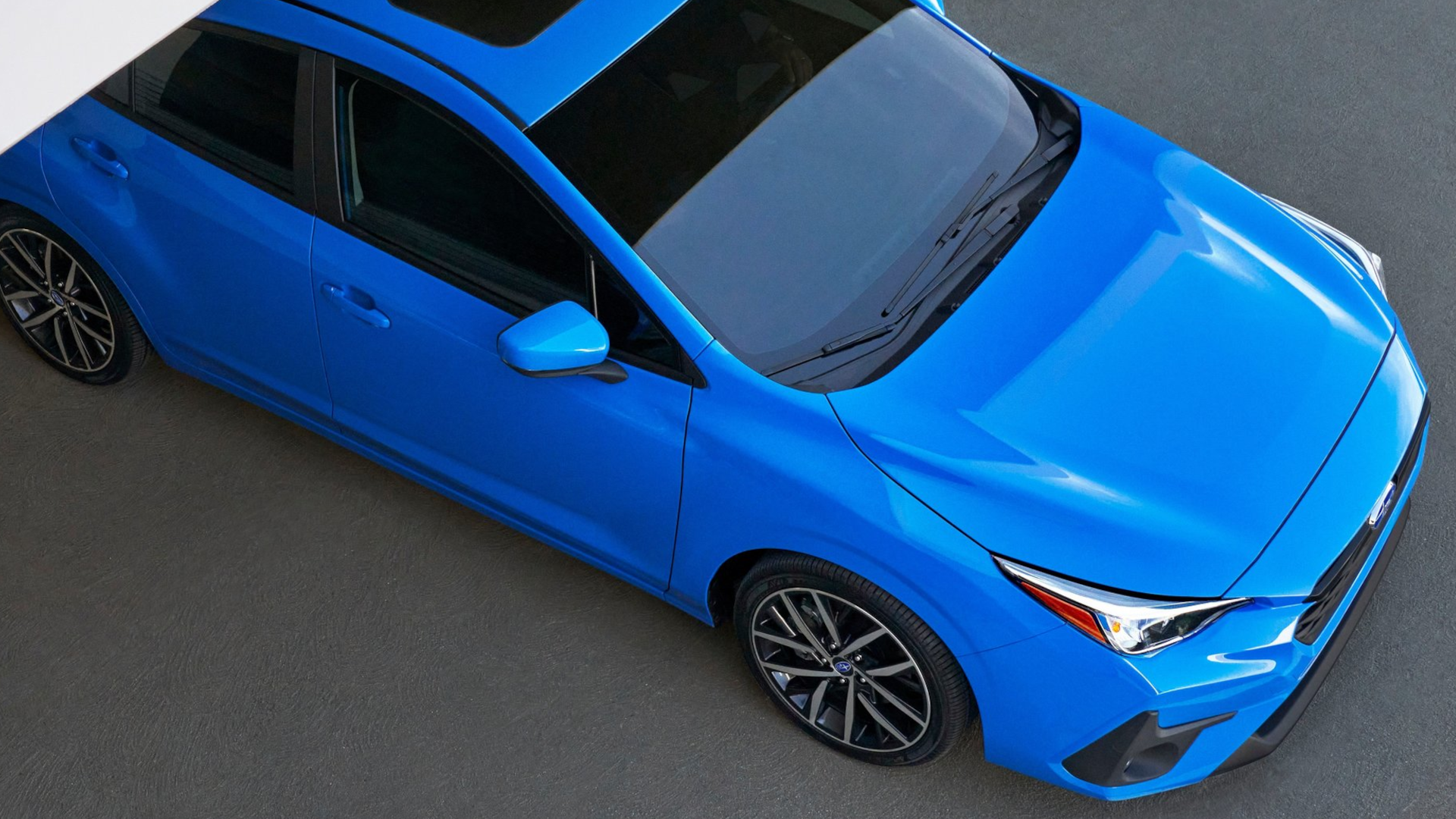
If you want the cheapest brand-new AWD hatch in the US, the 2026 Subaru Impreza is the car for you. The base Sport variant, which comes with a 152-hp 2.0-liter flat-four mated to a single-speed CVT transmission, starts from $26,595, while the more powerful RS version that gets a 2.5-liter unit starts from just under $30,000. If you opt for the base version, you’ll get equipment like an 11.6-inch touchscreen infotainment system, dual-zone climate control, and power side mirrors.
|
2026 Subaru Impreza |
|
|---|---|
|
Engine |
2.0-2.5 liter NA H4 |
|
Transmission |
1-Speed CVT |
|
AWD Type |
Symmetrical, full-time |
|
Power |
152–180 hp |
|
Torque |
145–178 lb-ft |
|
0-60 mph |
Est. 8–9 seconds |
|
Base MSRP |
$26,595–$29,495 |
The Impreza also offers superior cabin practicality, as the larger car boasts more headroom front and rear than the Prius, though the Toyota trades a couple of inches of rear legroom to clock in superior front legroom than its rival. They are well-matched when it comes to trunk space, with the Prius prevailing with the rear seats up at 23 cubic feet of room versus 20 cubic feet, though the Impreza’s 56 cubic feet of space when the seats are lowered bests the Prius’ 50 cubic feet.
The Impreza’s AWD System Is More Advanced
Another feather in the Impreza’s cap comes courtesy of its Symmetrical AWD setup, which grants the vehicle full-time AWD, unlike the Prius’ part-time AWD setup. Subaru’s system can detect which wheel needs power, and then send extra grunt its way, or vice-versa, to ensure that peak grip and traction are achieved between all four wheels. This makes the Impreza vastly superior to the Prius in slippery conditions, so it’s the one to opt for if you want to feel the full benefit of AWD.
The Prius Is Vastly More Efficient And Faster
While the Prius’ cabin isn’t quite as roomy and its AWD system isn’t as advanced as the Subaru’s, its powertrain is a bit of a peach. Not only does it provide more grunt than either of the Subaru’s Boxer units, with 196 combined hp being channeled between all four or just the front wheels given the situation, but it’s also way more efficient. The Prius boasts an average figure of 54 MPG, which is not far off double that of the Impreza’s 30 MPG average. This comes despite the Prius weighing around 100 lbs more than its competitor, as well as being able to hit 60 mph around two seconds faster than the entry-level Subaru. The fact that the Prius’ rear-wheel-drive functionality comes from the rear-mounted electric motor, rather than from the engine via driveshafts like the Impreza, helps save a fair amount of fuel on its own.
|
2026 Toyota Prius |
|
|---|---|
|
Engine |
2.0-liter NA I4 with hybrid |
|
Transmission |
1-Speed e-CVT |
|
AWD Type |
Part-time |
|
Power (Combined) |
194 hp |
|
Torque (Combined) |
139 lb-ft |
|
0-60 mph |
7.0 seconds |
|
Base MSRP |
$29,950–$36,965 |
Toyota’s Hatchback Demands A Significant Premium
These advantages come at a cost though, with even the base Prius LE AWD starting from $29,950, over $3k more than the base Impreza. The standard Subaru comes slightly better equipped, too, given the Prius LE only gets single-zone climate control, though the Toyota does get safety equipment like Blind Spot Monitoring as standard, unlike the Impreza.
All in all, the choice of either the Prius or Impreza depends on what you value more. If having a superior AWD system, saving a bit of cash when buying the car, and having a slightly larger cabin appeals to you, the Subaru will be well-suited, though the Prius stands out for its more powerful and efficient powertrain. Both models also sport solid reliability records, though the Toyota will likely prove to be the superior option from this standpoint.
AWD Makes Driving In Uncertain Conditions Much Safer
While modern front and rear-wheel-drive cars cope fine in fully dry conditions when compared to AWD ones for the most part, given how good tires and traction control/stability control technology have got over the last few decades, AWD comes into its own when the heavens open. A cheeky summer shower – or perhaps a trickier winter snow blizzard – can cause issues for FWD and RWD vehicles. Due to only having two of the available four wheels dealing with the engine’s power, they have to deal with more punishment, and are therefore more susceptible to losing traction. This can cause you to lose control, or struggle to progress forward.
AWD cars share their grunt between all four wheels, meaning each has less work to do, allowing them to better utilize the grip available. This effect is enhanced even further with vehicles that come with active AWD systems like the Impreza, which can favor the wheels with the most grip available. For drivers who live in areas with trickier climates such as Colorado – or need to drive off-road every now and again – having a vehicle with AWD could prove crucial for getting you to your destination without drama.