Often, when a car is updated from one generation to the next, there’s a modest horsepower increase that comes with the switch to the latest generation. In most mainstream models like the Subaru Forester or Honda Civic, you’re usually looking at a relatively small number: perhaps 5 or 15 hp between one generation and the next. Sometimes, an existing engine is updated with lower-friction parts, improved breathing, or the latest fuel-injection tech, allowing engineers to affordably squeeze out a few extra ponies. Even if the difference is minor, it counts as an improvement on the mental radar of shoppers, and helps add value to the purchase decision.
BMW
BMW is a German luxury car and motorbike manufacturer and current owner of Mini, Rolls-Royce, and Alpina. With roots dating back to 1913 as Rapp Motorenwerke, it officially became Bayerische Motoren Werke in 1922 as a manufacturer of aircraft engines. BMW’s first car was built in 1928 when it built the Austin 7 under license from Dixi, which was called the BMW 3/15. BMW grew into a manufacturer of premium and luxury automobiles, launching iconic nameplates like the 3 Series, 5 Series, and 7 Series, and is today known as one of the leading luxury automakers in the world, while the BMW M division is hailed as a leading manufacturer of performance cars.
- Founded
-
1916
- Founder
-
Karl Rapp
- Headquarters
-
Munich, Germany
- Owned By
-
Publicly Traded
- Current CEO
-
Oliver Zipse
The models we’re showing you below are the opposite of the norm when it comes to their growing horsepower figures from one generation to the next. We’re not talking an increase of a dozen horsepower, but rather machines that have added dozens, a hundred, or even several hundred horsepower in just a single model year. Here are some of the most notable generation-over-generation horsepower increases we could track down for your reading pleasure.
While this feature is open to all modern vehicles that have had more than one generation, we’ve specifically chosen the models below for demonstrating major horsepower improvements between two consecutive generations – and we’re ranking them from the smallest to largest jumps in horsepower.
9
2006 Audi RS4 (B7)
Horsepower Increase: 45 hp
|
2006 Audi RS4 Specifications |
|
|---|---|
|
Engine |
4.2L NA V8 |
|
Horsepower |
414 hp |
|
Torque |
317 lb-ft |
|
Drive |
AWD |
|
Top Speed |
150 mph+ |
The first-generation (B5) Audi RS4 came only in a wagon format, was powered by a 2.7-liter twin-turbo V6, and made 375 horsepower and 325 lb-ft of torque at its peak. When its replacement came along for 2006, the biturbo was out and a naturally aspirated V8 was in, as Audi and rival BMW were all-in on high-revving V8s at the time. The second-generation RS4 had a V8 engine with 414-420 horsepower and 317 lb-ft of torque, improving on the previous version by 45 horsepower (12%). This machine will go down in history as one of Audi’s greatest RS models, and spinning its V8 to over 8,000 revs with three pedals at your feet, six manually shifted gears in your right hand, and four driven wheels beneath you was a one-of-a-kind experience.
8
2023 Nissan Z
Horsepower Increase: 68 hp
|
2023 Nissan Z Specifications |
|
|---|---|
|
Engine |
3.0L twin-turbo V6 |
|
Horsepower |
400 hp |
|
Torque |
350 lb-ft |
|
Drive |
RWD |
|
Top Speed |
155 mph |
The latest Nissan Z arrived with 400 twin-turbo horsepower and 350 lb-ft of torque for the 2023 model year, and it’s the most affordable car you’ll find today with 400 horsepower and a full factory warranty. Quicker than ever, the latest Z replaced the 370Z before it, which ran a naturally aspirated V6 good for 332 horsepower and a notably lower 270 lb-ft of torque.

Related
The First Manual Car With Automatic Rev Matching
Rev-matching matters on a racetrack and even in the real world, but the first car to include the automatic function might surprise you.
Upgrade from the last Z car to the latest, and you’ll get 68 more horsepower and 80 more lb-ft of torque in the process. Those are increases of 21% and 30% versus the previous car, respectively.
7
2008 E90 BMW M3
Horsepower Increase: 71 hp
|
2008 BMW M3 Specifications |
|
|---|---|
|
Engine |
4.0L NA V8 |
|
Horsepower |
414 hp |
|
Torque |
295 lb-ft |
|
Drive |
RWD |
|
Top Speed |
155 mph |
Numerically, the increase in horsepower between the straight-six-powered E46 BMW M3 (343 horsepower, 269 lb-ft) and the V8-powered E90 M3 that replaced it (414 horsepower, 295 lb-ft) comes out at 71. That’s a 21% generation-over-generation horsepower increase driven by the M3’s switch to a naturally aspirated V8 engine, backed by a slight torque upgrade of 26 lb-ft, or 10%. It’s a modest boost in power compared to some we’re about to see, but when it comes to BMW M3 history, this was the biggest increase in power between any two consecutive generations. The E90 was the first and only generation of M3 to come with a V8 engine, and it raised the bar for the car’s performance credentials.
6
2008 Dodge Viper
Horsepower Increase: 100 hp
|
2008 Dodge Viper Specifications |
|
|---|---|
|
Engine |
8.4L NA V10 |
|
Horsepower |
600 hp |
|
Torque |
590 lb-ft |
|
Drive |
RWD |
|
Top Speed |
200 mph |
The Dodge Viper’s production years and generations can be a little confusing, and that’s largely a factor of its low-volume, hand-built nature. From the 2003 to 2006 model years, the Viper was in its third generation, dubbed ZB1. Those days, the Viper’s V10 served up 500 horsepower and 525 lb-ft of torque. The next generation Viper rolled around for 2008, and while it plays out more like a major facelift, the 2008 to 2010 Viper counts as a new generation machine, dubbed ZB2. Among the laundry list of upgrades? A new engine variant that now made 600 horsepower (an increase of 100) and 590 lb-ft of torque (an increase of 65 lb-ft). That’s 20% more horsepower and 12% more torque.
5
2006 BMW M5 E60
Horsepower Increase: 100 hp
|
2006 BMW M5 Specifications |
|
|---|---|
|
Engine |
5.0L NA V10 |
|
Horsepower |
500 hp |
|
Torque |
384 lb-ft |
|
Drive |
RWD |
|
Top Speed |
155 mph |
The BMW M5’s third and arguably most lusted-after generation is the glorious E39. Back in 1999 when it was unveiled, the 5.0-liter, 400-horsepower naturally aspirated V8 was a technological marvel complete with a sensational building of power and thrust towards its high-revving redline and backed by 365 lb-ft of torque. When the E39 was replaced by the E60 in 2006, a new naturally aspirated 5.0-liter V10 hit the 100-horsepower-per-liter mark, good for 500 horsepower and 383 lb-ft of torque. That’s 100 more horsepower (25%) and 18 lb-ft more torque, a 5% improvement.
4
2025 BMW M5
Horsepower Increase: 117 hp
|
2025 BMW M5 Specifications |
|
|---|---|
|
Engine |
4.4L twin turbo V8 PHEV |
|
Horsepower |
717 hp |
|
Torque |
738 lb-ft |
|
Drive |
AWD |
|
Top Speed |
190 mph |
Here’s the third BMW on our list. At the conclusion of its last generation, the BMW M5 offered up 600 horsepower and 553 lb-ft of torque from a twin-turbo V8. Today, that model’s been replaced by the latest M5, complete with a switch to hybrid power for its latest generation. Forty years after its launch, we wonder what the creators of the original M5 would think of the 717 horsepower and 738 lb-ft of torque in the new-for-2025 machine.

Related
The G30 BMW M550i Costs Half As Much As A New M5, And Is Just As Quick
If a quick BMW sedan is what you’re after, you don’t need to spring for a new M5 when you have this as an option.
Compared to F90 generation before it, the latest M5 boasts an increase of 117 hp and 177 lb-ft of torque. That’s 20% more horsepower, and nearly a full third more torque than the previous-generation car, which already had more than plenty.
3
2025 Aston Martin Vantage
Horsepower Increase: 153 hp
|
2025 Aston Martin Vantage Specifications |
|
|---|---|
|
Engine |
4.0L twin-turbo AMG V8 |
|
Horsepower |
656 hp |
|
Torque |
590 lb-ft |
|
Drive |
RWD |
|
Top Speed |
202 mph |
There’s a lot of history behind the Aston Martn Vantage. In more recent chapters, the 2018 to 2023 model offered 503 horsepower and 505 lb-ft of torque. For the updated-for-2025 model, those figures have gotten into the pre-workout and swelled to 656 horsepower and 590 lb-ft of torque, all from an AMG-sourced, Aston Martin-calibrated turbo V8 with a 4.0L displacement. The result is a jump of 153 horsepower (30%) and 85 lb-ft of torque (17%) between the generations – not to mention the latest push towards the Vantage’s best-yet styling, chassis and driving experience. That’s a big power boost between two generations, but we’ll see a car that doubles it a little further down the page.
2
2009 Cadillac CTS-V
Horsepower Increase: 156 hp
|
2009 Cadillac CTS-V Specifications |
|
|---|---|
|
Engine |
6.2L supercharged V8 |
|
Horsepower |
556 hp |
|
Torque |
551 lb-ft |
|
Drive |
RWD |
|
Top Speed |
191 mph |
The first-generation Cadillac CTS-V ran 5.7- or 6.0-liter naturally aspirated V8 engines, depending on the year selected, both generating 400 horsepower. When the second-generation CTS-V launched to replace it in 2009, a horsepower war was brewing, so engineers dialed the replacement in for 556 horsepower, just to be safe. That’s a 156-horsepower leap in a single generation. With up to 395 lb-ft of torque in the original CTS-V and 552 lb-ft from the new supercharged V8, that figure increased by 157 lb-ft. By the math, that’s 39% more horsepower and 40% more torque.
1
2025 Chevrolet Corvette ZR1
Horsepower Increase: 309 hp
|
2025 Chevrolet Corvette ZR1 Specifications |
|
|---|---|
|
Engine |
5.5L twin-turbo V8 |
|
Horsepower |
1,064 hp |
|
Torque |
828 lb-ft |
|
Drive |
RWD |
|
Top Speed |
233 mph |
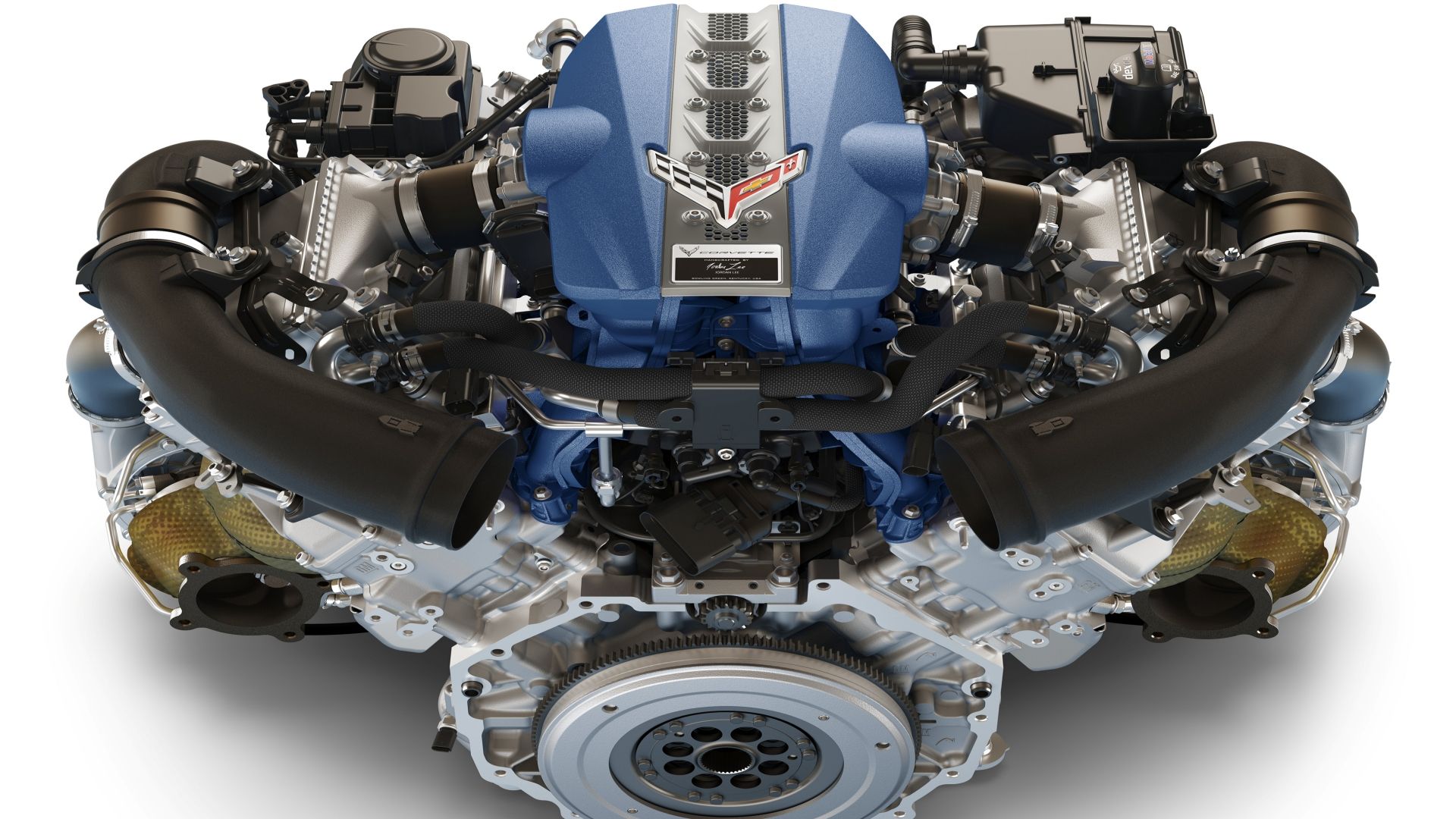
The Chevrolet Corvette ZR1 has always been about blowing things out of the water – and with the latest ZR1’s arrival, that includes the power specs of its own predecessor. Welcome to the biggest generation-to-generation power leap on the page, by a considerable margin. In its C7 generation, the last with a front-mounted engine, the Corvette ZR1’s supercharged V8 made 755 horsepower and 713 lb-ft of torque. This brought supercar acceleration and performance metrics to a highly attainable price point as a real performance bang for the buck.

Related
OFFICIAL: Watch The New Chevrolet Corvette ZR1 Hit 233 MPH
Watch GM President Mark Reuss drive the new American monster to a record speed.
Later, the latest ZR1 arrived for its C8 generation, now with a staggering 1,064 horsepower and more torque than four Honda Civics. That’s an extra 309 horsepower and 115 lb-ft of torque, increases of 41% and 16% respectively. This single-generation power increase doubles the second-place CTS-V, which is also powered by a GM V8.
Sources: GM, BMW, Stellantis, Audi, Nissan