Mazda typically keeps its model lineup tight, with a vehicle for every significant segment. Compared to brands like Toyota or Hyundai, its lineup looks anemic. Still, there are benefits to not confusing customers and concentrating on doing a few things well rather than spreading the design and engineering teams thin.
The discontinued CX-3 subcompact SUV was too subcompact for the American market, which wanted legroom for people in the back. The CX-30 stepped in to replace the CX-3 in the US with extra space for rear passengers and new engine choices. It has narrowed the gap between the Mazda sub-compact and compact crossover models to the point of creating some confusion.
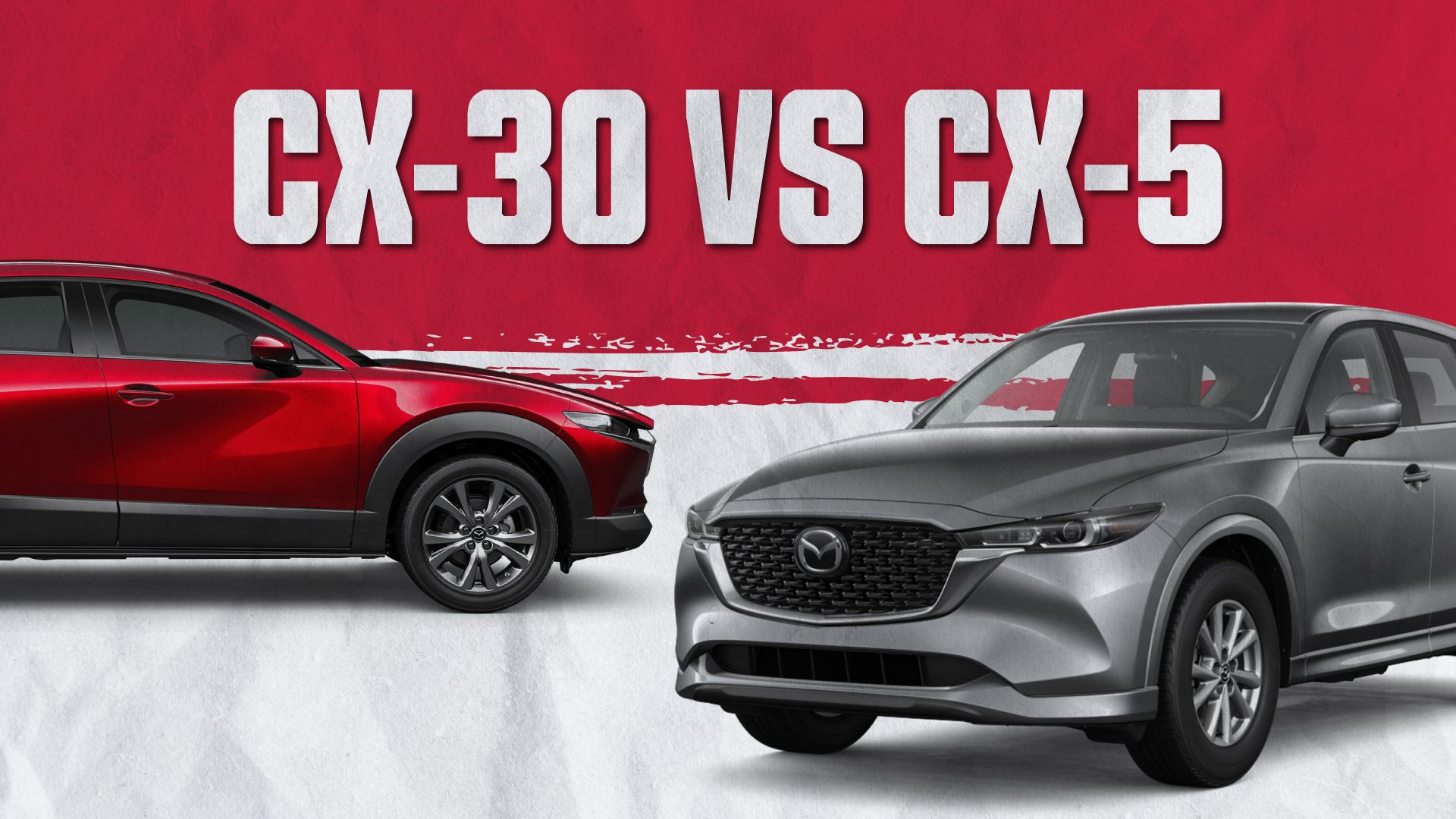
So, let’s get some clarity with a Mazda CX-5 vs Mazda CX-30 comparison. For additional clarity, the photos below are of the CX-30 first and the CX-5 second. The CX-50 is a different enough vehicle that we’re leaving it out of this comparison.
Originally published in November 2022, this article has been updated and is correct as of January 2025. This comparison uses information from the 2025 CX-30 and 2025 CX-5.
Dimensions, Interior, And Cargo Space
In a Mazda CX-30 vs CX-5 size comparison, there’s not a huge difference. The CX-5 has a 106.2-inch wheelbase, and its total length is 180.1 inches. The CX-30’s wheelbase isn’t much shorter at 104.4 inches, but more than five inches shorter than the CX-5. The CX-5 is just about two inches wider.
Inside, that translates to 29.1 cubic feet of cargo volume for the CX-5 over the CX-30’s 20.2 cubic feet, a fairly notable difference. The total passenger volume for the CX-30 is 94.1 cubic feet, and the CX-5 gets 103.6 inches. Many of the measurements for the passengers are close enough to skip over, but the important one is rear passenger legroom. The CX-30 has a decent 36.3 inches of legroom in the back, while the CX-5 gets almost over three inches more at 39.6 inches. If you have kids that have entered their teens and are growing fast, the CX-5 has more room to grow into.
Add CarBuzz to your Google News feed.
Powertrains: The Same But Different
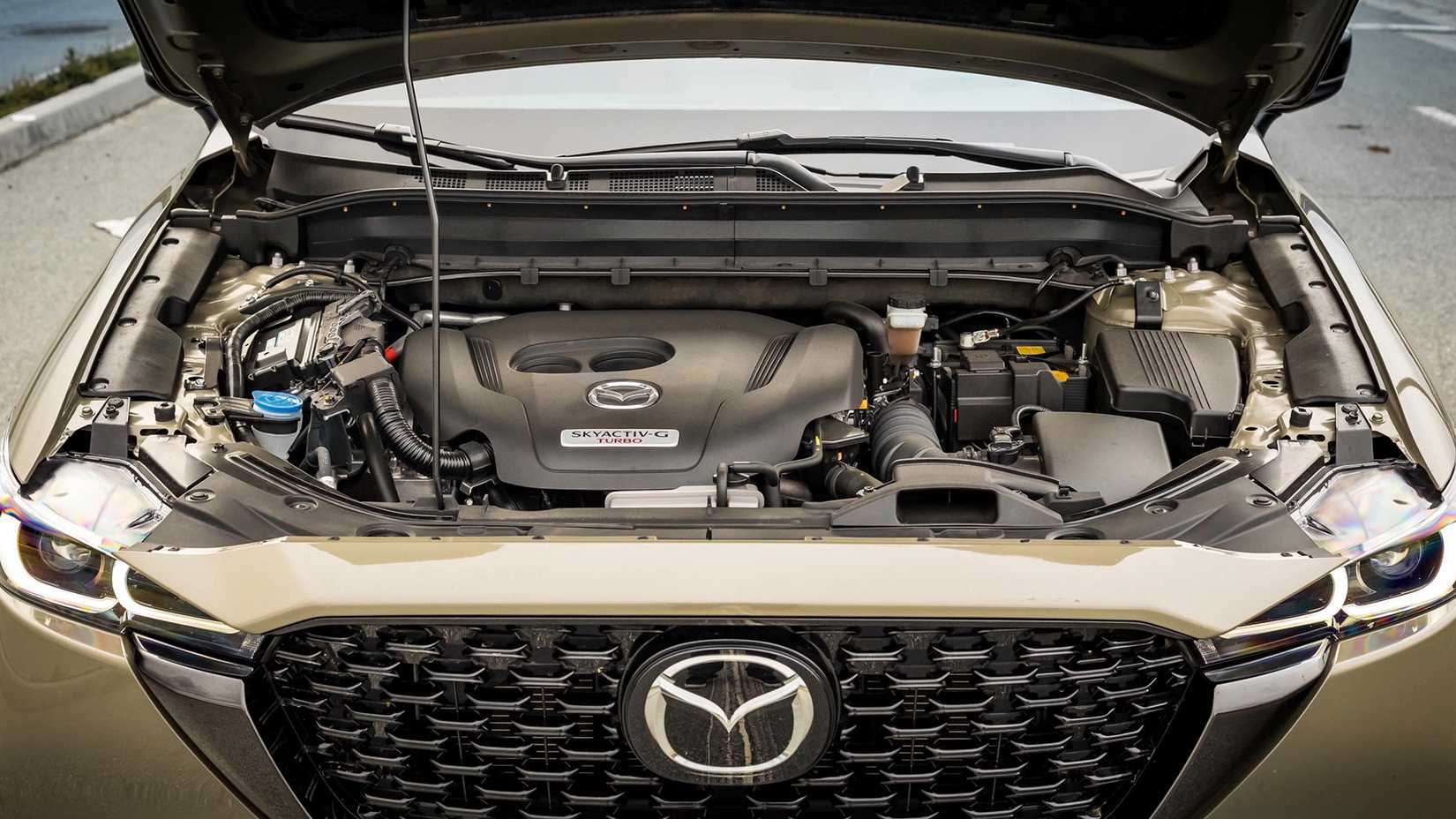
Mazda has made all-wheel drive standard for both the CX-30 and CX-5, so the variations are in engine choices. For the CX-5, it’s either a 2.5-liter four-cylinder engine making 187 horsepower or a 2.5-liter turbocharged four-cylinder engine producing 256 hp (with premium unleaded gas). The CX-30’s options are a 2.5-liter four-cylinder engine making 191 hp or a turbocharged 2.5-liter four-cylinder engine making 250 hp. These are about on par compared to the more expensive option. The CX-30 even has the same 320 lb-ft of torque in the higher-end turbocharged trims.

Related
The Mazda CX-5 Is Still The Gold Standard For A Fun Driver’s SUV On A Budget
SUVs aren’t sports cars, but driving a Mazda CX-5 is a great way to not feel like you’ve given up on enjoying the finer things in life.
Technology: It’s The Little Things
Mazda’s standard safety tech is strong, and the differences between the two are minor. However, there are a few notable differences in the Mazda CX-5 vs. CX-30 technology showdown. They aren’t all in the CX-5’s favor, however. For example, the CX-30 comes with LED daytime running lights and brake lights, while the base CX-5 has halogen running lights. The MX-30 has a six-speaker sound system, while the CX-5’s base system has four speakers. However, the CX-5 gets a 10.25-inch infotainment screen, while the CX-30’s is 8.8 inches (with an optional 10.25-inch screen).

Related
Mazda CX-5 vs CX-50: 10 Core Differences Between Mazda’s Compact Crossover Twins
More alike than they are apart, we help you decide which is right for you – the Mazda CX-5, or the sharper, new, CX-50.
Ownership And Driving Experience
Regarding ownership, both the CX-30 and the non-turbocharged trims of the CX-5 will be the less expensive options as the engines run on regular unleaded. It’s just the turbocharged version that requires premium to unlock its peak horsepower. Below, we can see a comparison between the models in terms of gas mileage.
|
Model |
Mazda CX-30 2.5L |
Mazda CX-5 2.5L |
Mazda CX-30 2.5L Turbo |
Mazda CX-5 2.5L Turbo |
|---|---|---|---|---|
|
Gas Mileage (city/highway/combined) |
26/33/29 mpg |
26/30/28 mpg |
22/30/25 mpg |
22/27/24 mpg |
|
Annual Fuel Cost* |
$1,550 |
$1,600 |
$1,800 |
$1,900 |
*Based on EPA estimates and estimated annual mileage of 15,000 miles
If you want to stretch out filling your tank, the CX-5’s 15.3-gallon tank isn’t going to be much of an advantage, if any, over the CX-30’s 12.7-gallon tank. As the figures demonstrate, it’s only marginally more expensive to fuel the CX-5 over a year, assuming you cover around 15,000 miles.
Both cars are fun to drive in general, and Mazda’s dedication to driving dynamics pays off even if you’re not interested in driving fast. Among their direct competition, there isn’t anything better in that respect. However, we’re not fans of the indecisiveness and clumsiness shown by the CX-30’s six-speed automatic transmission. We drove both models almost back-to-back, and in a direct showdown, we preferred the CX-5’s transmission programming. It’s not perfect and occasionally makes odd choices, but it’s a rarity compared to the CX-30.

Expert Opinion
The CX-5 is still one of the most fun-to-drive crossovers on the market – particularly with the turbocharged engine’s added alacrity. It’s not just on a back road where it shines, though, with its smooth and responsive engine and transmission combo and steering that feels like it’s reading your mind. It’s excellent for hustling through the town or city with its minimal size and suspension that’s up to the challenge of rough roads and awkwardly placed speed bumps. Cruising is just as comfortable and fuss-free.

Related
The Compact SUV With More Safety Awards Than Any Other In The Last 5 Years
Here’s what makes this Mazda a champion of automotive safety.
Pricing: Cheaper Doesn’t Mean Worse For Everyone
The biggest difference between the Mazda CX-5 and CX-30 is the price. If you’re a driving enthusiast that needs a family crossover, then the CX-5 is a slam dunk, as it has better transmission programming and more space. For everyone else, it’s not so clear-cut. The CX-30 is marginally smaller and is going to be easier on the wallet. It starts at $24,995 for the base model with the less powerful engine and goes up to $36,950 for the top turbocharged trim level. Alternatively, the CX-5 starts at $28,570, while the most expensive version starts at $40,600.
For those that don’t expect to have many people in the back seats and want a small, stylish, and comfortable commuter car that does everything well or well enough, the CX-30 with the non-turbocharged engine is a winner. The same goes for families with small children that expect to upgrade their vehicle in five to eight years.
The only reason to go for the turbocharged engine is if there will be a lot of freeway miles involved, and the extra power will make life easier. For those with older kids or who regularly cart friends or coworkers around, the CX-5 makes more sense. That’s about as simple as we can boil things down to. From there, it’s all about budget and trim levels.
Sources: Mazda, EPA