Quick Links
Those of us in the US are especially aware of the death of the station wagon. If we turn back the clock a few decades, the station wagon was one of the most common sights on American roadways. One of the main reasons for this was the wagon’s ability to handle and ride like a sedan, but carry enough stuff for a large family. However, the introduction of the minivan in the mid-1980s and the family SUV in the early 1990s killed the station wagon, and the segment is now a shell of its former self.
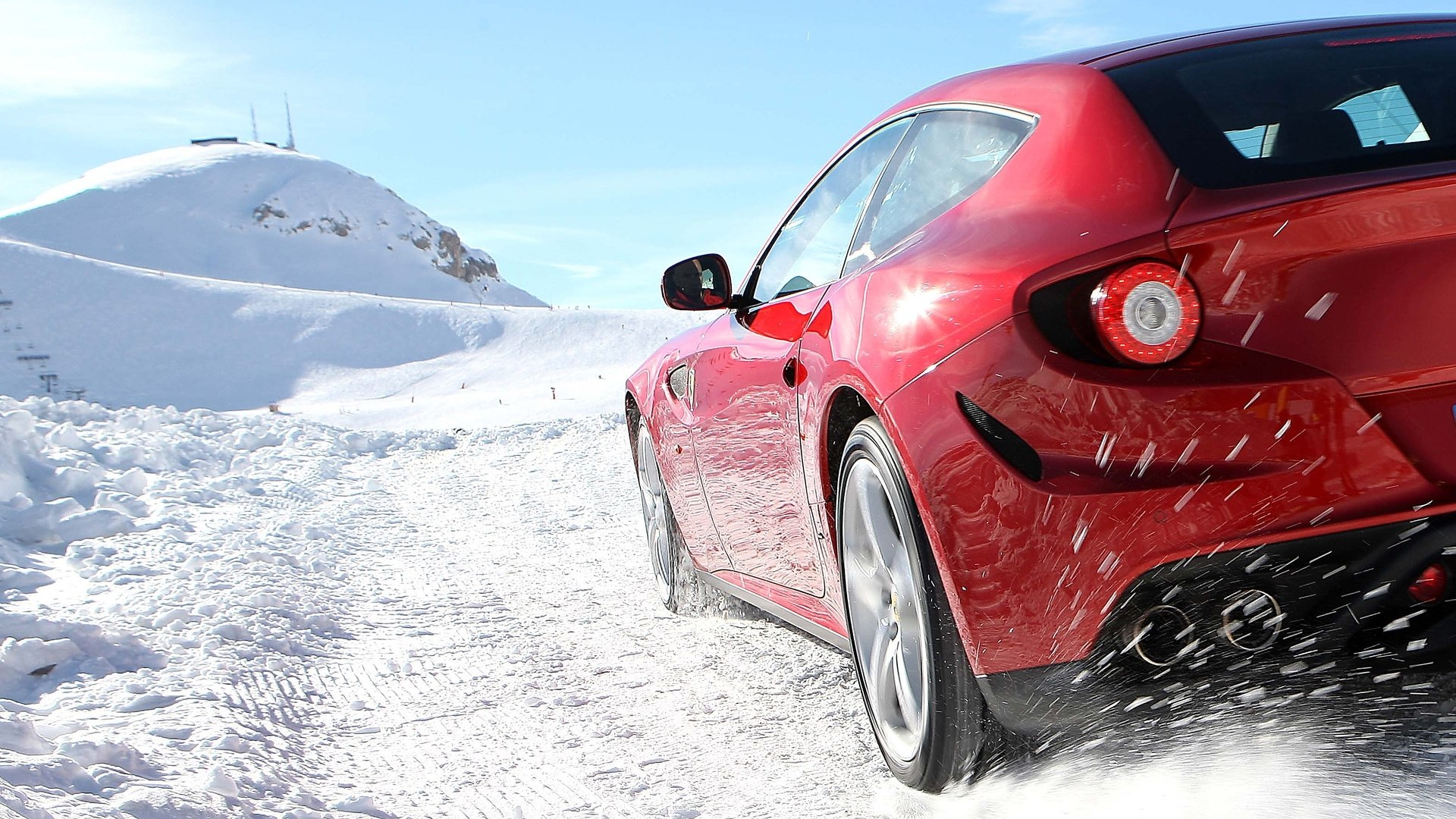
The wagon’s death isn’t just relegated to the US, either. The entire world has watched the humble wagon go from a commodity to a rarity, with Europe being one of the last great holdouts for the vehicle segment. Within the now-rare wagon segment lived an even less-known sub-segment: the V12 wagon. There were only a few models ever produced, and one of the last ones went out of production just under 10 years ago. The model in question was the Ferrari FF, a supercar with a family-friendly body.
- Base Trim Engine
-
6.3L V12 ICE
- Base Trim Transmission
-
7-speed auto-shift manual
- Base Trim Drivetrain
-
All-Wheel Drive

Related
Ferrari FF Owner Faces Massive Bill After Losing Keys In Fight
And there’s no spare key, either.
V12 Power In A Practical Package
Ferrari FF Key Points
- Introduced in 2012
- Features a 6.3-liter V12
- Technically considered a “shooting brake”
- Axed following the 2015 model year
Now, when we say “practical”, we’re not implying the two-door, V12-equipped Ferrari FF can be likened to something like a 2025 Ford Explorer. The truth is, the FF is far from that. However, when it comes to non-SUV Ferrari models, the FF does boast a good bit of practicality. In fact, this was one of the reasons Ferrari decided to build the FF, as the Italian automaker wanted to build a model that could be driven like a grand tourer, but could fit things like skis and luggage inside its cabin with relative ease.
The FF was unveiled at the 2011 Geneva International Motor Show, and quickly began garnering praise for its then-unconventional body shape mixed with a good bit of Italian styling. The FF was so loved that BBC’s Top Gear named the Ferrari FF their “Estate Car of the Year”. On top of the accolades, the FF was the fastest four-seater car on the market at the time, and was even Ferrari’s second-fastest grand tourer as a whole, just behind the 599 GTO.
Technically, the Ferrari FF serves as the Ferrari 612 Scaglietti’s spiritual successor, and wasn’t originally intended to be a shooting brake. Before final designs could be undertaken, Flavio Manzoni and Lowie Vermeersch, both designers working for Ferrari at the time, took the FF’s development down the shooting brake lane. The Fezza’s name, “FF”, stands for “Ferrari Four,” which hints at its utilization of an all-wheel-drive system, which the FF would be the first series-production Ferrari to ever employ.
Current Pricing
While we’d love to impart good news like “the Ferrari FF can be had for less than the cost of a brand-new Honda Civic,” that’s not the case at all. However, the FF’s used market value is currently $132,000 for a 2015 model-year example. That’s quite a lot less than its original MSRP of $295,000 before any options or fees. While average prices are a bit difficult to nail down, we’ll outline the FF’s current used values in the table below:
|
2011 |
2012 |
2013 |
2014 |
2015 |
|
|---|---|---|---|---|---|
|
Current Average Used Price |
$111,000 |
$122,000 |
$126,000 |
$126,000 |
$132,000 |
*Pricing courtesy of Hagerty.com utilizing “Good” condition valuation
Detailed Specs & Features
The 6.3-liter V12 that’s doing all the Ferrari FF’s heavy lifting was no stranger to hard work. The V12 in question’s official codename – F140 EB – was part of the larger F140-family of Ferrari V12s. The engine class traces its roots back to 2002, when the first F140 V12 was unveiled as the power source for the flagship Ferrari Enzo supercar. Since then, the F140 has undergone several tweaks, along with branching off into several subfamilies, one of which the FF’s EB variant belonged to.
As for the rest of the Ferrari FF’s underpinnings, things are just as bespoke as its engine. The transmission tasked with handling its 6.3-liter V12 power is a seven-speed dual-clutch automatic unit, which can, reportedly, change gears as fast as you can blink your eye. The FF’s all-wheel-drive system was the first road-going version of AWD produced by Ferrari, and it was meant to provide a rear-drive-bias, while also having the ability to shift up to 20 percent of the FF’s power to its front axle. However, the system disengages after fifth gear.
Its chassis is an aluminum space-frame, and its suspension is fully independent. The FF also takes advantage of Magnetorheological dampers, which are able to adjust the suspension instantly based on road conditions. When mated to the FF’s all-wheel-drive drivetrain, these Magnetorheological dampers are able to provide a reportedly impressive amount of traction in less-than-ideal road conditions.
The Ferrari FF’s engine and performance specs are detailed in the table below:
|
Engine Details |
6.3L NA V12 |
|---|---|
|
Power |
651 hp |
|
Torque |
504 lb-ft |
|
0-60 mph |
3.7 seconds |
|
1/4 Mile Time @ mph |
11.4 seconds @ 126.0 mph |
|
Top Speed |
208 mph |
|
Curb Weight |
4,145 lbs |
*Specs courtesy of Ferrari
Interior
Being a bespoke, Italian supercar, the Ferrari FF boasts quite a few performance and luxury-oriented features embedded within its electronic brain. Its infotainment system incorporates a 6.5-inch touchscreen, along with the ability to show 3D camera views from around the FF’s exterior. Bluetooth, voice command functionality, and navigation are standard, as well. Classic tan leather is heavily strewn about the FF’s cabin, and its maximum cargo capacity measures in at 28.3 cubic feet.
The Ferrari FF’s Successor
After the Ferrari FF’s 2015 axing, the Italian supercar maker was interested in continuing its legacy with another bespoke wagon/shooting brake. Their answer was called the Ferrari GTC4 Lusso, a shooting brake that came about in 2016, right on the heels of the outgoing FF. However, instead of a 6.3-liter V12 underneath its hood, Ferrari supplied both a V8 and a newer version of the F140 V12 belonging to the “ED” subfamily. In short, the GTC4 Lusso is the last V12-powered station wagon ever produced.
The GTC4 Lusso was unveiled at the 2016 Geneva International Motor Show and was immediately put up for sale. At its outstart, the GTC4 Lusso carried a starting price of about $300,000. Its V12 engine received a power bump, as it now produces 681 horsepower and 516 lb-ft of torque. Of course, it retained an all-wheel drive system, although the V8-powered GTC4, the GTC4 Lusso T, was produced with rear-wheel drive only.
Its styling is reminiscent of the Ferrari FF, although there are clear differences. Its rear end now features Ferrari’s signature quad tail-lights, a styling cue shared with other models like the Ferrari 812. Its front end was given a bit more aggression in its countenance, with more angular headlights. However, its overall body shape remained virtually unchanged from the FF, save for new styling elements like side vents and slightly different glass.
Below, we’ll take a look at the 2016 Ferrari GTC4 Lusso’s detailed engine and performance specs:
|
Engine Details |
6.3L NA V12 |
|---|---|
|
Power |
681 hp |
|
Torque |
515 lb-ft |
|
0-60 mph |
3.4 seconds |
|
1/4 Mile Time |
11.4 seconds @ |
|
Top Speed |
208 mph |
|
Curb Weight |
4,233 lbs |
*Specs courtesy of Ferrari
Sources: Ferrari, Hagerty.com