While SUVs and crossovers have become the big cheeses in the automotive landscape in 2025, the sedan market was one of the main battlegrounds for manufacturers during the 20th century and early 2000s. These days the category has seen a drop in popularity, only the Toyota Camry features towards the sharp end of the sales charts in the US, while Chevy’s soon-to-be-discontinued Malibu lags well behind its mid-size rivals. Another US brand, Chrysler, elected to leave the mid-size sedan space long ago.
Part of the reason is due to the lackluster performance of its Sebring model, which was never able to break through to take the fight to the likes of the Camry and Honda Accord, let alone the Ford Taurus of the time.
This piece looks at the Chrysler Sebring, and why it never left the impression on the auto industry that its builders hoped it would. All technical and pricing data was sourced from trusted providers, such as the vehicle manufacturer and consumer sites.
The Sebring Wasn’t Initially Designed As A Sedan
Interestingly, the Sebring nameplate wasn’t initially meant to take the shape of a sedan, as the first-generation model of the car was only available as a two-door coupe and convertible. It was built upon Mitsubishi underpinnings, which the Japanese brand used to construct its Eclipse coupe and Galant sedan. The sedan version of the Sebring didn’t surface until 2001, when the second-gen variant was unveiled.
While a coupe version built on the Eclipse was still offered, Chrysler enlisted its JR platform to build the sedan and convertible versions of the Sebring. It was aimed at the lower end of the mid-size sedan market, and priced lower than the likes of the BMW 5-Series and Mercedes-Benz E-Classes’ of the world, and dealt more in combat with affordable Japanese options like the Camry and Accord.
The Third-Gen Sebring Turned Out To Be The Last
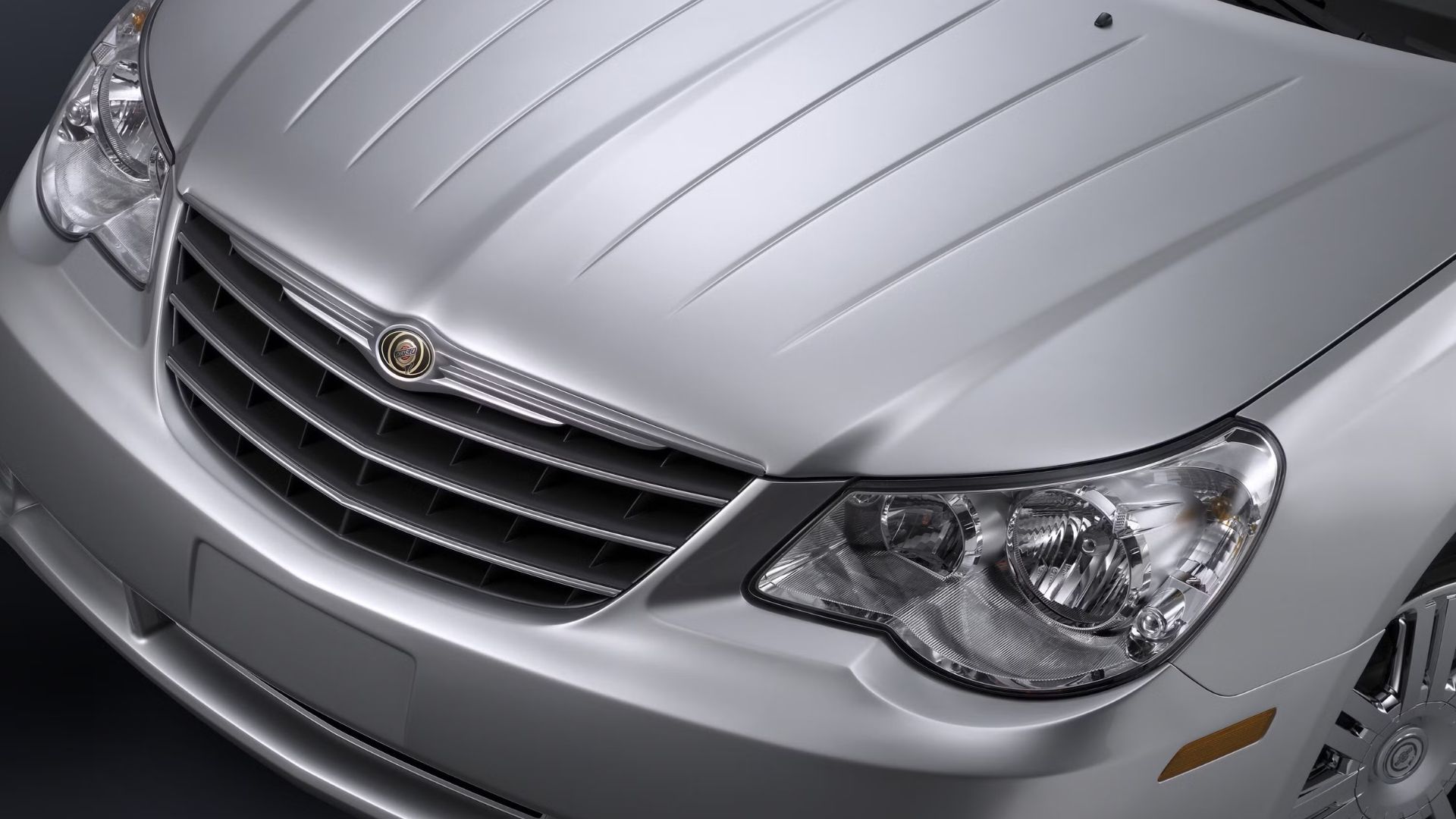
The Sebring was refreshed for the third and final time in 2007, and its styling was more akin to the Crossfire coupe and convertible that had launched a few years earlier. It got the same kind of chunky rear end, as well as a hood with slats plastered across it. Sales of the car failed to get Chrysler’s pulse racing though, and upon its mid-cycle refresh in 2010, the marque elected to ditch the Sebing name.
The car was instead renamed the 200, with Chrysler hoping that placing it directly below the more luxurious 300 in name would help pique customer interest. It was a step forward compared to the Sebring, but still not enough to match its closest competitors.
Discussion
What was the last truly desirable Chrysler model sold in America?
Chrysler is down to a rather depressing minivan-only lineup in the USA. Yes, the Pacifica is an excellent vehicle, but it’s hardly anything to get gearheads excited. That got me thinking: When last has Chrysler sold a genuinely desirable model in America? The supercharged Crossfire SRT-6 sold in the 2000s stands a chance, with its distinctive design and 330-hp V6. The old-school 300 SRT-8 with its 470-hp Hemi V8 was hardly boring, either.
Were these the last interesting cars Chrysler made, or would you need to go back even further into the history books to find one?
The Sebring Never Set The World On Fire
One of the main reasons the Sebring never stood apart from its other mid-size sedan rivals was that it failed to move the needle from a mechanical standpoint. It was available throughout its life with a range of inline-four and V6 engines, as well as a variety of manual and automatic gearboxes. Unlike some of its rivals, the Sebring was also never offered with any kind of true ‘hot’ version.

Related
Why Chrysler’s K Car Platform Matters More Than You Think
While we look back and scoff at them, the K-Car was an important step in modern automotive history.
|
2001-2011 Chrysler Sebring Sedan and Convertible Specifications |
|
|---|---|
|
Engine |
2.0-2.4L NA I4, 2.5-3.5L NA V6 |
|
Power |
150-235 hp |
|
Torque |
160-232 lb-ft |
|
0-60 mph |
7.8-10.7 seconds |
Higher-Spec Sebrings Had Decent Grunt, But Not Much Else
It came with the option of a 3.5-liter High Output V6 should the 2.4-liter four-pot sound a little gutless, with the former bringing a meaty 235 hp to the party even if it wasn’t quite as notable as the legendary slant-six. While it did get stabilizer bars to help keep the chassis nice and stiff to reduce weight transfer and body roll, this was about as far as it got in terms of sportiness. There was never any kind of sports suspension option that sharpened the Sebring up, with the only tick box being the Touring option, which only softened up the ride even further from the base setting. Higher-end models at least came with a full-disc braking setup, unlike the entry-level touring model which had discs on the front and ancient drums on the rear.
There was an all-wheel-drive version too, which started at $28,000. All in all though, the Sebring was built as nothing more than a slightly larger grocery-getter, which meant it struggled to match its better-engineered rivals.
The Sebring Completely Missed The Mark
Chrysler had an opportunity with the Sebring, given the company had built a reputation for offering high-end luxury vehicles, like the commanding Imperial, throughout its history. Had it played its cards right, the Sebring could have offered a plusher and smoother experience than its rivals, but at a lower price point. Chrysler half attempted to do this, as the Sebring Limited’s low $22,000 base MSRP was accompanied by a decent amount of standard equipment, especially compared to the base model which was only $2,000 cheaper.
It got a leather-wrapped steering wheel, one-touch power windows, the improved braking system and 17-inch alloy wheels, rather than simple wheel covers like the cheapest entry. The trouble was, the Sebring fell down in other areas compared to its rivals.
The Sebring Was Called Out For Its Quality
While the Sebring was cheap, unfortunately it felt it too. The model was criticized for its sub-par interior build quality when it was new, essentially undoing the good that was done by its tempting price point. It also failed to drive as well as rivals like the Camry and Accord, while its styling failed to win everyone over. All these elements combined meant the Sebring was destined to be written off as something of a nothingburger.

Related
Chrysler Is Officially A Minivan-Only Brand In 2025
The future looks bleak for this once revered auto manufacturer.
As a result, they’re worth peanuts on the used market. Even range-topping final model year examples can be had for well under $5,000, as per Kelley Blue Book, while earlier specimens can be had in good condition for around $2,000. They’re something a little different if you’re in a bind and need a cheap used runabout, though those looking for a more long-term solution would be better suited going for something like a used Camry or Accord, or even a 5 Series, which offers a much better driving experience and interior quality than the Sebring at a very similar used price according to KBB.
The Sebring Coupe Was A Different Beast
For those looking for a coupe that’s a little different, a more modern two-door version of the Sebring was offered between 2001 and 2007. While the sedan became the face of the nameplate at the start of the second-gen’s tenure, the coupe variant was retained. It was based on the third-generation Eclipse, which had already failed to capture the magic of its forerunner, ensuring it was mechanically unrelated to its Sebring siblings. This included different engine choices, with 2.4-liter I4 and 3.0-liter V6 Mitsubishi powerplants being utilized.
|
2001-2005 Chrysler Sebring Sedan and Convertible Specifications |
|
|---|---|
|
Engine |
2.4L NA I4, 3.0L NA V6 |
|
Power |
140-195 hp |
|
Torque |
155-205 lb-ft |
|
0-60 mph |
7.0-9.8 seconds |
While the Eclipse was aimed more at the sporty end of the coupe market, the Sebring coupe was geared at the luxury end. Its smooth and classy styling perfectly illustrated this, as was its interior, which could be had in a number of upmarket colors. The base versions came with cloth chairs and the four-cylinder engine, while the more expensive Limited got leather seats and the beefier V6. Like its sedan and convertible relatives, the coupe failed to capture the public’s imagination.

Related
Chrysler’s Oddball Hot Hatch May Be Worth A Second Look
We never thought we’d be saying it, but here we are.
Despite coming with different underpinnings, the Sebring was equally forgettable. It was a luxury car built on cheap foundations, ensuring it simply didn’t provide the experience it promised. The poorly-built cabin failed to improve matters either, meaning it joins the normal Sebrings as not being one of Chrysler’s best models. Poor sales meant it was axed after the 2005 model year, and its cold reception means even the latest examples can be had for around $3,000 on the used market.
Sources: Chrysler