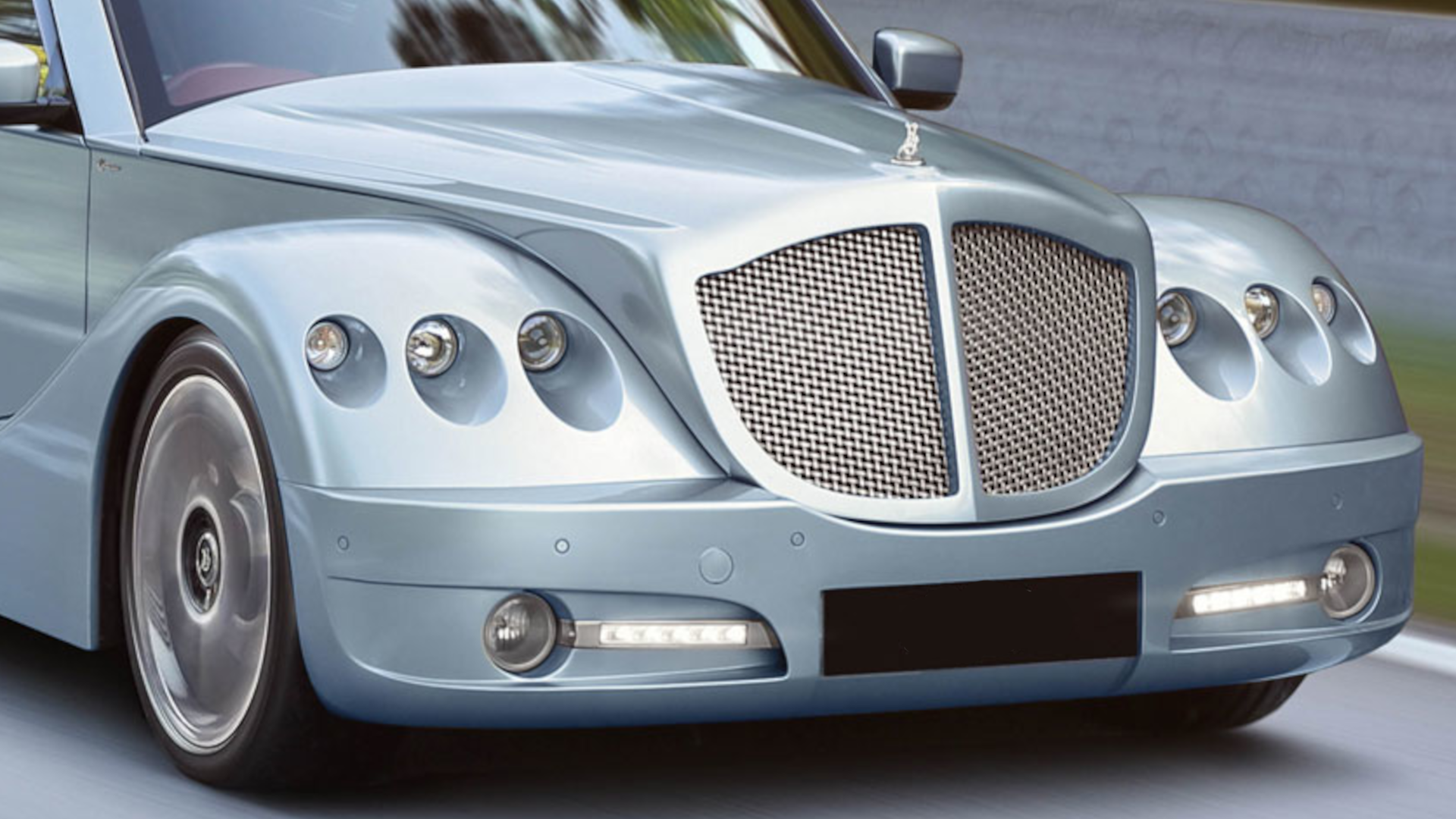
Modern-day Buick is but a shadow of its former self, unless you’re into crossover SUVs, in which case it has several appealing options on sale. A couple of decades ago, Buick was still cranking out semi-luxury sedans and didn’t even have an SUV on the menu. If we peel back the years even further, Buick also had quite a strong presence on the muscle-car scene with models such as the Skylark GS and the Wildcat, to name a few. And who can forget the Buick GNX? It was one of the fastest cars to roam the streets in the late ’80s.
Buick
Started back in 1899 by David Dunbar Buick, Buick was one of the first American car brands and is credited with the establishment of General Motors in the early 1900s. It’s one of oldest surviving American carmakers, and now sells luxury SUVs. It’s considered to be less premium (and less expensive) than Cadillac, but slightly more opulent than Chevrolet.
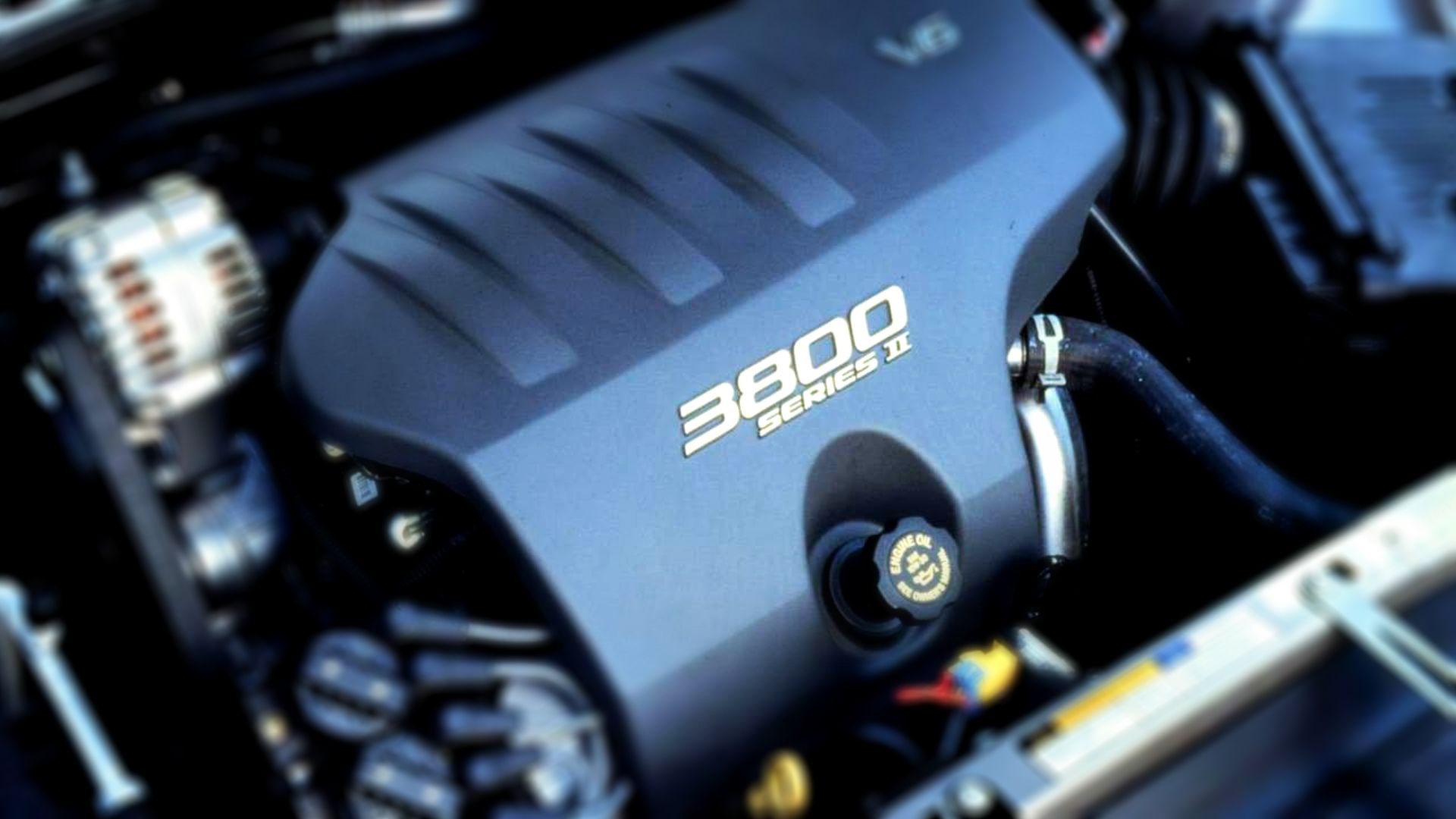
The Buick of yesteryear was also responsible for one of the most celebrated engines in all of automotive history: the 3800 V6, also just called the Buick V6. Its life spanned a total of 34 years, and over 25 million of them were built. It was such a good engine, in fact, that it won a spot on Ward’s 10 Best Engines Of The 20th Century. Think of the Buick 3800 as the Chevy small-block of American V6 engines. Engines as hardy as the 3800 V6 don’t come along all that often, but when they do, they should be remembered long after they’re gone.
The last Buick 3800 V6 engine was built in 2008, but it’s still under the hoods of thousands of used GM cars.
The Buick 3800 Started Life As A V8
Three Buick 3800 V6 Facts
- Derived from the Buick “Fireball” 215 CID (3.5L) aluminum V8 introduced in 1951
- Debuted in the Buick LeSabre concept
- First introduced as a V6 in 1962
The Buick 3800’s roots began in the early 1950s as the precursor to the Buick “Fireball” V8. At first, the Fireball V8 was an all-aluminum design, something seen as unusual and advanced at the time of its inception. Aluminum was just beginning to be researched for use as a casting material for automobile engines due to its light weight. The Buick LeSabre concept was the first vehicle to feature the all-aluminum Fireball engine, and was also supercharged.

Related
WATCH: GM 3800 V6 Engine Teardown Shows How Faulty Gaskets Can Spoil A Reliable Engine
This particular engine was sourced from a 2006 Pontiac Grand Pix GT with 126,000 miles on the clock.
It wasn’t until 1961 that the Buick V6 was created. The 1962 Buick Special – Buick’s cheapest model at the time – was the first to receive the new V6. In essence, it was just the Fireball V8 with two cylinders lopped off, and with a displacement of 198 CI (3.2L). And instead of aluminum, cast iron was used for both the block and heads. At first, the Buick V6 was seen as a rough-running engine due to the uneven firing pattern typical of a V8-derived 90-degree V6 where the opposing pistons share the same crankpin. A 90-degree V6 is also inherently unbalanced, which is why V6s usually have 60-degree bank angles (a 90-degree angle is ideal for a V8 – the engine the Buick 3800 is derived from – but not for a V6). However, buyers were pleased by its performance, with many reporting that it behaved quite like the Fireball V8, albeit with less power.

Related
Every Automakers’ Most Iconic V8 Engine: Mainstream Edition
While V8 engines typically power supercars and sports cars, some V8 engines are bred as simple workhorses.
1964 saw the 198 CID V6 grow to 225 CID (3.7L), and it would now be placed in the Buick Skylark, a slightly larger model, and the Buick Sport Wagon. Oldsmobile would also begin to source the Buick V6 for its Vista Cruiser station wagon, along with the famous F-85 Cutlass. In 1967, Buick sold the rights and tooling for their V6 to Kaiser-Jeep, as General Motors would now use a Chevrolet-bred 250 CID (4.1L) inline-six for entry-level models. British automaker Rover also acquired engine rights from Buick in 1967, although that deal was for use of Buick’s Fireball V8 – and that engine eventually evolved into the famous Rover V8.
The Buick V6 Was Born During A Time Of Automotive Uncertainty
Those who know American automotive history will recall the first Oil Crisis began in 1973. Basically, the crisis was caused by an abrupt shortage of oil imports coming in from Saudi Arabia, which severely hampered America’s gasoline and diesel supply. In turn, this drove gas prices sky-high, making the usual big V8s driven in the States at the time very expensive to own.
So, American automakers began building smaller cars with smaller engines, in order to offer fuel-efficient options to Americans struggling to afford gasoline. The Buick V6 was one of these motors, as General Motors bought back the rights to the Buick V6 from AMC, who now owned the rights to Kaiser-Jeep. The first model to come equipped with the Buick V6, now measuring 231 CID (3.8L), from the factory was the Buick Skyhawk and Apollo.

Related
10 Of The Best Buick Cars Of All Time
Buick has a rich history of great cars, but these ten pushed the boundaries.
Also using the new Buick V6 was Oldsmobile, who were installing the motor in models such as the Cutlass and Starfire. Chevrolet also began adopting the Buick V6 engine for their own purposes, mainly for use in the Camaro, El Camino, and Malibu models. Also in on the Buick 231 CID V6 craze was Pontiac, who began putting it into their Sunbird, Firebird, LeMans, and Ventura models.

Add CarBuzz to your Google News feed.
In 1977, the Buick V6 finally received a long-overdue modification – a new crankshaft with crankpins offset by 30 degrees for the opposing pistons. This split-crankpin crank design finally evened out the firing intervals, resulting in appreciably smoother running.
The 3800 V6 Through The Years
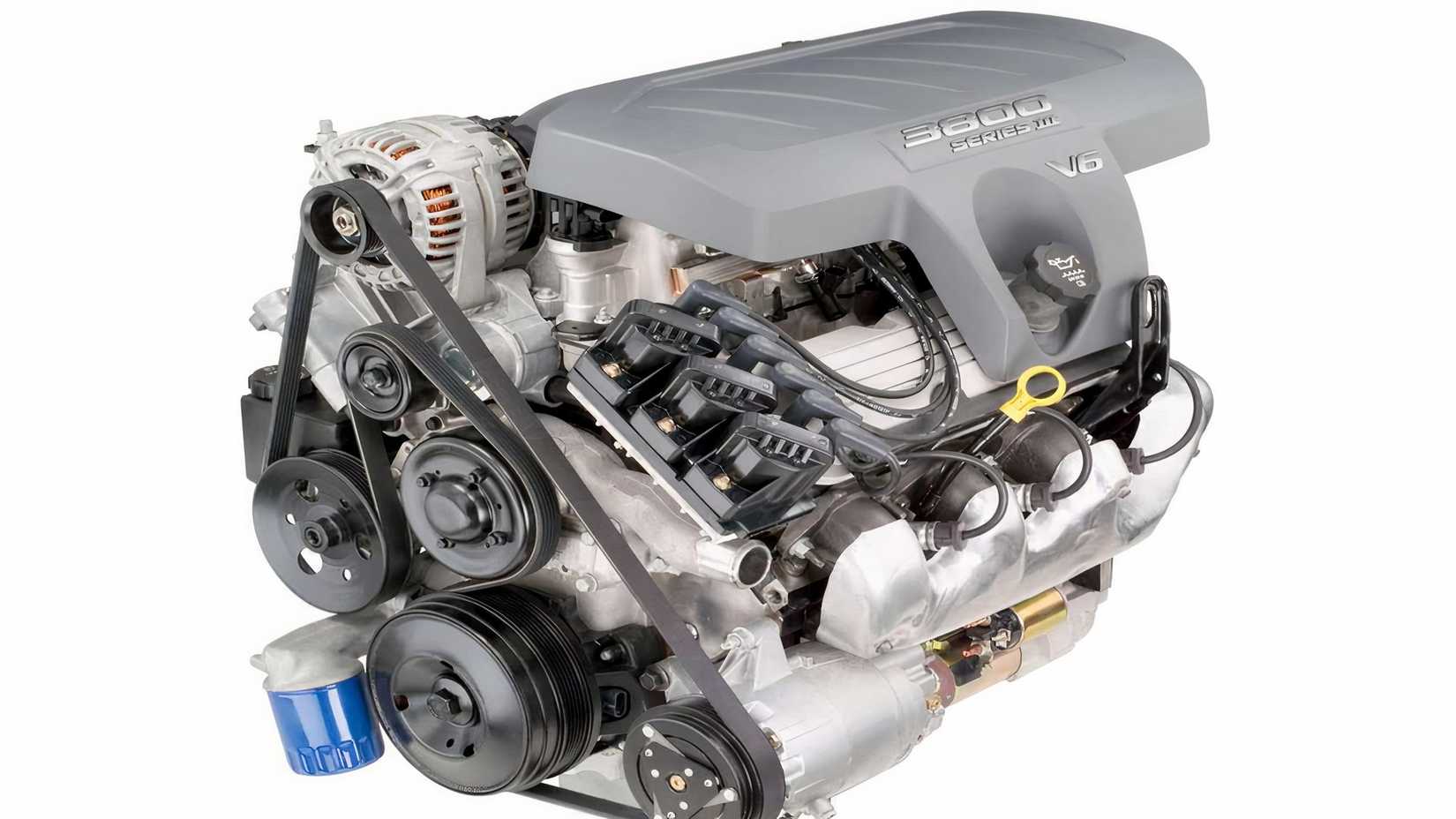
After the first and second oil crises were averted, the precursor to the Buick 3800 V6 continued to live on underneath the hoods of many budget General Motors models. After nearly a decade of disorganized use and several one-off versions, the Buick V6 as we know and love it, the 3800, was first seen in 1988. Below, we’ll break down each generation of the Buick 3800 V6.
Pre-Series I (1988–1991)

The first modern iteration of the Buick 3800 V6 came about in 1988, as it now received features such as multiport fuel injection and on-center cylinder bore spacing. It was also equipped with a balancer shaft, which quelled the last remaining vibrations inherent in the 90-degree V6 configuration that couldn’t be fixed with the split-pin crank, and finally turned it into a sweet-running engine. In its base iteration, the Pre-Series I 3800 V6 produced 165 horsepower and 210 lb-ft of torque.
Models Using The Pre-Series I 3800 V6:
- 1988–1990 Buick Electra
- 1988–1991 Buick LeSabre
- 1988–1990 Buick Reatta
- 1988–1990 Buick Riviera
- 1988–1991 Holden Commodore (VN Series I)
- 1988.5–1991 Oldsmobile Delta 88
- 1988–1990 Oldsmobile Ninety-Eight
- 1988–1990 Oldsmobile Touring Sedan
- 1988–1990 Oldsmobile Toronado
- 1988–1990 Oldsmobile Toronado Trofeo
- 1988–1991 Pontiac Bonneville
Series I (1990–1995)
In 1990, Buick debuted the next-gen version of the 3800 V6, dubbed the Series I in the 1990 Buick Regal. Power was increased slightly to 170 horses, and new engine features included a new timing-chain tensioner, sound-deadening valve covers, and a revised intake manifold. The Series I 3800 V6 was also supercharged, and produced up to 225 horsepower.

Models Using The Series I 3800 V6 (L27):
- 1992–1995 Buick LeSabre
- 1991–1994 Buick Park Avenue
- 1991 Buick Reatta
- 1990–1995 Buick Regal
- 1991–1993 Buick Riviera
- 1992–1995 Chevrolet Lumina APV
- 1992–1994 Pontiac Bonneville
- 1992–1995 Pontiac Trans Sport
- 1992–1994 Oldsmobile Eighty-Eight
- 1992–1994 Oldsmobile Ninety-Eight
- 1991–1992 Oldsmobile Toronado
- 1991–1992 Oldsmobile Toronado Trofeo
- 1992–1995 Oldsmobile Silhouette
Models Using The Series I Supercharged 3800 V6 (L67):
- 1991–1995 Buick Park Avenue Ultra
- 1992–1995 Oldsmobile Ninety-Eight Regency Elite (optional), standard with the Touring Sedan grade
- 1992-1995 Pontiac Bonneville (optional), standard with the SSEi grade
- 1995 Buick Riviera (optional)
- 1995 Oldsmobile Eighty-Eight (optional)
Series II (1995–2005)

The longest-running iteration of the Buick 3800 V6 was its Series II generation, which spanned a decade. It’s also the most revered, as it’s considered the most reliable, along with the smoothest-running version. Several changes were made to create the Series II, including a completely new crankshaft, a redesigned cylinder head, and different valves. It also sported a higher compression ratio, and with supercharging, it produced up to 240 horsepower and 280 lb-ft of torque. The Series II won Ward’s 10 Best Engines from 1995 to 1997.
Models Using The Series II 3800 V6 (L36):
- 1996–2005 Buick LeSabre
- 1995–2005 Buick Park Avenue
- 1996–2004 Buick Regal LS
- 1995–1997 Buick Riviera
- 1995–2002 Chevrolet Camaro
- 2000–2005 Chevrolet Impala
- 1998–1999 Chevrolet Lumina LTZ
- 1998–2005 Chevrolet Monte Carlo
- 1995–1996 Oldsmobile Ninety-Eight
- 1995–1999 Oldsmobile Eighty-Eight
- 1998–1999 Oldsmobile Intrigue
- 1996–1998 Oldsmobile LSS
- 1997–1998 Oldsmobile Regency
- 1995–2005 Pontiac Bonneville
- 1995–2002 Pontiac Firebird
- 1997–2003 Pontiac Grand Prix

Related
This Buick Performance Car Will Be A Future Collectible
Buick isn’t much of a performance brand these days, but this recent, hot model might very well be a future gem.
Models Using The Series II Supercharged 3800 V6 (L67):
- 1996–1999 Buick Regal GS
- 1996–1999 Buick Park Avenue Ultra
- 1995–1997 Buick Riviera
- 1998–1999 Chevrolet Monte Carlo SS
- 1995–1999 Oldsmobile Eighty-Eight (optional)
- 1995–1996 Oldsmobile Ninety-Eight (optional)l)
- 1995–1999 Pontiac Bonneville (optional)
- 1997–1999 Pontiac Grand Prix (optional)
Series III (2004–2009)

The introduction of the Series II 3800 V6 saw a big reduction in General Motors models that used the engine. The list was whittled down from over 20 to just three vehicles, as the stalwart’s eventual decline began. With the introduction of the Series III, the motor gained an aluminum intake manifold on naturally aspirated models, returnless fuel injection made its debut, and it was also the first gasoline-powered motor to receive a SULEV (Super Ultra Low Emissions Vehicle) efficiency rating. The supercharged version’s power rating reaches its maximum at 260 horsepower.
Models Using The Series III 3800 V6 (L26):
- 2004–2008 Pontiac Grand Prix
- 2005–2009 Buick LaCrosse
- 2006–2008 Buick Lucerne
Models Using The Series II Supercharged 3800 V6 (L32):
- 2004–2005 Pontiac Grand Prix GTP
- 2006–2007 Pontiac Grand Prix GT
What Made The 3800 So Great, Summed Up
Apart from its vast popularity, the 3800 V6 boasted a few key aspects to itself which made it such a great engine. For one thing, it was an extremely smooth-running engine once equipped with a split-pin crank and balancer shaft, so by 1988 it offered refinement that few V6 motors could touch, especially 90-degree ones. It was also incredibly fuel efficient, with some models using the 3800 V6 being able to get well over 30 mpg on the highway. Lastly, however, is its reliability. Loads of 3800 V6-equipped vehicles have well over 300k miles on the clock, with many going even further than that. It’s no wonder the Buick 3800 V6 lived for so long, and accomplished so much.
Sources:
GMAuthority.com, AutoEvolution.com.