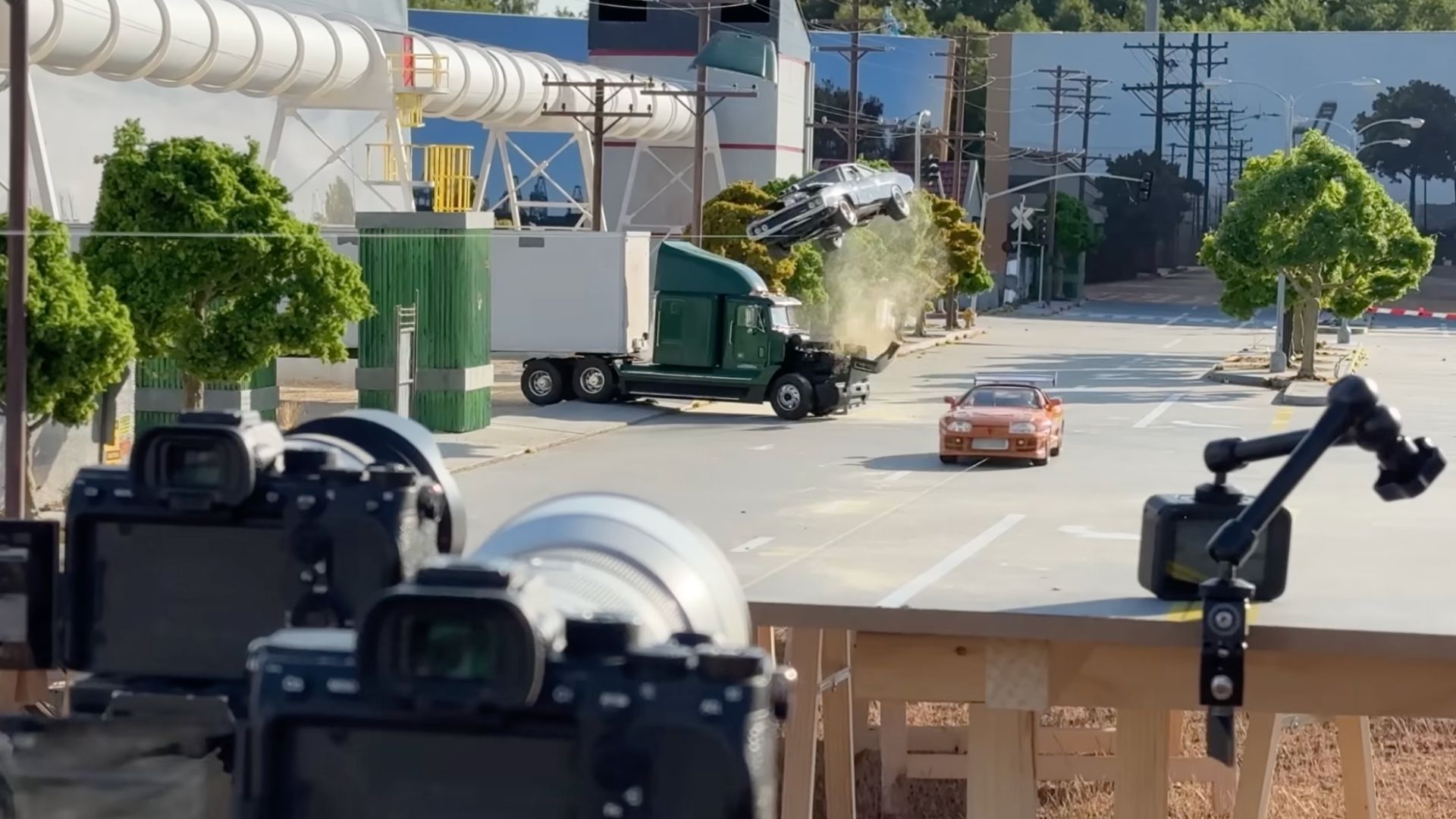
The first Fast and Furious movie barely resembles its sequels in some ways, but one thing remains a hallmark of the franchise: outrageous stunts and some pretty impressive practical effects. The final showdown between Dominic Toretto in his 1970 Dodge Charger and Brian O’Conner in his 1994 Toyota Supra has inspired dioramas and model kits, and now, it’s even got its own miniature homage courtesy of the YouTube channel Movies Miniatures Effects. Despite carrying out the race in 1:24 scale, the final result is so realistic you might not be sure the original wasn’t done that way.
- Base Trim Engine
-
3L I6 ICE
- Base Trim Transmission
-
6-speed manual
- Base Trim Drivetrain
-
Rear-Wheel Drive
The Job Required Painstaking Preparation
The YouTube team, based in France, did a commendable job of making a miniature set en plein air look like the Port of Los Angeles, but it wasn’t easy. The filmmakers crafted backdrops that matched the San Pedro surroundings of the original, then placed them behind a meticulously crafted setpiece that included a train crossing and shipping and recieving centers, just like in the movie. The fated semi that pulls out in front of Dom even has its own ramp setup – obscured from the camera – to get the miniature Charger to vault up and over in just the right way. Check it out below.
The final product is unreal, but it clearly took meticulous planning and more than a few takes to make it all happen. And then of course there’s the editing on the back end to give the scene that grainy, overexposed, heat-soaked look of the original movie. If there were some way to miniaturize Brian and Dom’s aggressive facial expressions on the figurines behind the wheel, the end result would be almost indistinguishable from The Fast and the Furious.

Related
Miniature Ferrari 296 GTS Takes 300 Hours To Make
Just 199 will be made, and they’re typically pricey.
Before CGI, All We Had Were Miniatures
Not only is the project a neat take on a famous scene in automotive cinema history, it also provides a glimpse on how Hollywood carried out large-scale stunts in the era before computer-generated imagery. Jurassic Park, for example, used hyper-realistic miniatures and animatronics alongside its ground-breaking CGI, and as a result, it ends up looking almost more lifelike than the later films that relied much more heavily on virtual effects. If you’ve ever wondered how that’s done, the F+F tribute above sheds some light on the process.
Foremost, the surroundings and vehicle miniatures need to be impeccably detailed. And as you might be able to see, the team pre-damaged the Charger model to ensure it fell apart in just the right way to look realistic from behind the camera. Stuffing the thing with sawdust also helped it achieve that debris-field effect that makes it all look like an actual car crash – rather than just a few kids mashing their toys together that then emerge unscathed. And finally, having a zillion camera angles of the scene allowed the film editor to stitch it all together, potentially covering up behind-the-scenes operations like massive human heads emerging over the skyline. All in good fun.
Source: Movies Miniatures Effects on YouTube

Related
Fast And Furious Cars: 10 Of The Most Iconic Rides From The Fast Franchise
Hypercars, supercars, JDM and American muscle – F&F spoils us with different cars