The mass majority of us will have experienced a situation in which we just aren’t confident in making a maneuver because we cannot clearly see if there are any obstacles behind us, hiding in blind spots. Perhaps this was due to particularly nasty weather, such as thick fog, obstructing our view, or maybe we’d just hopped into a new car and hadn’t had a chance to get familiar with where the blind spots are, or had simply forgotten to adjust the mirrors prior to setting off. Visibility can be further hindered in supercars and sports cars, with their designs prioritizing style and performance over everything else.
Blind-spot monitoring systems are now largely commonplace in new cars, along with a whole host of awesome new safety features, and these systems are designed to eliminate any concerns that drivers may have about cars, pedestrians, or anything else that may be lurking in the shadows behind and alongside them when out on the road. If you’re wondering what the meaning of BSM is on a car, read on to find out.
This article takes a look at everything related to blind-spot monitoring systems, including why and when the technology was invented, how useful it is today, the different types that exist, and other related technologies. Information has largely been sourced directly from a variety of mainstream manufacturers.
Related
Ford’s New Smart Mirrors Will Make Reversing A Trailer A Piece Of Cake
You never have to wonder where the extremities of your trailer are with Ford’s auto-swiveling mirrors.
What Exactly Is BSM?
A blind-spot monitoring system, or BSM, is exactly what it sounds like – a system that can monitor what’s in your blind spot. A blind spot is an area around the car that can not be seen by the driver while they are at the wheel, and naturally, not being able to see this area poses significant risks, both to occupants of the car and to anyone who may be in the blind spot. This technology seeks to display to or warn the driver of objects in the blind spot, thus enabling them to drive safely. Various types of BSM systems are available, with all providing some sort of visual aid, while some go one step further and provide an audible warning too – this article will explore all mainstream types of BSM systems.
Unsurprisingly, it’s the safety-crazed Swedish manufacturer Volvo that lays claim to bringing this technology to the mainstream. The automaker first debuted a BSM system on its 2001 concept car, dubbed the 2001 Volvo SCC (safety concept car), before making the system available to the public for the first time on the then-new Volvo XC90 in 2003.

Add CarBuzz to your Google News feed.
Here’s How Blind-Spot Monitoring Systems Actually Work

Blind-spot monitoring systems work by analyzing the area surrounding a car, reading whether an obstacle is hiding within the blind spots, and then relaying that information to the driver. There are two main ways in which a BSM system can evaluate the blind spots, and that’s either by radar, or by camera.
Radar-Based Systems
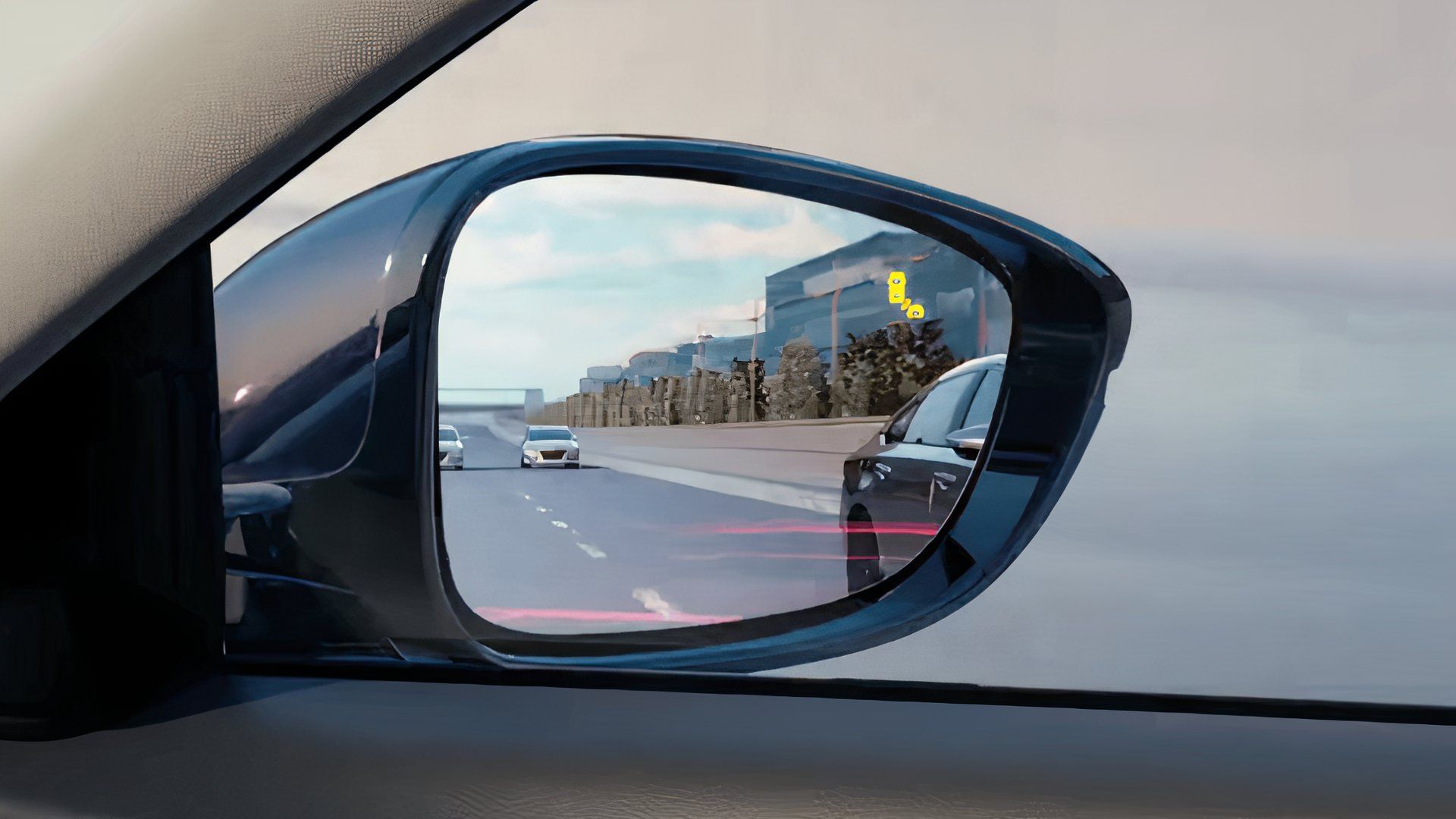
A radar-based system will be able to tell where an obstacle is, how close to the vehicle it is, how fast it’s moving, and when it eventually passes out of the blind spot. If an obstacle is in one of the car’s blind spots, then the driver can be alerted, usually by a solid or flashing orange light in the corner of the corresponding door mirror. This visual warning is increasingly paired with an audible warning, further alerting the driver to the obstacle lurking out of sight.
Camera-Based Systems
Camera-based systems simply provide the driver with a clearer view of the surrounding road, and instead of giving a warning, these systems provide a clear enough image so that the driver can effectively eliminate any blind spots – similar to how a back-up camera works. In some instances, the camera’s image is only displayed when indicating to change lanes, which reduces the chance of distraction while driving.

Related
New BMW Digital Side Mirrors Will Eliminate Blind Spots
New camera angles and clever image processing can provide a driver with a panoramic view around the rear of their vehicle.
These Are The Different Types Of BSM Systems
The way in which blind-spot monitoring systems are built in and how they operate can change from car to car car; these are some of the more common types which can be found on most modern mainstream models:
Door-Mounted BSM Systems
Door-mounted BSM systems can either use cameras to send an image back to the driver, or sensors which will use radar to warn the driver of objects in the blind spots. These sensors or cameras will be mounted along the doors, and provide a better ‘view’ of the surrounding road for the driver, thus eliminating the blind spot.
Mirror-Integrated BSM Systems
The mirror-integrated BSM systems are hugely popular, and they work by showing a small indicator at the top or bottom of the door mirror. When an obstacle in the blind-spot is picked up, the indicator in the corresponding door mirror will light up, solidly, or it will likely flash if the driver is indicating.
Camera-Based BSM Systems
Such systems feature cameras on the side of the vehicle, which then send footage of the blind spots to the driver in real time, allowing them to have a much clearer view of the surrounding road. Often, these systems also feature warning indicators which light up, either on the driver’s display screen and/or in the corresponding door mirror.

Related
Honda Finds Brilliant Solution To Dangerous Blind Spots
The company is speeding ahead with new driver-assist technologies.
Here’s Why Blind-Spot Monitoring Systems Are A Valuable Driver’s Aid

Some driver’s aids are largely unpopular and can even be considered to be a distraction, with some arguing that such aids are actually leading to drivers becoming less skilled as the reliance upon technology increases. However, BSM systems are widely accepted as being hugely helpful, and one of those features that perhaps we never knew we needed but now couldn’t live without. Here’s why.
BSM Systems Are Especially Useful When Visibility Is Low
Driving on the highway in heavy rain, snow, or particularly thick fog can be daunting, especially when changing lanes. A BSM system takes away some of the stress by cutting through the bad weather and continuing to alert drivers of obstacles that may be increasingly difficult to see in such conditions.
Safety First: BSM Systems Help To Reduce Avoidable Incidents
The driving force behind BSM systems is simply to reduce accidents, be it by reducing the number of highway incidents from changing lanes without properly looking, or by alerting drivers of cyclists and pedestrians in tightly packed city centers.
New Drivers May Find BSM Systems Especially Helpful
Audible and visible alerts can help to remind new drivers to check their blind spots when turning, reversing, or changing lanes. New drivers often make up a large percentage of incidents due to a lack of experience, but a smart BSM system, in addition to other youth-focused safety features, should be able to reduce this risk.

Related
Advanced Driver Aids Are Making Us Worse Drivers
It turns out driver assistance systems are fostering complacency.
Associated Driver Assistance Systems
Blind-spot monitoring technology can and does work in conjunction with other radar and camera-based tech in order to further increase convenience and reduce risk – here are some great examples of how BSM works alongside other driver assistance systems:
Lane Change Assist
Lane-change assist provides an audible and/or visual alert when a hazard is picked up in a driver’s blind-spot, when they are indicating to change lanes. Such incidents when merging or switching lanes on the highway can be extremely dangerous, so no doubt this technology has saved many lives along the way.
Rear Cross-Traffic Alert
This feature is one which many can now no longer do without, and it alerts the driver when an obstacle steps into the vehicle’s path when reversing, which can often be hard to spot if it appears quickly, as it’s impossible to keep an eye on all three mirrors at any given time. The alert will be audible, and usually also highlighted on a back-up camera display, giving the driver the best possible chance of reacting before an accident occurs.
Adaptive Cruise Control
Blind-spot monitoring systems and adaptive cruise control aren’t as closely linked as the other systems mentioned, but they do work excellently together to provide an all-round safety package for when traveling on the highway. Adaptive cruise control maintains a safe distance from the vehicle ahead, while the BSM keeps an eye on surrounding cars to the side and behind, protecting both driver and occupants from all angles when working together.

Related
Discussion: Does cruise control actually save gas?
Yes, cruise control does help save gas. Maintaining a constant speed, rather than continuously adjusting your speed manually with your foot, is a more fuel-efficient way to drive.
Why Is My BSM Light On?
If your BSM light is on, it suggests that a fault with the system has been detected, and it’s time to have your car’s system inspected. The light may be solid or flashing, depending upon the severity of the issue.
Can You Turn Off BSM?
Yes, BSM can be turned off, usually via a physical button on the dash, or through the settings accessed through your vehicle’s main display screen.
What Does BSM Mean On A Toyota?
BSM on a Toyota means blind-spot monitoring system.
Sources: Toyota, Honda, Volvo