Some engines are just objectively better than others for certain tasks. Looking for an economical daily? Probably best to steer clear of any big-block V8s, and likewise, if you’re in the market for a high-performance sports car, opting for a four-cylinder diesel engine isn’t likely to do you any favors.
However, when it comes to finding something exciting for a high-performance engine swap, there is one name that keeps cropping up, and that’s Honda’s K24 engine. This K-series inline-four from Honda is winning fans within the tuning community for a whole host of reasons, and we decided to discover what all the fuss is about – here’s everything you need to know.
Available Models
Honda
Japanese automaker Honda rose from the ashes of WWII and set about its business as a manufacturer of motorcycles initially, only launching its first car, the T360 kei truck, in 1963. Founder Soichiro Honda targeted the American market as the most important nut to crack, leading to generations of iconic nameplates like the Civic and Accord being among America’s best-selling passenger cars. Today, Hondas are renowned for their safety, practicality, and reliability, with a sprinkling of performance from models like the Civic Type R.
- Founded
- 24 September 1948
- Founder
- Soichiro Honda
- Headquarters
- Hamamatsu, Japan
- Owned By
- Publicly Traded
- Current CEO
- Toshihiro Mibe
CarBuzz has sourced all specifications and statistics directly from Honda. If any other authoritative sources have been used, they will be listed separately at the foot of the article.

Related
The 10 Most Reliable Honda Engine Families Ever Produced
Engine masters Honda makes everything from high-revving V-TECs to boat, plane, power generator, and motorcycle engines.
A Brief History Of Honda’s K-Series Engine

Honda’s iconic line of K-series engines was introduced in 2001, just as Honda was refreshing much of its comprehensive lineup. The K-series engine, first introduced as the K20A, replaced the popular B-series family of engines, and both engines share many similarities. One key difference, though, was the size of the K-Series engine, which started at 2.0 liters, and went up to 2.4 liters in the K24 engine.
The K24 appeared not long after and is commonly found in larger models, due to its higher capacity. While some models, such as the CR-V and Element, use a lower-powered guise of the K24, some sportier models, like the Acura TSX, pack upwards of 200 horsepower.
Key characteristics of all K-series engines include the iconic V-TEC system, which is a system that allows the engine to swap between different cam profiles as engine revs increase or decrease. Furthermore, the K-series engines boast complete aluminum construction, which keeps the total weight nice and low – ideal for keeping the handling of any car sweet. Another distinctive feature is dual overhead cams (DOHC).
The K-series engine first appeared in the Type R Civic and Integra models of 2001, but it equally found homes under the hoods of some much less intense and economy-focused cars, such as base Civic and Accords. While the K-series family has spent much of its life as a naturally aspirated engine, in order to keep up with the competition, Honda decided to turbocharge the K20 for the 2015 Honda Civic Type-R, and all subsequent Type R models have been boosted since.

Add CarBuzz to your Google News feed.
K24 Engine Applications
K24 Applications And Outputs
- K24A1: 2002 – 2006 Honda CR-V; 160 horsepower and 162 lb-ft
- K24A2: 2004 – 2008 Acura TSX; 205 horsepower and 166 lb-ft
- K24A4: 2003 – 2005 Honda Accord, 2003 – 2008 Honda Odyssey, and 2003 – 2006 Honda Element; 160 horsepower and 161 lb-ft
- K24W: 2013 – 2017 Honda Accord and 2015 – 2019 Honda CR-V; 185 horsepower and 181 lb-ft
- K24V7: 2016 – 2020 Acura ILX; 201 horsepower and 180 lb-ft
- K24W7: 2015 – 2020 Acura TLX; 206 horsepower and 182 lb-ft
- K24Y2: 2012 – 2015 Honda Crosstour; 192 horsepower and 162 lb-ft
Honda offers a wide and varied selection of cars, and so, naturally, for an engine to succeed across the entire line-up, it needs to be versatile enough to be slotted into a wide range of different vehicles. This is where the K-series really succeeds, and in particular, the K24.
While the smaller capacity K20 is more often found under the hood of hatchback and compact models, such as the Civic and Integra, the larger K24 unit can be found powering a variety of crossovers and SUVs. For example, the CR-V, Element and Crosstour have all been powered by Honda’s 2.4-liter K-series engine.
Premium models, such as the Acura TLX and TSX, use more powerful versions of the K24, which no doubt helps to justify their steeper price when compared to counterpart Honda models. No current Honda or Acura models in America are sold with the K24 engine, but some, such as the 2020 Acura ILX, used the K24 fairly recently, giving the K24 a production life of almost 20 years in North American models.

Related
WATCH: How To Build A 10,000-RPM K24 Honda Engine
The goal is to reach 10,000 rpm with minimal power loss.
K24 Vs. K20: What’s The Difference?

|
Honda K-Series Engine Comparison |
||
|---|---|---|
|
Engine |
K20 |
K24 |
|
Capacity |
2.0 liters |
2.4 liters |
|
Power |
150 – 320 horsepower |
160 – 205 horsepower |
|
Torque |
137 – 310 lb-ft |
161 – 182 lb-ft |
|
Notable applications |
Honda Civic, Integra and Accord |
First-gen Acura TSX, various JDM Honda models (Element and Odyssey Absolute) |
The main difference between these two engines is the glaringly obvious one – the K24 is simply the larger capacity sibling of the K20. As the name suggests, the K24 sports a capacity of 2.4 liters, whereas the K20 is a 2.0-liter engine. The K24’s engine specs result in more torque than the 2.0-liter engine, thanks to a larger capacity, which makes the K24 a more suitable choice for crossover and SUV models, such as the CR-V or Crosstour. Yes, the K24 engine’s horsepower isn’t spectacular, but it can easily produce more power with some modifications.
Another difference is that Honda has been boosting the K20 over the last decade, whereas the K24 has only ever left the factory in a naturally aspirated state. Honda made the decision to turbocharge the K20 for Type R models, which made sense, as the competition was ramping up power output significantly, and a naturally-aspirated K20-powered Civic Type R just could not compete at the same level.
Here-in highlights the other main difference between these two engines – their applications. The K20 can be found powering smaller economy models, and in more potent guises, the Honda Type R lineup. By way of comparison, the K24 tends to power either more premium Acura sedans, or family-orientated crossovers and SUVs.
Why The K24 Engine Is A Great Tuner Engine
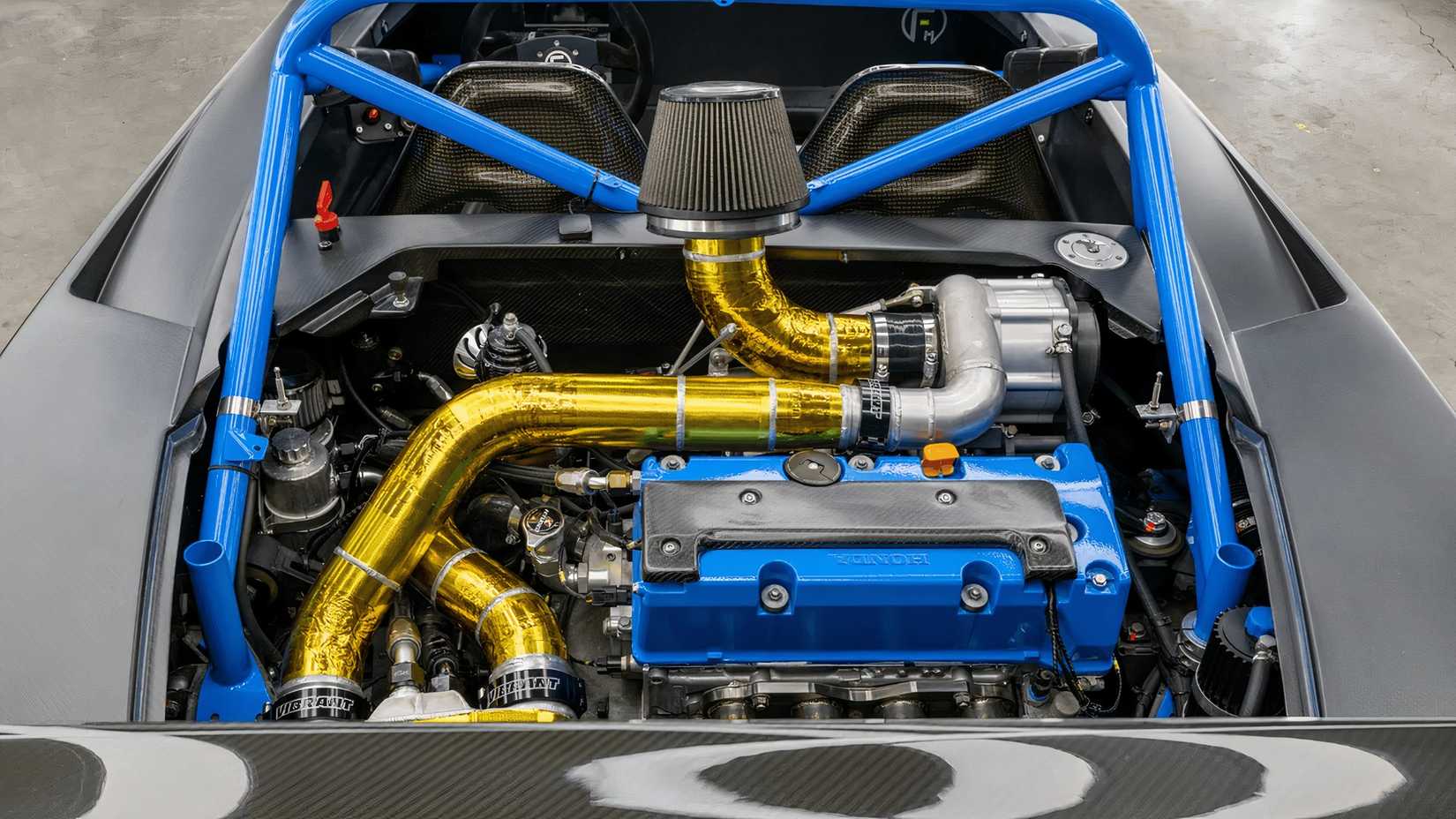
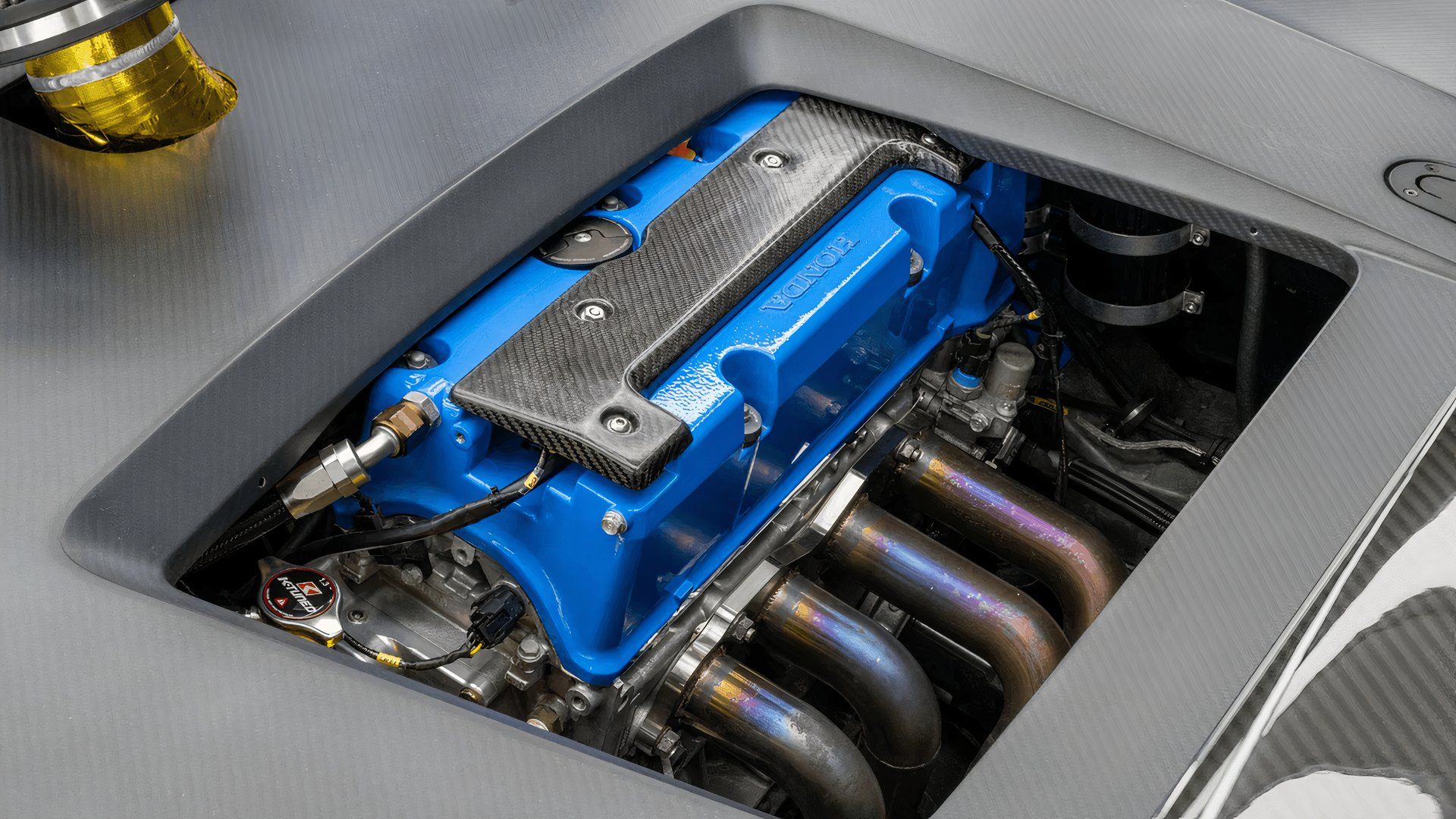
Many models by Honda have a huge following of enthusiasts that love to modify and enhance their cars, and there’s good reason for that too. The K-series engine lends itself well to tuning, and the K24, being part of that family, is no exception. Here are some, but not all, reasons why the tuning scene loves to get their hands on a K24.
Honda’s K24 Is A Reliable Base
First and foremost, tuners look for reliability when it comes to building an engine. Making huge power is great, but if the engine can’t handle it, then what’s the point? This is where Honda’s K24 comes into its element, as the K-series engines are some of the most bulletproof engines out there. Starting with a solid and dependable base like this is a fantastic way of ensuring reliable power further down the line.
Strong Internals Can Take The Pressure
One of the easiest ways of punching out big numbers from a small engine is to throw a turbo or supercharger into the mix. In many instances, this can involve first strengthening the standard internals by fitting forged parts, which is a costly exercise, prolonging the process and amplifying the costs. Fortunately, Honda’s K24 can handle the pressure, as even with stock internals, the engine can be reliably boosted to north of 400 horsepower.
The High-Revving Nature Of The K24 Makes For A Thrilling Drive
High-revving engines mean you can keep your foot planted for longer between shifting gears, and there is little else more satisfying than chasing down 7,000 rpm redlines. Here, few accessible inline-fours can match the K24, which boasts a stock redline of 7,200 rpm.
1:07

Related
Video: Somebody Put A 13,000-RPM Honda Engine In A Mazda Miata
The MX-5 gets more power but loses some torque.
Notable K24 Engine Swaps
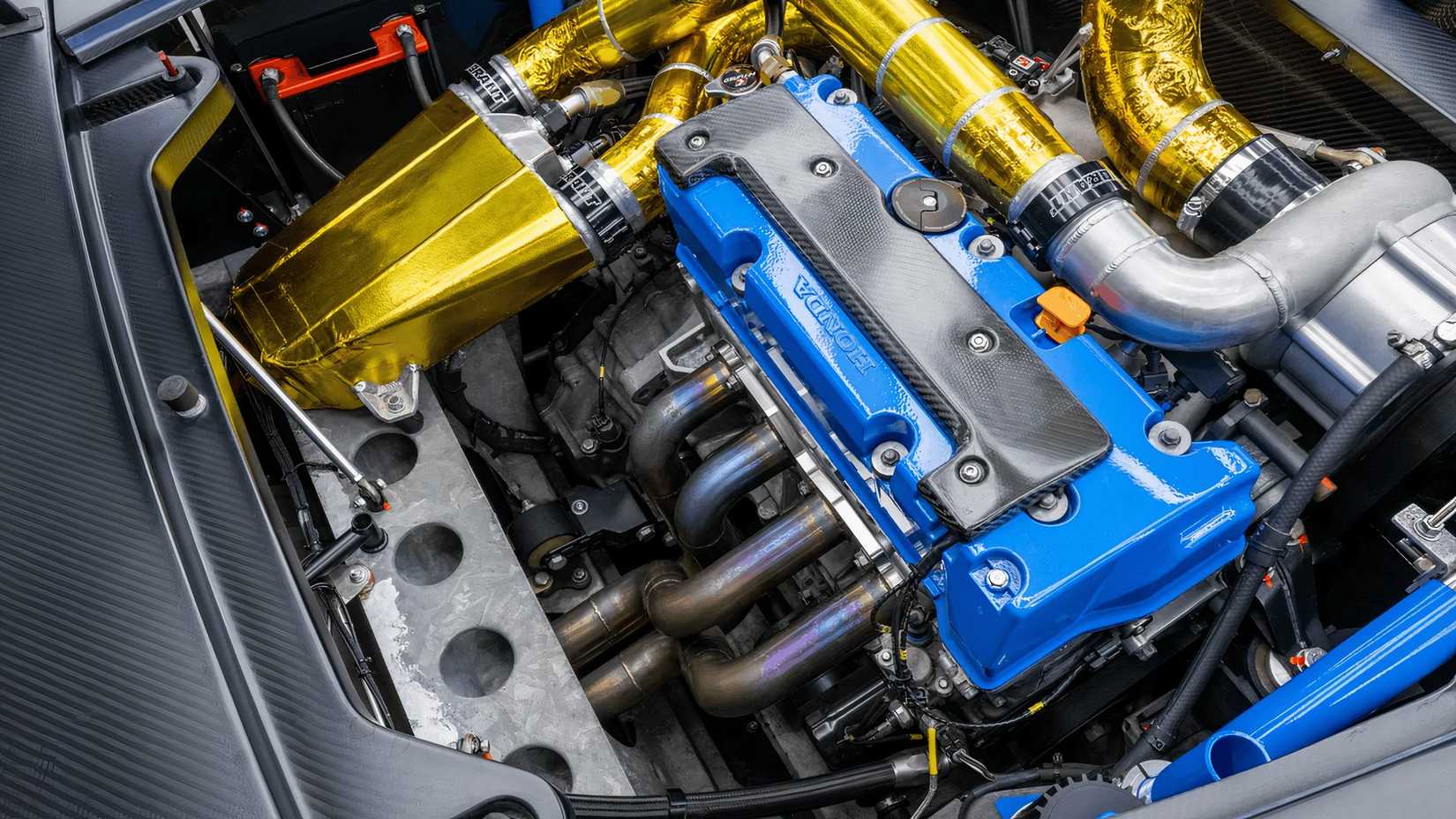
Purists love to complain when tuners ‘ruin’ their cars by performing engine swaps, and usually there’s little cause for the moaning – but surely swapping a K24 into a classic Ferrari counts as automotive sacrilege? Mike Burroughs from StanceWorks would beg to differ, as that’s exactly what he’s done to his striking Ferrari 308 GTB. The result is astounding, though – an ’80s Italian sports car that puts out a reliable 1,000 horsepower; all of a sudden, the Honda swap starts to make sense.
The controversy doesn’t end there, either – here’s a 997 Porsche which is also powered by a K24. The reason behind this madness? Nick, the owner, did not fancy his chances against the early water-cooled 911 issues (IMS bearing failures are just the beginning), and so a hot K24 seemed like a reasonable solution. A supercharger spices the recipe up somewhat, providing Nick with a sensible but playful 435 horsepower at the wheels.
The K24 is also regularly lumped into the engine bays of other Hondas, too, such as with this sleeper of a seventh-gen Civic Hybrid. Gone is the old, lackluster powertrain, and in its place sits a turbocharged K24, which pushes out multiple times the stock output, while still retaining the unassuming exterior.
How Much Does The K24 Engine Cost?
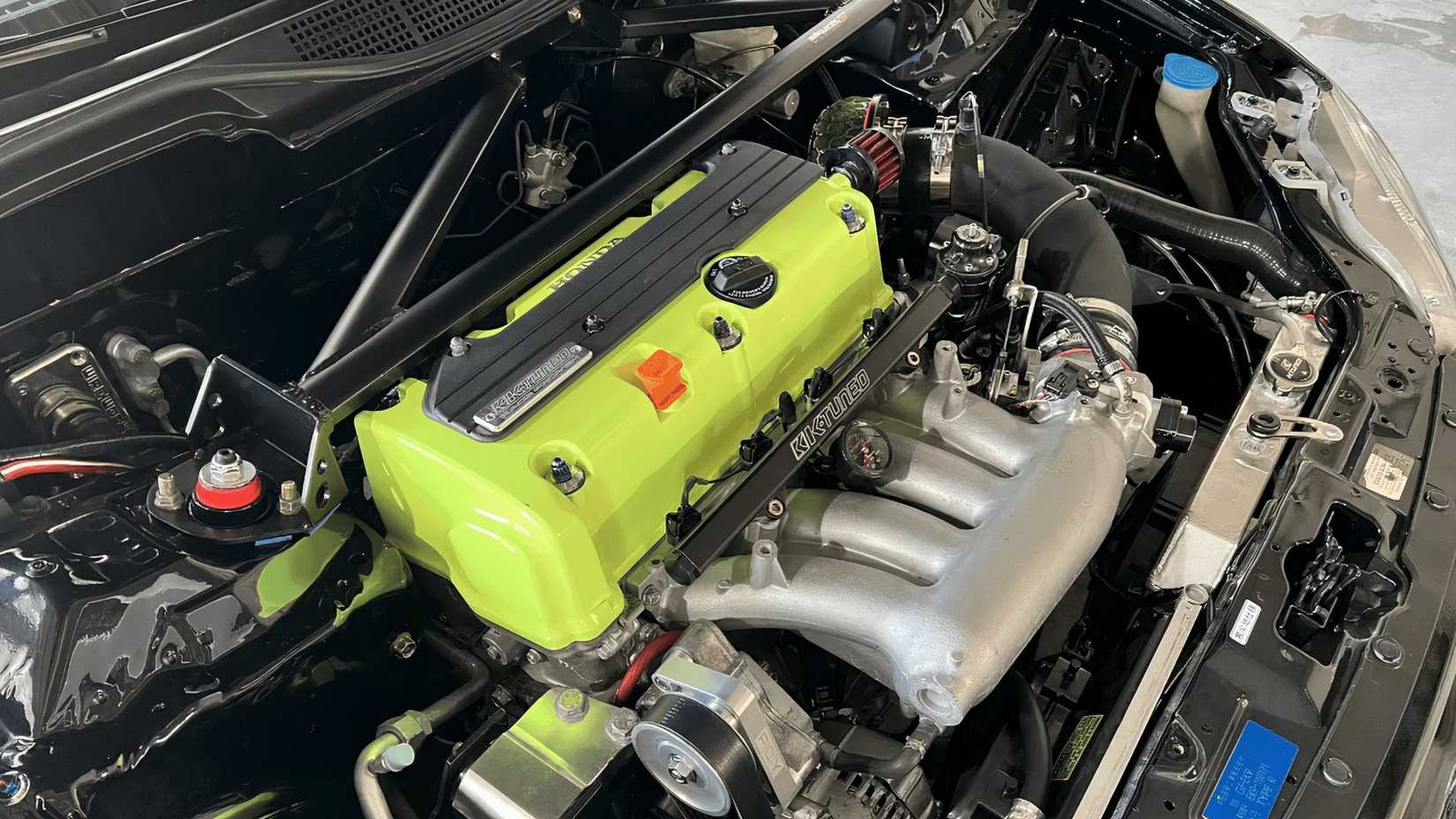
The cost of a K24 engine can vary massively, depending on the condition and state of tune. A project engine can be picked up for just a fistful of dollars, less than $500, while an assured and guaranteed engine will likely cost two or three times this amount. Later engines will cost more.
For a fully built and modified engine, the sky really is the limit, with big-power builds costing many thousands of dollars, but most tuners prefer to start with a clean slate and build the engine themselves, so they can guarantee the quality of workmanship and condition of parts used.
How Much HP Does A K24 Have?
The K24 hp output will vary depending on the model, but it is between 160 and 205 horsepower. Modified K24 engines can make multiple times what is possible from a standard engine.
What Car Has The K24 Engine?
The K24 engine can be found most commonly under the hood of first-generation Acura TSX models, although various JDM Hondas used the engine too, such as the Element and Odyssey Absolute.
Are K24 Engines Reliable?
The Honda K24 engine is known to be generally very reliable when maintained well.
Sources:
Honda