It’s hard for enthusiasts to fully grasp how big of a deal the Ford Taurus was when it arrived in 1986. This revolutionary new sedan wasn’t just radically different from everything else in the Ford lineup, but fundamentally different from nearly anything else on sale. Over the next ten years, it would help Ford rise to a level of success it hadn’t seen in decades, buoyed by the success of a forward-thinking design and the lessons learned in getting it there.
Taurus
- Model
- Taurus
- Segment
- Sedan
Throughout the early 1990s, the model was a runaway success, dominating the sales charts in the US and dethroning the dominant Japanese brands for the first time in years. It appeared that Ford had finally found a way to compete with these automakers, and it would again ascend to the top of the industry, but by the end of the decade, all of those hopes had been dashed. The success of the Taurus in the early ’90s is a high point in Ford’s history, but it’s also a cautionary tale that sometimes innovation can go too far.
We take a look at the rise of the Taurus and what made it such a hit in the early 90s, before turning our attention to the missteps that saw it fall from grace.
A Revolutionary Debut
When the Ford Taurus arrived in 1986, Ford was in dire straights. Just a few years earlier, in 1980, the Blue Oval reported a $1.5 billion operating loss, the second-most in US corporate history, and Donald Peterson soon took over as President and Chief Operating Officer. He not only instituted a series of cost-cutting measures to help turn the company’s fortunes around, but he also instilled a new sense of pride in the designers and engineers of the company, focusing on quality at the factory and appeal on the showroom floor.
Instituting an entirely new production method, the company brought the designers, engineers, and marketing department together while creating the first Taurus to ensure they were all on the same page. Employing extensive customer input on the model, the team worked to not only create a vehicle that customers wanted to drive, but one they would be proud to own themselves, and in 1986, the Ford Taurus and its badge-engineered Mercury Sable cousin arrived to extensive fanfare.

Related
Ford’s Failed Attempt At Conquering America With European Luxury
Ford’s dive into a different part of the worldwide automotive market ended in shambles.
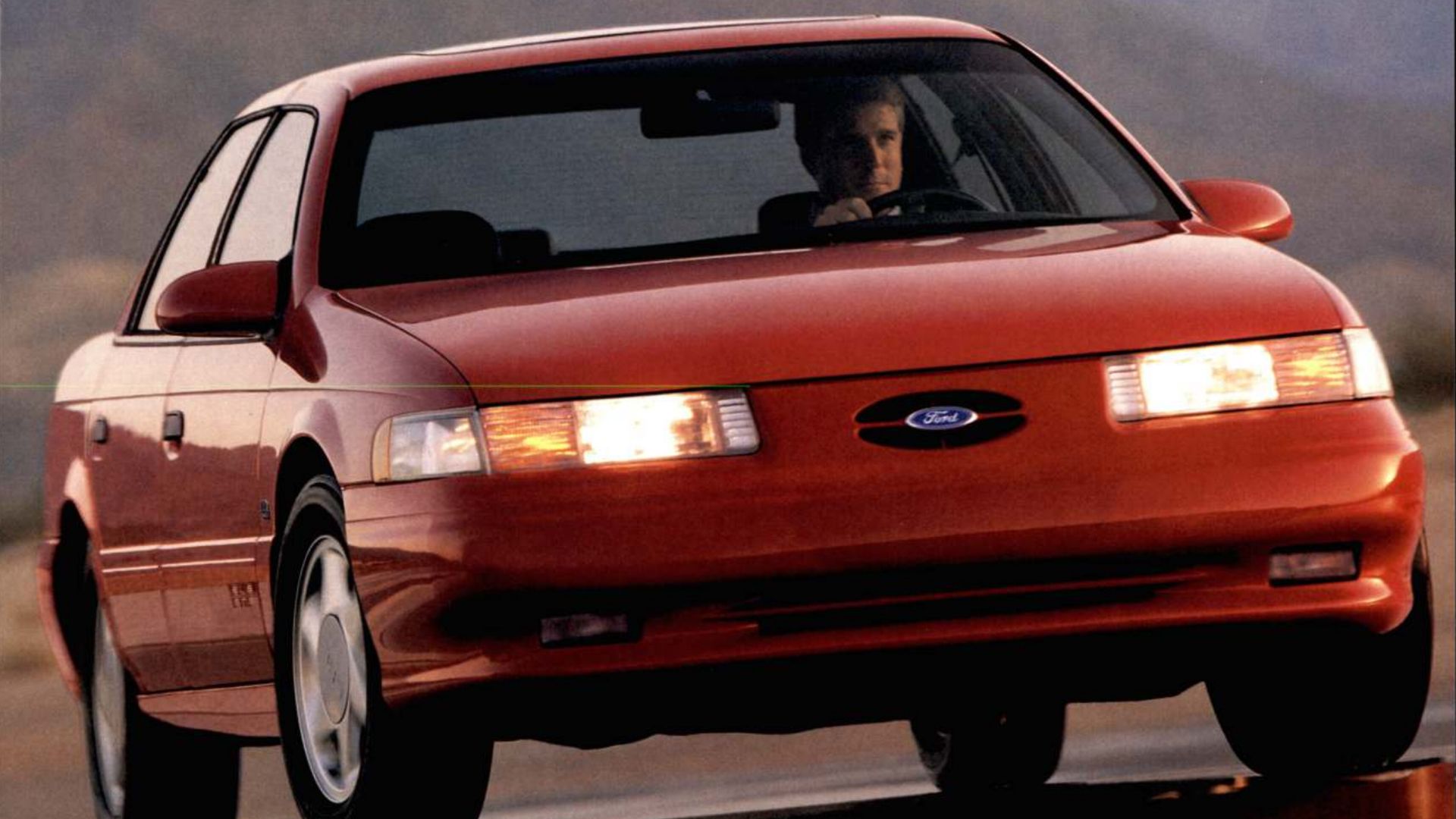
The car debuted with a radically different design by 1980s standards in sedan and wagon body styles with sleek, aerodynamic shapes that were a serious departure from the boxy models that had dominated the decade so far. Everything was held to a higher standard on the Taurus, ensuring it had top fit and finish along with a well-thought-out interior that blended seamlessly with the exterior. Not to mention, thanks to FWD and its choice of inline-four or V6 engines, it had everything it needed to take the fight to the imports.

Google News
Add CarBuzz to your Google News feed.
While the press was divided over the redesign, buyers were in love. In 1986, over 200,000 Taurus models were sold in the US, and the success of it and other redesigned models like the Escort, helped propel the company to record profits the following year. By the end of the first generation in 1991, over two million Tauruses had been sold, but little did we know that the model was just getting started.
Dominance in the 1990s
The second-generation Ford Taurus arrived for the 1992 model year, although there is some debate over whether this is a completely new generation or just a refresh. Although it was mechanically identical to the previous models (although a V6 engine was now the only option), the exterior featured a significant redesign that minimized certain features such as the headlights and improved its appearance. While it wasn’t a drastic update, Ford did consider it to be a new generation, and refreshed looks were just what the model needed to finally creep into first place.
From 1989 to 1991, the Honda Accord was the best-selling car in America, but in 1992, the Taurus usurped it for the first time, and would hold that position through 1996. Given its popularity, it’s no surprise a redesign was all it needed to pull ahead, but there were a few main factors that helped set the sedan apart:
- Family Appeal: Thanks to the quality upgrades Ford had made at the factory level, word had gotten around of the Taurus’ impressive reliability and practicality. The design was perfected for a family or young professional, as it offered ample space and a confident ride, as well as inoffensive styling. Overall, the car exceeded expectations, and this led to greater sales.
- Innovative Marketing: Ford’s marketing campaigns in the 1990s painted the Taurus as a modern, stylish, and safe family car. Many will remember the iconic “Have you driven a Ford lately?” ads, but what the Taurus commercials did well was highlight its ample safety features. Features like the car’s high safety rating, passenger airbags, and ABS all ensured your most valuable cargo was kept safe.
- Strong Engineering: The second generation of the Taurus introduced subtle but impactful upgrades. This was another popular focus of the ads, mentioning that “with no negatives, you simply accentuate the positives”. The nip and tuck of the second generation didn’t mess with the original formula, and since that formula was so ahead of its time, even ten years on, it continued to be popular.
- Fleet Sales: Finally, one of the biggest reasons the Taurus was so popular was thanks to fleet sales to rental companies, law enforcement, and corporate fleets. Ford has always had great connections in this realm, and the safety, practicality, and value of the Taurus made it another great product for it. While it isn’t the most prestigious move, it was a big reason sales were so high.
Reasons for Decline
From 1991 to 1995, the Taurus was killing it, and with hopes of keeping that momentum going, the company planned another radical change for the third generation. By 1996, the Honda Accord and Toyota Camry had entered the scene, and GM and Chrysler had caught on to the aerodynamic, curvier design trend. The Taurus wasn’t special anymore, so Ford envisioned an even curvier model, eschewing the angularity of the previous models in favor of something that looked out of this world.
The third-generation Taurus was dominated by circles, ovals, and bubbles, with the entire vehicle giving the impression its clay model was given a few good squeezes before calling it a day. It wasn’t offensive, but it wasn’t far off, with its bug-eyed appearance standing out as one of the biggest misses in Ford’s history, and comparable to the controversially styled second-generation bug-eyed Ford Scorpio in Europe. If you can believe it, the third-gen Taurus managed to take the sales crown one more time in its first year on sale in 1996, but we see this more as residual success from the previous generation than anything else.

Related
Ford Festiva: Ford’s Compact Game Changer
The brainchild of international collaboration, Ford’s pint-sized hatchback has left its mark on the automotive world.
The car was just ugly, and the fleet sales that had once boosted Ford’s profits now hurt the Taurus’ image, as potential buyers now associated the model with the cheap, beat-up versions they drove on vacation. The Camry then pulled ahead, and despite giving one year up to the Accord in 2001, the Camry has been the sales king ever since. Ford had simply gone too far with its cash cow, and it realized it, attempted to revert course with the fourth-generation Taurus. However, by then it was too late. SUVs and crossovers like the Explorer were now the darling of the American buying public, despite their own problems, and shifting tastes had no room for a model that was past its prime.
Lasting Legacy
Following its sales decline and unfortunate redesign, Ford phoned in the fifth generation of the model before introducing one last hurrah in 2010. The final generation of the Taurus was perhaps the best one since the very beginning, offering ample size, power, and performance when optioned as a SHO model. The model was ubiquitous across the American landscape thanks to being adopted by law-enforcement agencies across the country, and you’ll still see plenty of these models on the road to this day.
Unfortunately, the world had moved past the need for the Taurus. When it first arrived, it revolutionized the mid-size sedan segment with its focus on aerodynamics, safety, and practicality and demonstrated that American automakers could innovate and lead in a market increasingly dominated by international brands.

Related
This V8-Powered 1999 Ford Taurus SHO Is Dirt Cheap
Seriously, someone needs to buy this.
It challenged the conventions of automotive design and paved the way for innovation in Ford’s lineup, and helped to revitalize the brand’s reputation in the ’80s and ’90s, thereby influencing the broader industry and helping to set a new standard for mid-size sedans. Unfortunately, Ford attempted to capture lightning in a bottle once again and failed. Yes, you can blame them for ruining a good thing, but if it had worked, we’d be here today singing the brand’s praises. Sometimes, designers, engineers, and executives can all have their hearts in the right place with a vehicle, and it can not work out, but this doesn’t take away from their success in the first place. The Taurus was an icon in its time, and it’s time we gave it the respect it deserves.
Sources:
Ford
,
Car and Driver
.