Cadillac is always at the forefront of innovation. From its very early days, to its modern tech advancements like the addition of an accelerometer on models such as the CT5-V and Lyriq, the company has always pioneered new features and equipment on its models, upholding its reputation as a high-end brand.
Cadillac
- Founded
-
1902
- Founder
-
Henry Leland
- Headquarters
-
Warren, Michigan
- Owned By
-
General Motors
- Current CEO
-
Johan de Nysschen
Many automotive features that made their very first appearance on a Cadillac have since become commonplace in most models we see on the roads today. Making our car journeys safer, more comfortable and more enjoyable, these clever bits of technology have brought the automotive industry forward over the decades. Let’s take a look at ten technological “firsts” Cadillac can claim for itself.
This list includes ten mechanical and technological innovations of the automotive world that were first introduced by Cadillac. Items are listed in chronological order, from the oldest to the most recent.
1
Synchromesh Manual Transmission
|
Year Introduced |
1929 |
|---|---|
|
Model |
Cadillac Series 341-B |
We start off our list with something that is now taken for granted: the synchromesh manual transmission. After 12 years of research, Cadillac introduced this technology in 1929, revolutionizing the driving experience forever. To put it simply, a synchromesh transmission enables the driver to change gears by simply pressing the clutch pedal and selecting the desired gear. In older vehicles, the driver had to shift into neutral first, before moving on to the intended gear – a technique known as “double-clutching” to manually synchronize the gear clusters, so they don’t grind when they mesh.

Related
CarBuzz Guide To Different Types Of Car Transmissions
How they differ, how they work, and which one is the best
Soon after Cadillac pioneered the synchromesh, other automakers began to implement this technology; at first this was only used for some gears, but in 1952 the Porsche 356 became the first vehicle to use synchromesh on all four forward gears.
2
Auto-dimming Headlights
|
Year Introduced |
1951 |
|---|---|
|
Model |
Various Cadillac and GM models |
Auto-dimming headlights are a very common feature in cars today, not just in high-end models but in more affordable ones as well. Detecting the presence of oncoming cars, the device automatically dims the headlights to avoid dazzling the other driver. While they seem like a fairly modern type of technology, auto-dimming headlights are actually older than you might think.

Related
The Only Car Brand To Offer Full Adaptive Driving Beam Headlights In America
An archaic US rule regarding headlights have automakers in the dark. But one switched on company found a way around it.
General Motors first used them in 1952, fitting a device known as the “Autronic Eye” to its Cadillac, Buick, and Oldsmobile production models. Other GM brands followed suit the next year, and over the following decades most other automakers began to implement the technology in their own cars, keeping road users safer and reducing the risk of accidents due to poor visibility.
3
Air Suspension
|
Year Introduced |
1957 |
|---|---|
|
Model |
Eldorado Broughham 4-door Hardtop |
Air suspension is a type of suspension that uses pressurized air pumped through bellows to provide a vehicle’s occupants with a comfortable, cushioned ride. This suspension first made its debut in 1957 in a limited-edition Cadillac model, the Eldorado Brougham four-door hardtop. The Brougham variant was produced between 1957 and 1960, across the third and fourth generations of the model.

Related
The First Production Car With Air Suspension Is An American Legend
Air suspension is a luxury usually reserved for only the most upmarket vehicles in 2025, but the technology made its debut earlier than you may think.
The Eldorado Brougham did not just introduce the air suspension, but a whole host of additional automotive “firsts” as well, some of which would become commonplace in modern vehicles: these included an automatic parking brake release, powered driver’s seat with memory, automatic door locks, low profile tires, and forged aluminum wheels.
4
Automatic Climate Control
|
Year Introduced |
1964 |
|---|---|
|
Model |
Cadillac Coupe DeVille |
In the modern world most motorists can not imagine going on a road trip, or even an everyday commute, without some form of temperature regulation in their vehicle. Whether it’s heating to keep us warm in the winter, or air conditioning to cool us down in the summer, keeping occupants comfortable at the right temperature is a crucial function of any vehicle.
However, that wasn’t always the case. While heating and air conditioning both existed in cars before the 1960s, Cadillac was the very first brand to offer an automatic climate control system in 1964. This particular system was called “Comfort Control”.
5
Heated Seats
|
Year Introduced |
1966 |
|---|---|
|
Model |
Cadillac Fleetwood |
General Motors had patented the technology for heated seats back in 1955, but did not introduce it on a production model until 1966, with two different Cadillac models. These were the Fleetwood, where the technology was only available on the front seats, and the Fleetwood 75, where it was only available on the rear seats as the 75 was intended to be driven by a chauffeur.
The system operated based on external temperature, activating when the car was switched on and the temperature was below 50 degrees Fahrenheit. It would then switch off automatically when the car’s fan heater was activated; alternatively, the driver could choose to turn it off themselves.
6
Car Alarm and Anti-Theft System
|
Year Introduced |
1973 |
|---|---|
|
Model |
Several Cadillacs |
The sound of a car alarm is generally considered a loud, disruptive nuisance; however, these devices are crucial to keep our cars safe from thieves. Modern car alarms are far more sophisticated than early units, with a myriad of high-tech functions to stay one step ahead of criminals.
Once again, Cadillac was at the forefront of innovation, being the first brand to introduce a modern car alarm system integrated into a comprehensive anti-theft system in 1973. The system had a 15-second window during which the car could be started before sounding the alarm; it would also be set off immediately by opening the trunk, hood, or glovebox.
7
Cylinder Deactivation
|
Year Introduced |
1981 |
|---|---|
|
Model |
Cadillac Eldorado |
In the 1980s, the Cadillac Eldorado once again became a pioneer of technological innovation with the introduction of a feature that has now become extremely common in modern engines: cylinder deactivation. This is the mechanism that enables a car’s engine to shut off individual cylinders when power demand is low, improving efficiency and saving fuel.

Related
Cadillac Was the First Automaker To Develop Cylinder Deactivation
Now commonplace, cylinder deactivation was originally pioneered by Cadillac, for better or worse.
Although automakers had experimented with cylinder deactivation mechanisms since the turn of the century, the Cadillac Eldorado was the first production car to propel it into the mainstream, paving the way for countless other brands and models. Today, cylinder deactivation is an important part of emission reduction, as well as improvement of fuel efficiency.
8
LED Lighting
|
Year Introduced |
1992 |
|---|---|
|
Model |
Cadillac STS |
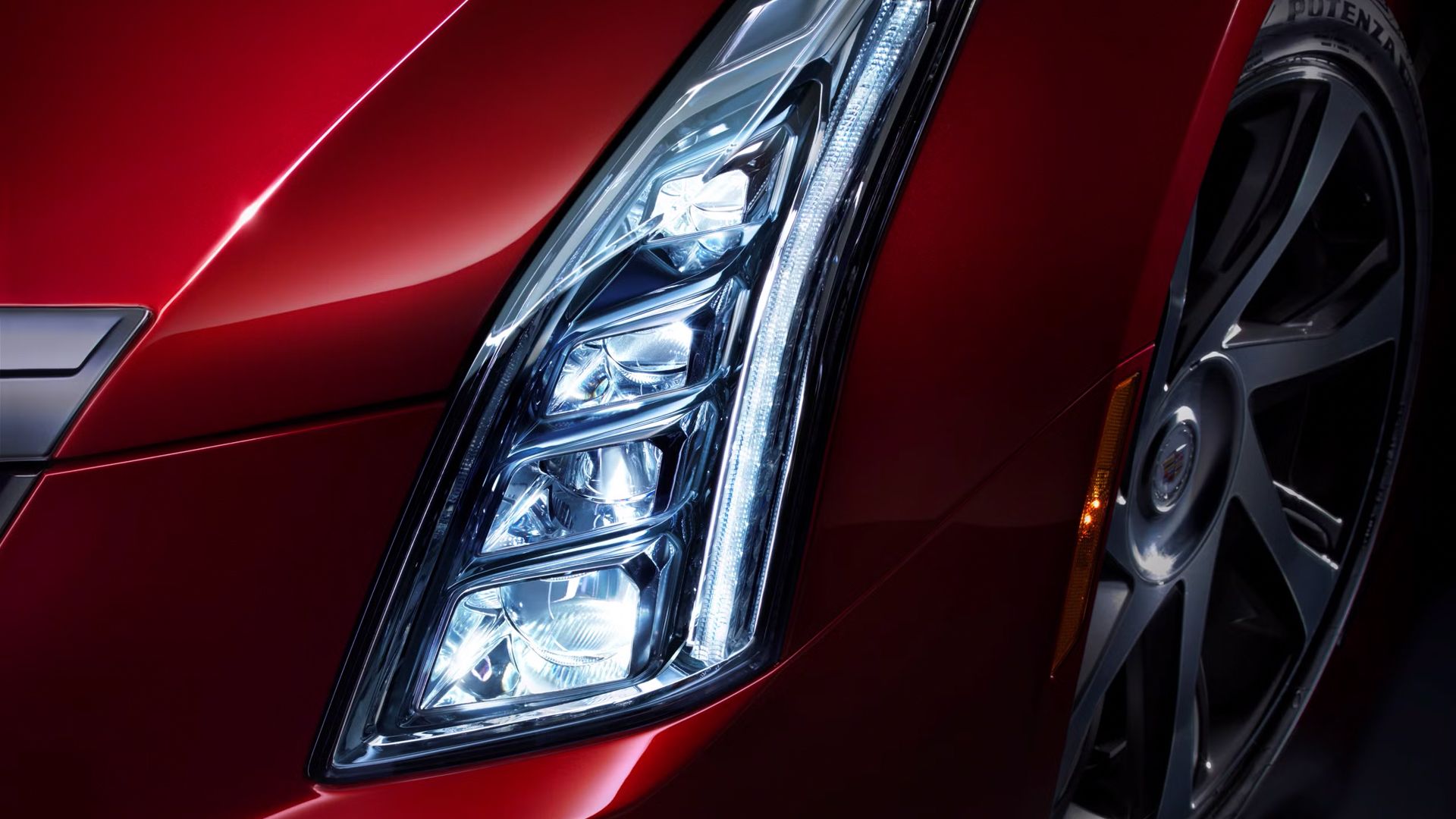
LEDs are a very common type of automotive lighting today; thanks to their high efficiency, low temperatures, and long lifespan, LEDs are an ideal choice for both front and rear lights on a vehicle. The first car ever with an LED high-mounted center rear stoplight was the 1984 C4 Chevy Corvette. LED taillights were first introduced by Cadillac in 1992 with the Seville; however, it wasn’t until the turn of the millennium that a Cadillac model with LEDs used on all rear lighting elements arrived: the 2000 DHS.
Shortly afterwards, LEDs began to gain popularity among other automakers as well; in 2013, the Mercedes-Benz S-Class (W222) became the first car to use LEDs on every single lighting element, both inside and outside the vehicle.
9
OnStar
|
Year Introduced |
1997 |
|---|---|
|
Model |
Several Cadillacs |
OnStar was one of the very first telematics-based automotive systems. It was developed over the course of three decades, with work on the project beginning in 1966 and the system’s commercial debut in 1997. Three companies collaborated on its development: General Motors, Electronic Data Systems and Hughes Electronic Corporation. The purpose of the system was to help drivers through features like navigation, remote assistance, and remote diagnostics.
The first Cadillac models to incorporate OnStar were the DeVille, Eldorado, and Seville, all for the 1997 model year. Within a few years of the system’s debut, several other automakers had obtained a license from GM to use it on some of their own models.
10
MagneRide
|
Year Introduced |
2002 |
|---|---|
|
Model |
Several STS |
MagneRide is an adaptive suspension system that relies on magnetically controlled dampers. The dampers are filled with a fluid made of iron particles, which is manipulated by electromagnetic coils creating a magnetic field; when the viscosity of the fluid increases, the suspension becomes stiffer. The coils are in turn controlled by a series of sensors dotted through the car.
MagneRide was created by Delphi Corporation, then a part of the GM family; the first model to be fitted with this type of suspension was the Cadillac Seville STS in 2002. The following year, the C5 Chevrolet Corvette was also equipped with MagneRide. Several other Cadillac models, such as the Escalade, are also equipped with this technology.
Sources: Cadillac, Hagerty.