What do BMW, Mercedes-Benz, Fiat, and Jaguar have in common? They can all list Max Hoffman among their early proponents in the U.S. market. The Austrian-born businessperson was an early champion of the Continent, importing a variety of cars to America through his New York showroom. Among them was the legendary (but financially near-ruinous) BMW 507 roadster, as well as the so-called “02” series – the 1602, 1802, and 2002, precursors to today’s 3 Series sedan and 4 Series coupe.
His influence was felt not only on the sales floor but also at product-planning meetings in Germany, where his predictions about American tastes were often (but not always) dead on.
BMW
- Founded
-
1916
- Founder
-
Karl Rapp
- Headquarters
-
Munich, Germany
- Owned By
-
Publicly Traded
- Current CEO
-
Oliver Zipse
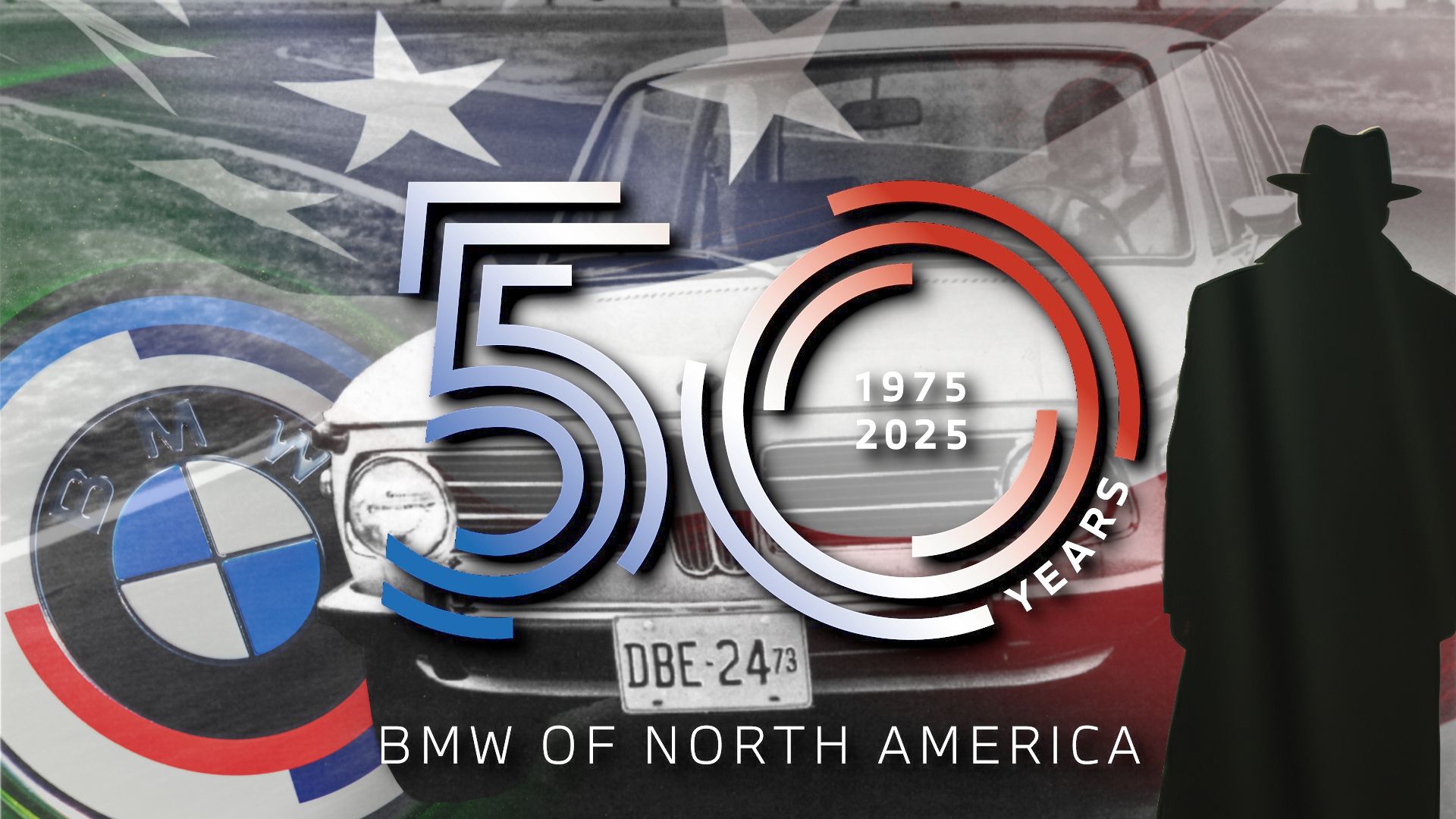
In 2025, BMW North America celebrates its 50th anniversary. In honor of that, this week is BMW Week here at CarBuzz, where we’ll be looking at BMW North America’s greatest achievements, interesting stories, and some broader looks at the BMW brand, its history, and some of our most and least favorite models.
An Immigrant Success Story
Born Maximilian Edwin Hoffmann on November 12, 1904, the Austrian executive got involved in automotive import and export from the earliest days of his career. Hoffman brought cars from neighboring countries into Austria and sent European cars to the Middle East, establishing a successful sales business in the process. However, the Nazi German march across the Continent sent Hoffmann and family first to France, then to America, landing in New York in 1941. Following a handful of dalliances in other industries, Hoffman returned to automobile sales and imports – dropping the final letter in his name in the process. Established in 1947 on New York’s tony Park Avenue, Hoffman Motors was the sole American importer of Jaguar, and his prestige spread to include other brands like Volkswagen, Porsche, and Mercedes.
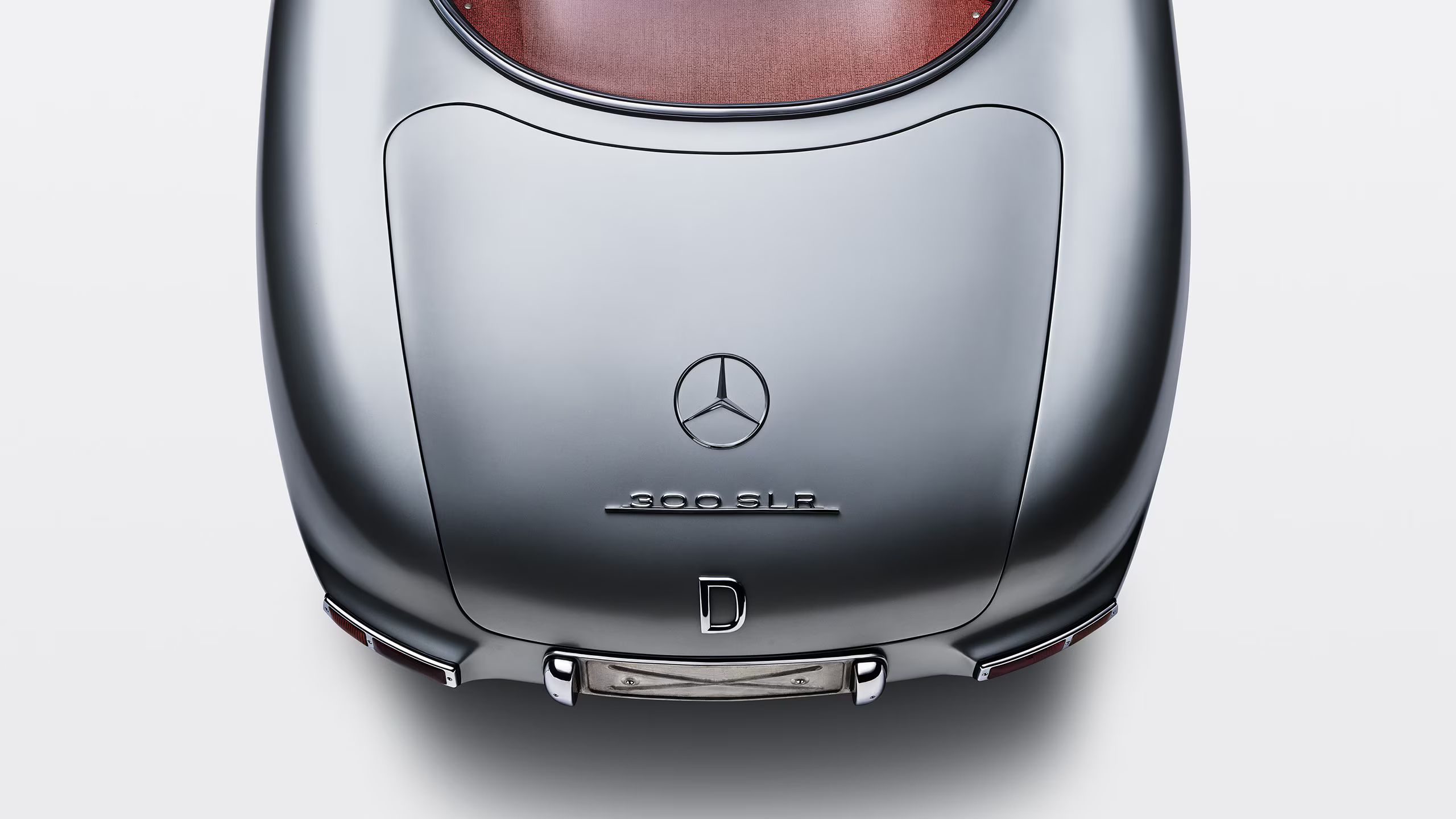
In fact, the Austrian’s influence went further than the sales floor. Keen to create new markets in which his wealthy customers could spend their hard-earned cash, Hoffman is said to have convinced Mercedes-Benz to create the road-legal 300 SL Gullwing coupe – he even committed to purchase 1,000 units personally to encourage the company to move forward with the pricey, risky project. Ultimately, the 300 SL was a success, moving 1,400 coupes and an additional 1,858 roadsters over its nine-year production run, and the cachet of a glamorous sports car helped bring Mercedes-Benz into the conversation when it came to American tastes and desires.

Related
BMW’s Most Striking Roadster Is Guaranteed To Make You Money In The Long Run
As close to a sure thing as a classic BMW. Or something like that.
Recovering From A Big Failure
Playing both sides of the table, Hoffman also spent time with BMW executives, convincing them with the help of American designer Albrecht Graf von Goertz to build the gorgeous 507 roadster. Hoffman promised to spend $1 million in pre-purchase commitments to underwrite the 507’s development, an agreement he ultimately reneged on, and as the 507’s development became more expensive and problematic, so too did his relationship with BMW in Germany.
The 1956–1959 507 was ultimately a flop, costing as much in America as a flagship Cadillac convertible that offered less overt sportiness but far more luxury and space. In its initial development stages, Hoffman promised BMW it would sell around 2,500 507s in the U.S., a number that fell to less than a tenth of that by the time the project was canceled. His guidance soured BMW, which ended its partnership with Hoffman Motors in 1958. The failure of the 507 also brought the automaker to the brink of bankruptcy and about to be absorbed into rival Mercedes-Benz until German industrialist (and former Nazi party member) Herbert Quandt invested some prodigious capital behind BMW.
Despite the problem-ridden 507 endeavor, Hoffman’s days at BMW weren’t over. In 1962, the company once again contracted him to sell at least 1,000 cars in the U.S. in the next three years, as well as provide parts, service, and retail support for a small (but nationwide) dealer network. Luckily, 1962 also marked the beginning of the original Neue Klasse sedan – distinct from the future EV-native platform of the same name – which was competitive and rather nice to drive. Hoffman’s task became far easier, and by 1966, BMW was selling more than 1,000 units each year in the U.S. due to the success of the Neue Klasse’s 1500 and 1800 four-cylinder saloons.
Things got even better as a new two-door coupe arrived. Riding on a shortened version of the Neue Klasse sedan platform, the BMW 1600-2 more than tripled the company’s U.S. sales upon its 1967 debut, and its more powerful 1968 2002 sibling improved things even further, doubling sales to more than 9,000. A far cry from the company’s disastrous late-1950s, during which barely 100 vehicles were sold each year, BMW was finally established in the U.S. market. Although Hoffman’s actual contribution to the development of the 2002 is contested – BMW claims the car was already in the works by the time he lobbied for it – the salesman nonetheless established the retail presence needed to get the sparkling little coupe in customers’ hands.

Related
The Holy Grail Of Classic BMW Sports Coupes Will Cost An Arm And A Leg
This is the ultimate BMW for collectors. Here’s why.
Bringing Bavaria To The U.S.
Max Hoffman is the undeniable father to one other neat BMW product of the era, however. The BMW New Six sedan, debuting in 1969 in the U.S. as the 2500 and the 2800, were larger and more spacious than the 2002, and the standard inline-six engine provided more power. But Hoffman convinced BMW to build a model unique to the American market, bundling the added power of the 2.8-liter engine with the more sparsely equipped cabin of the 2.5. The 1971 BMW Bavaria was the result, and it was very popular thanks to its classic hot-rod formula of the biggest engine in the lightest vehicle, with more reasonable pricing to boot.

Per BMW, the Bavaria wasn’t actually profitable, and the company made more money on the rarer (but more expensive) 2800 sedan and the 3.0 CS coupe models. But while the automaker might have lost money on yet another great Hoffman idea, the Bavaria still gave the brand some real luxury credibility. The 2002 was too small to compete with luxury cars, targeting sporty cars like the Alfa Romeo Giulia Sprint, Datsun 240Z and 510, and Toyota Celica. On the other hand, the spacious New Six sedan, especially the popular Bavaria variant, could easily be mentioned in the same breath as a Mercedes or Jaguar.

Related
The 15 Best BMWs Of The Last 50 Years, According To CarBuzz
BMW has produced many Ultimate Driving Machines over the last half-century, and these are our favorites.
Hoffman’s influence in Munich waned as the 1970s marched on, and in March 1975, he sold his retail interest in the company to a new subsidiary called BMW of North America, at which point in time there were around 250 dealers in the U.S. BMW NA took over from there, and a year later, there were more than 290, some of which served previously unrepresented areas in the South and Midwest. Hot off a string of successes, the American Bimmer market had plenty of momentum, and while his influence was dubious at times, BMW owes a lot to Max Hoffman’s stateside stewardship of the brand.
Source: BMW