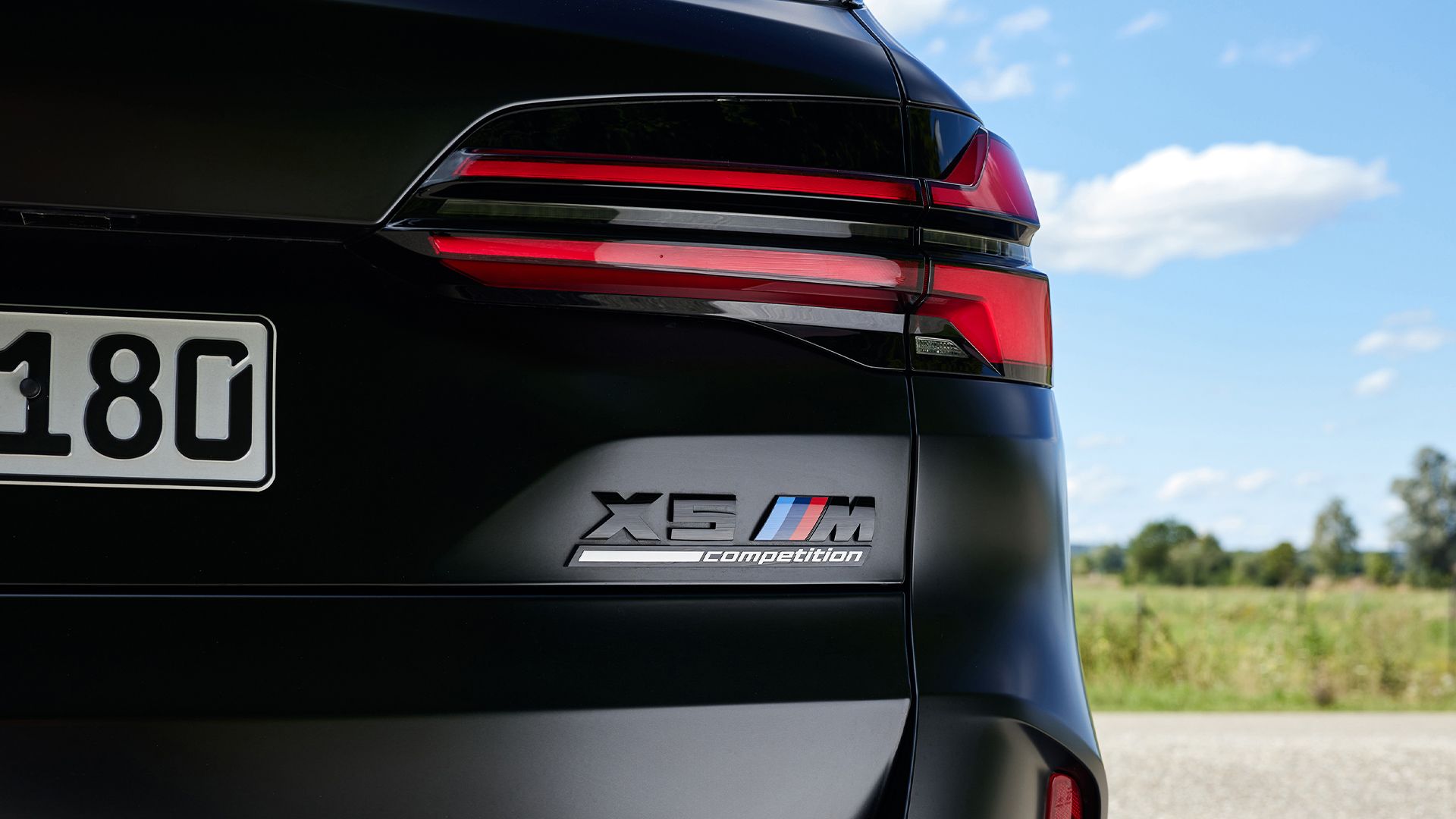
The BMW X5 has been on sale since 1999, positively impacting the German automaker’s portfolio over the last 26 years. The X5’s sales success should not be taken lightly, with BMW North America confirming that the SUV sold almost 15,000 units in Q1 2025. Considering it is bigger and more expensive than the X3, the X5 sold just over 1,500 units less than its sibling – making it the second best-selling BMW SUV and the second best-selling BMW overall for the year’s first term.
BMW
BMW is a German luxury car and motorbike manufacturer and current owner of Mini, Rolls-Royce, and Alpina. With roots dating back to 1913 as Rapp Motorenwerke, it officially became Bayerische Motoren Werke in 1922 as a manufacturer of aircraft engines. BMW’s first car was built in 1928 when it built the Austin 7 under license from Dixi, which was called the BMW 3/15. BMW grew into a manufacturer of premium and luxury automobiles, launching iconic nameplates like the 3 Series, 5 Series, and 7 Series, and is today known as one of the leading luxury automakers in the world, while the BMW M division is hailed as a leading manufacturer of performance cars.
- Founded
-
1916
- Founder
-
Karl Rapp
- Headquarters
-
Munich, Germany
- Owned By
-
Publicly Traded
- Current CEO
-
Oliver Zipse
While Q1 2025 is an indication of the X5’s sales success over the years, the SUV’s overall history is just as successful, as well as ones that consumers must take note of. With four generations to its name, we rank the different X5s according to their reliability from the worst to the best.
|
BMW X5 Overview: 1st to 4th Generations |
||||
|---|---|---|---|---|
|
|
1st Gen |
2nd Gen |
3rd Gen |
4th Gen |
|
Model Years |
2000 – 2006 |
2007 – 2013 |
2014 – 2018 |
2019 – present |
|
Engines |
3.0L I6 Gas 4.4L V8 Gas 4.6L V8 Gas 4.8L V8 Gas |
3.0L I6 Turbo Gas 4.4L V8 Turbo Gas 3.0L I6 Turbodiesel 4.8L V8 |
3.0L I6 Turbo Gas 4.4L V8 Turbo Gas 3.0L I6 Turbodiesel 2.0L I4 Turbo PHEV |
3.0L I6 Turbo Gas 4.4L V8 Turbo Gas 3.0L I6 Turbo PHEV |
|
Transmissions |
5-speed manual 6-speed manual 5-speed automatic 6-speed automatic |
6-speed automatic 8-speed automatic |
8-speed automatic |
8-speed automatic |
|
Drivetrains |
RWD and AWD |
|||
This analysis includes all BMW X5 generations. Notably, not enough time has passed to assess the reliability of newer model years accurately. Recall, complaint, and all accompanying data are accurate as of the date of publication, but are subject to change.
We have consulted a variety of reputable sources, including J.D. Power, NHTSA, and Car Complaints, while also taking into account the number and severity of consumer complaints/recalls. It must be noted that J.D. Power ratings are an assessment of initial reliability, not long-term reliability.
4
Second-Generation BMW X5 (2007 – 2013)
Following the bang with which the X5 entered the market, it was time for the second-generation SUV to debut. However, this was also the most troublesome X5. The second-gen BMW X5 has had many recalls over the years, with the highest number (22) coming in the 2010 model year. The recalls pertained to the SUV’s airbags, engine, fuel system, brakes, and hydraulic system – among others.
In March 2022, the NHTSA noted that the positive crankcase ventilation (PCV) valve may short circuit, resulting in an increased fire risk when driving or soon after the SUV is parked. According to the governing body, more than 917,000 BMWs are affected, including the 2007-2010 X5 3.0si and X5 xDrive30i.
Common Problems
- Fire Risk (PCV Valve Short Circuit)
- Engine & Gearbox Failure
- Water leaks Into Interior
- Loss Of Power While Driving
- Coolant Pump Failure
A notable recall on this generation BMW X5 includes an issue on the front driveshaft universal joint in 2017. The recall noted that the front wheels may lock, increasing the risk of a crash. The NHTSA noted that “BMW will notify owners, and dealers will replace the front driveshaft, free of charge.”
In its final year on the North American market, the second-gen X5 managed to claw its way back up to a decent spot in J.D. Power’s quality and reliability rankings. According to the body, common issues owners complained about in the first 90 days of ownership regarding the 2013 BMW X5 are vehicle maneuverability, how the interior materials feel, and a lack of ease of getting in and out of the vehicle. Regardless, occupant comfort in the third row of seats was commended. Still, of all X5 generations, the second-generation is the one that, according to the data, should be treated with kid gloves.
Reliability Overview: Second-Gen X5
- Highest J.D. Power Quality and Reliability Rating: 82/100 (2013 model)
- Highest No. of Recalls: 22 (2010 model)
- Highest NHTSA Complaints: 329 (2008 model)

Related
BMW X5 Model Years To Avoid
A huge success on the sales charts, many X5s have also been good at finding their way into the nearest workshop.
3
First-Generation BMW X5 (2000 – 2006)
When it launched, BMW referred to its X5 as an SAV: Sports Activity Vehicle. Over the years, this nomenclature disappeared as it was more commonly known as an SUV. The X5 was BMW’s first foray into the SUV game, gaining an early advantage as this segment of the market was about to boom globally. This first-generation BMW X5 wasn’t without its reliability concerns, though.
Common Issues
- Air Suspension Failure
- Oil Leaks
- Cooling System Issues
- Electrical Fire While Parked
- Faulty Dashboard
- Intermittent Starting Difficulties
- Heated Seats Overheating
One of the first-gen X5’s first recalls came in 2001 when a brake line chaffing’s anti-corrosion coating was deemed poor, with impending results being rust and the loss of brake fluid. This resulted in extended stopping distances, leading to a possible crash. The recalls on the 2000 X5 saw more issues around the braking system come to light, as well as gearbox issues that hindered the SUV’s ability to maintain speed in traffic and/or accelerate.
The NHTSA summarized the problem:
“Over an extended period of time, abrasion particles could deposit on the electrical contacts within the switch, causing a disruption of the electric current through the contacts. If the disruption occurs when the vehicle is stationary with the transmission in the neutral or park positions, the transmission will switch automatically into the emergency program, which is displayed in the instrument cluster via a warning lamp and a message, “trans. fail-safe prog.” In this case, the vehicle can be driven in lower gears only with limited engine output.”
Numerous issues with oil leaks and the cooling system also impacted this X5, as it did several other BMWs of the era.
“Extensive use of plastic components is the leading cause of problems in the cooling system on both six-cylinder and V8 engines as well. Critical components like the expansion tank, coolant-pump impeller, thermostat housing, and various connecting fittings are all made of plastic, and are the root cause of most 2000-2006 BMW X5 coolant leak and overheating problems.”
– Martin Pretorius, CarBuzz
Reliability Overview: First-Gen X5
- Highest J.D. Power Quality and Reliability Rating: N/A
- Highest No. of Recalls: 11 (2001, 2004 models)
- Highest NHTSA Complaints: 279 (2006 model)

Related
Driven: 2024 BMW X5 M Is All An SUV Can Possibly Be
It’s quick, it’s practical, it’s comfortable…what else would you want it to do?
2
Fourth-Generation BMW X5 (2019 – present)
While it is sometimes easy to assume that the most recent generation will have the least number of issues, it is not always the case, as evidenced by the fourth-generation BMW X5. Since coming to market some seven years ago, it has, indeed, been a strong contender in its segment, setting new benchmarks and staking its claim as a segment leader.
Common Problems
- Steering Sticks/Notchy
- Faulty Sensors
- Exploding Sunroof
- Stuck In Reverse

Related
BMW X5 Silver Anniversary Edition Is The Most Capable Off-Road X Car Ever
Happy birthday, BMW X5! To celebrate, you get fancy paint, special interior finishes, and vastly improved off-road capability thanks to xOffroad mode.
The 12 recalls on the 2021 model include various issues. The sunroof, for instance, closes without the key fob present inside the vehicle, with the NHTSA stating that:
“The roof function control unit may be programmed incorrectly […]. As such, these vehicles fail to comply with the requirements of Federal Motor Vehicle Safety Standard number 118, “Power-Operated Window Systems.”
The head restraints on the outer units of the second-row seats may be the incorrect type for the X5, given that it could detach in the event of a crash, increasing the risk of injury. In 2021, this model was recalled for a loose right front brake disc, a loss of ABS and a reduction in braking assistance. A particular concern on the 2021 model is a recall on the steering column shaft’s universal joint connection that may not have been tightened to specifications, and can become loose, according to the NHTSA.
As per the J.D. Power ratings, the fourth-gen X5 is a constant in the top three in the body’s ‘Best Upper Midsize Premium SUV’ category, so it seems to be a satisfying SUV to own when it’s still relatively new.
Reliability Overview: Fourth-Gen X5
- Highest J.D. Power Quality and Reliability Rating: 82/100 (2020, 2022, 2023 models)
- Highest No. of Recalls: 12 (2021 model)
- Highest NHTSA Complaints: 104 (2019 model)

Related
10 Most Reliable BMWs: Models Engineered For A Lifetime of Performance
Discovering the top 10 BMW models crafted for enduring reliability and performance.
1
Third-Generation BMW X5 (2014 – 2018)
The third-gen BMW X5 introduced a raft of changes to the nameplate, but also addressed many of the issues that plagued its predecessor. Sharing the chassis and wheelbase with the previous generation, the driving experience was an overall superior affair, but the SUV’s electronics remained a sensitive point.
Common Problems
- Sudden, Unintended Braking
- Battery Not Keeping Charge
- Failing To Start
- Sunroof Noisy And Leaks Water
- SOS And Navigation Malfunction

Related
The V12 Powered BMW SUV That Held Nürburgring Record For Nearly Two Decades
Ever hear the story about the BMW SUV from the early 2000s powered by a V12 engine spitting out 700 hp and wearing gold BBS wheels?
Of this generation, the 2016 model year saw one of the lowest recall and complaint counts. However, while this number is small, the issues that were addressed can not be overlooked. In December 2016, a loose ground cable led to some models unexpectedly shifting to Neutral, with the NHTSA stating that the “Digital Motor Electronic (DME) control unit that may have a loose electrical ground cable, possibly causing an under-voltage condition which would result in the transmission shifting to neutral.”
Other issues include an improperly sealed electrical connector on the water pump, and a leak on the Exhaust Gas Recirculation (EGR) module, which could result in the intake manifold melting.
As far as the J.D. Power ratings are concerned, all but the 2014 model had quality and reliability scores in the 80s.
Reliability Overview: Third-Gen X5
- Highest J.D. Power Quality and Reliability Rating: 84/100 (2018 model)
- Highest No. of Recalls: 8 (2014 model)
- Highest NHTSA Complaints: 142 (2015 model)
According to reliability data, the 2018 BMW X5 is one of the best BMW SUVs to buy for reliability. This may not be the most memorable of the X5 generations, but it appears to be one of the more solid iterations.

Related
Best Used BMW SUVs To Buy For Reliability
These secondhand SUVs offer peace of mind, without having to shell out for a brand-new model.
Sources: BMW, J.D. Power, Car Complaints, NHTSA