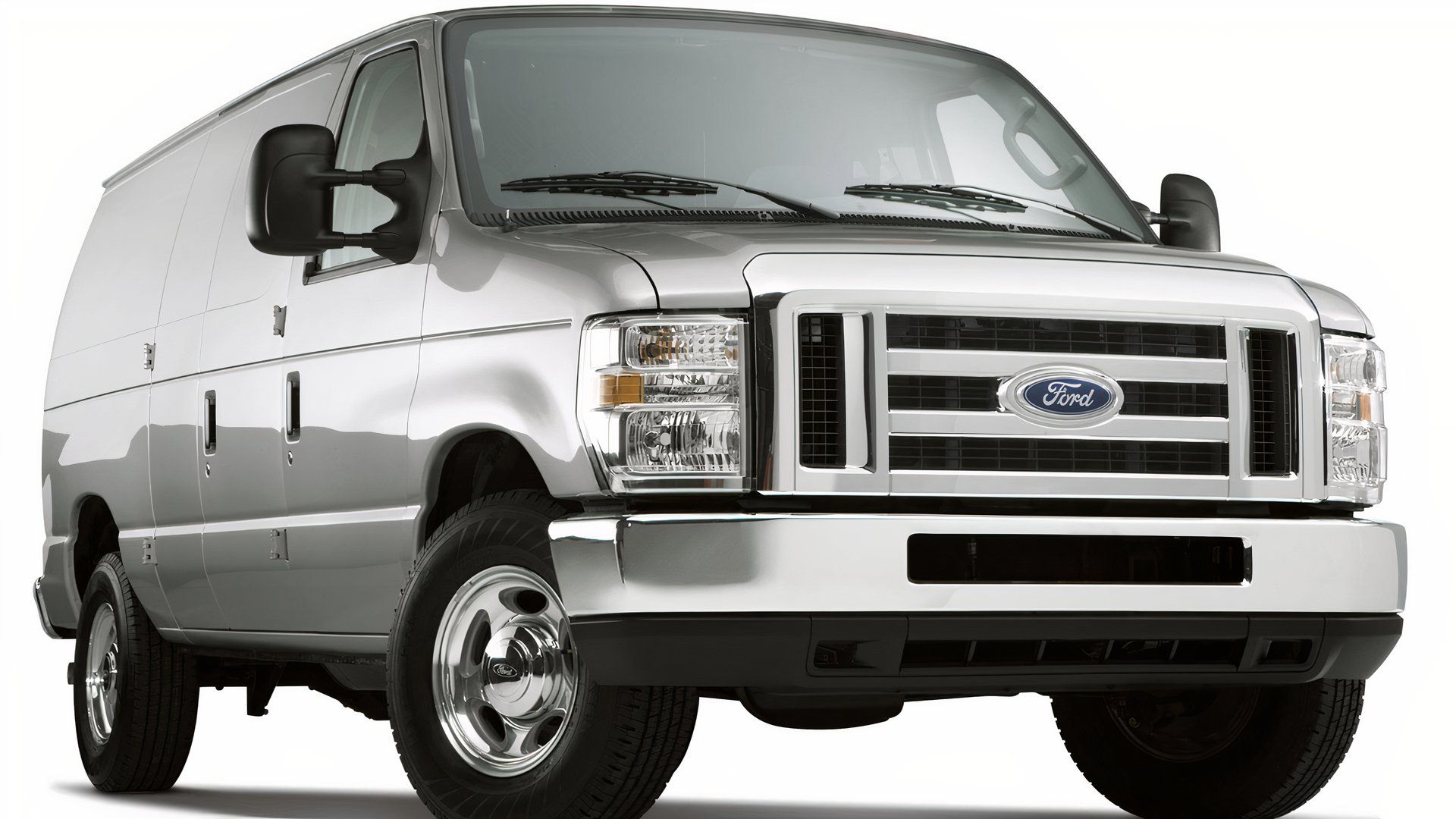
We’ve covered Ford’s Modular engine series in the past, especially the 4.6-liter V8. In fact, you can’t get us to shut up about these motors. The 4.6 is definitely in the conversation for most versatile Ford engine ever produced, powering everything from muscle cars to pickups. The engine’s last official application should go to show just how easily the engine adapted to whatever it was tasked with, powering the two-and-a-half-ton Ford Econoline cargo and passenger vans.
The engine was officially retired in May 2014, with the Romeo, Michigan plant that produced them shutting its doors in 2019. The very last 4.6 ever produced went into a 2014 model E-Series, so let’s honor one of Ford’s best with a look at that van.
The following is based on data published by automakers as well as used car and maintenance resources. Any conclusions or opinions drawn thereupon should be assumed to be those of the author unless otherwise attributed.
A Cargo Van With A Mustang Engine
The idea of a cargo van with a muscle car engine sounds like fun, but remember what defined a muscle car in the first place: powerful engines packed into relatively small cars. When you put a Ford Mustang engine into a van with a minimum curb weight of 5,208 pounds, it tends to even out. Let’s go spec-by-spec to see how the 4.6 performs in the 2014 Econoline Vs. the 4th-gen Mustang GT.
|
Model |
1996 Ford Mustang GT |
2014 Ford Econoline Van |
|---|---|---|
|
Engine |
4.6-Liter Modular NA 8-Cylinder |
|
|
Power |
215 hp |
225 hp |
|
Torque |
285 lb-ft |
286 lb-ft |
|
Top Speed |
130 mph |
75 mph |
|
0-60 |
6.6 Seconds |
9.5+ Seconds |
|
Curb Weight |
3,352 lbs |
5,208 lbs |
The lightest Econoline vans weighed around 5,208 lbs. These would be the delivery models with nothing in the back but an empty space for cargo. In the passenger vans, curb weight was closer to three full tons, closing in on twice the weight of a mid-90s Mustang GT.

Related
Why The Mustang GT Is Not As Expensive As You Might Think
The current Ford Mustang GT may seem like an expensive deal, and older versions were likely cheaper in a less troubled environment. Well, not so fast.
In our own reviews of the 4th-gen Econoline van, you’ll see us praising the 4.6’s workhorse-like capabilities when it comes to hauling lighter loads, but you won’t find us gushing about its “peppy acceleration” or “sporty handling.” The mid-90s Ford Thunderbird was a Mustang in disguise. This is a cargo van. It’s practical, it’s functional, and while it’s not a chore to drive, it’s hardly a plus-size pony car, either. The fact that the 4.6 can just as easily push a Mustang to a 6.6-second zero-to-sixty as it can pull 7,500 pounds behind a Ford E-Series van simply serves to illustrate how versatile this engine was.
If you want to see what a cargo van built for performance looks like, you’ll want to check out the mid-engine Ford Transit with a Jaguar XJ220 that can clear 60 mph in around five seconds.
Where Else Can You Find A 4.6-Liter Modular V8?
As mentioned, the 4.6-liter Modular V8 was one of the most versatile engines Ford ever produced. Here are just a few examples to illustrate the motor’s wide range of applications.
2003-2005 Lincoln Aviator
We never got to see what the 4.6 looked like in the engine bay of a minivan like the Ford Windstar, but the engine found its way into plenty of SUVs, like the 2003 Lincoln Aviator. The 4.6 produced 302 hp under the hood of the luxury mid-size, with 0-60 times coming in just under seven seconds.
1997-2010 Ford F-150
No surprise that the 4.6 found its way into the F-Series from 1997 to 2010. The engine was rated at 220 hp in the 1997 F-150, and drivers have reported towing as much as 7,000 lbs with this engine with no issues whatsoever.

Related
Ford F-150 Generations: Everything You Need To Know In One Place
After 14 Ford F-150 generations, a lot has changed with one of America’s favorite trucks. Read all about it here.
1998-2012 Ford Crown Victoria
The second-gen Crown Vic was rated at 200 hp, but could be bumped to 215 hp with the dual exhaust upgrade. This car was a touch heavier than the Mustang or the Thunderbird, at nearly two full tons, with 0-60 times clocked in the 7-9 second range, depending on which model you’re driving, road conditions, and driver ability.
Where Can You Get A 2014 Econoline Van For Yourself?
The fourth-generation Econoline van was launched in 1991 for the 1992 model year. This is the generation that’s still going strong today. But, the van has had a number of significant upgrades since it launched. If you want a 4.6-powered E-Series, you’ll want something from 2014 or earlier. Going to Kelley Blue Book for some fair market estimates, we get the following numbers for a 2014 model year:
|
KBB Fair Purchase Pricing |
|
|
2014 E150 Cargo Van |
$11,820 – $12,645 |
|
2014 E150 Passenger Van |
$11,671 – $14,213 |
If you’re willing to go a few extra years back, it’s not hard to find an E-150 in good condition at well under ten grand. A search on AutoTempest turns up a 117,344-mile 2006 model for $9,000, a 119,000-mile 2000 model for $7,995, and a 199,289-mile 2002 model going for $5,295, all equipped with 4.6-liter engines.

Related
10 Cheap Used Cars Expected To Gain Value In The Future
Not every car has to be a depreciating asset.
You’ll Have To Spend A Little More For Lower Miles
The mileage is, admittedly, a bit high on these older vans, but there’s a reason you see more beat-up old vans on the road than beat-up old sports cars and coupes. Nobody’s taking their Econoline to the quarter-mile or slapping turbochargers onto it. The fairly dull, workaday use that an Econoline van is tasked with generally means that it will last longer than many other vehicles equipped with the same engine.

Related
Supercharged 850-HP Ford Econoline Van Is A Hot Rod Spectacle
It was built by a popular father-and-son duo in 90 days.
According to CarComplaints, the only model you really need to look out for is the 2001, with six engine complaints on file. Three of these are for spark plugs ejecting from the engine block, one is for engine stall, one is for a broken crankshaft, and one is for the vehicle shaking while in motion.
Ultimately, the biggest upside to driving anything powered by a 4.6 is that it’s not going to be that difficult to find the parts you need to keep the thing running. Any junkyard in America should have hundreds of compatible cars, trucks, SUVs, and vans to pull from, and it shouldn’t be hard to find a relatively fresh engine when it comes time to make a transplant.
Sources: KBB, Ford, CarComplaints, AutoTempest, Cars.com