All types of auto racing are extremely competitive and typically have quite a lot of money riding on the line. Racing has been a huge part of automotive culture virtually since the birth of the automobile at the end of the 19th century. Reportedly, the first car race occurred in Chicago on Thanksgiving Day, 1895. Nearly 130 years later and auto racing is big business and more competitive than ever.
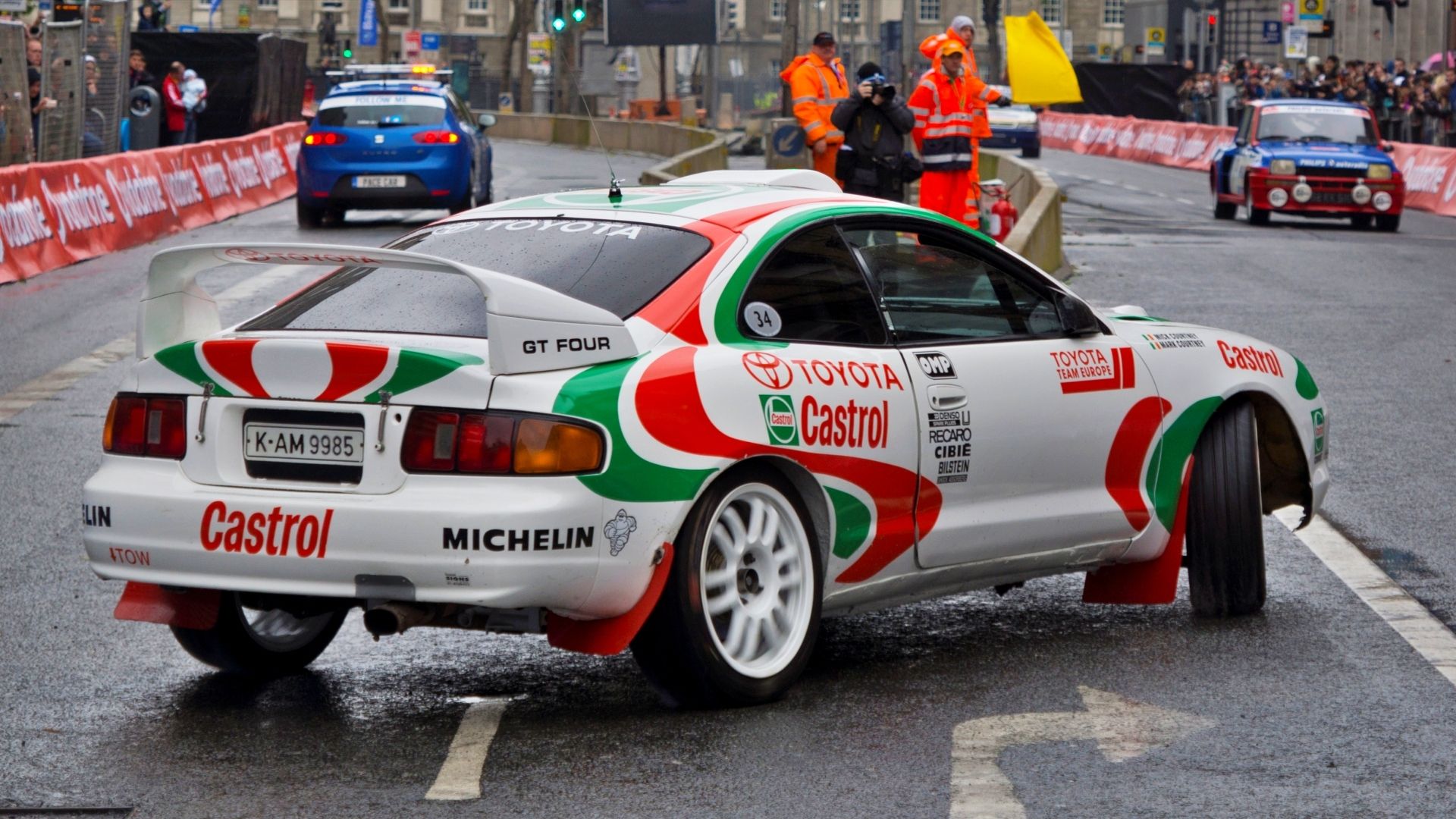
Rally racing is a particularly interesting racing category. The World Rally Championship (WRC) was established in 1973 as part of the FIA. Since then, it’s been the crucible into which several key automotive features we see today were born and bred, such as Audi’s Quattro all-wheel drive system and the anti-lag turbocharging system. However, in the 1990s, Toyota tried to get creative with their ST205 Celica GT-Four WRC rally car’s turbocharger, going to great lengths to make their cars perform even better. In their search for speed, they crossed the line, straying into cheating, and ended up getting caught red-handed.
Toyota
Toyota is a Japanese automaker founded in 1937 that has developed a reputation for reliability across a multitude of segments, from sports cars and family sedans to pickup trucks and off-roaders. Famous models from the brand include the Hilux, Land Cruiser, Camry, Crown, and Corolla, the latter being the world’s best-selling vehicle nameplate, with more than 50 million Corolla-badged vehicles being sold since it was first introduced. Toyota typically competes in the mainstream market, but is also famous for launching Lexus as a luxury sub-brand to take on Mercedes-Benz.

Related
Toyota Is Locking Down Trademarks For A New Celica
Every day we’re a little closer to Celica – now with a GR badge looking likely.
What Toyota Did And How
Toyota’s Dastardly Deed Key Points
- Employed a reactor plate bypass in the ST205’s turbocharger
- The cheat gave the Celica an extra 50 horsepower
- Discovered by the WRC in October 1995
- Toyota handed a one-year ban from the WRC as punishment

Related
10 Years Later: How Dieselgate Changed Oil Burners Forever
Is diesel dead and how the auto industry changed following the Dieselgate scandal 10 years ago.
It seems the saying “the truth always comes out” has merit to it. Toyota learned this the hard way at the Rally Catalunya in 1995, when their ‘fingers crossed’ moment went up in flames. Shortly before, Toyota’s rally engineers had been tinkering with their Celica ST205 GT-Four WRC rally car, trying to squeeze a bit more power out of it. It got to the point where blind eyes were turned, ears were covered, “I see nothing” was muttered, and a sneaky little surprise was planted deep within the bowels of the ST205’s motor.
The surprise was a small bypass valve meant to allow air to move around a WRC-mandated restrictor plate mounted on the ST205’s turbo intake side. The little modification actually meant a lot to Toyota engineers, as the little alteration meant that, on average, the ST205 Celica WRC could make 50 more horsepower than other competitors on the rally circuit. A power increase of that magnitude was sure to earn them the win. Of course, only if the secret modification managed to go undetected.
What Does A Restrictor Plate Do?
In essence, the answer is in the name: it restricts. Getting into more detail, a restrictor plate is installed in a turbocharged engine in order to limit the amount of power a turbocharger can actually produce by limiting the amount of air that goes into the turbocharger itself. This is done to “level the playing field” in racing, making for competition that’s more skill and chassis-based, rather than relying on sheer power. However, restrictor-equipped engines aren’t specific to the WRC; many auto racing categories employ them, including NASCAR, Formula 3, and the FIA GT Championship.
Employing a restrictor plate allows manufacturers to tailor the amount of power that’s actually being limited by limiting the amount of air that can actually enter an engine’s intake. Using a restrictor is favored over other methods of power restriction, such as ECU tuning or engineering an entire engine around a specific power output limitation. The reason is that these aspects can change based on where the particular engine is being used, or if rules change and require less power or allow more power.
The Ins And Outs Of The Shamed Celica
When it comes to the Toyota Celica as a whole, the ST205 WRC version sits firmly within its sixth generation. The Celica originally debuted in 1970. However, the Celica GT-Four is widely considered its own sub-model. The ST205, in production from 1994 to 1999, constitutes the third generation of the Celica GT Four, with the ST165 (1986–1989) being the first, and the ST185 (1989–1993) the second. The “GT Four” namesake refers to the model’s use of all-wheel drive. Toyota also made road-going versions of each GT Four generation in order to conform with World Rally Championship homologation standards.
The ST205 Celica GT-Four in particular was the final, and most powerful, version of the GT Four. The road-going version produced 239–252 horsepower – depending on the market – from its 2.0-liter turbocharged inline-four. The WRC version pumped out the same amount of horsepower as the road-going version with its restrictor in proper working order. However, with its restrictor bypassed, the extra 50 horsepower that was estimated to have been due to the lack of a restrictor plate meant it could churn out nearly 300 horses easily.
The WRC version of the ST 205 Celica GT Four utilized what Toyota coined a “Super Strut Suspension” front suspension setup, which was meant to absorb bumps and other rough road issues typically seen on a rally special stage using a hybrid version of a MacPherson strut and multi-link system. A large air intake was positioned on its roof to help cool the cabin and to allow for positive airflow. This was done in order to prevent dust from swirling about the car’s interior, instead allowing it to flow through and out.
We’ll dive into the ST 205 Celica GT-Four WRC’s detailed engine and performance specs in the table below:
|
Engine |
2.0L 3S-GTE turbocharged inline-four |
|---|---|
|
Power |
252 hp |
|
Torque |
224 lb-ft |
|
0-60 mph |
6.0 seconds |
|
Transmission |
six-speed manual |
|
Curb Weight |
3,064 lbs |
What Happened To Toyota’s WRC Involvement After Their Mistake?
Following the WRC’s ban on Toyota that expired in 1997, Toyota quietly bowed out of the WRC as a whole in 1999 after they had secured their third consecutive Manufacturer’s Title. Their rationale was their interest in joining Formula One, which they officially did at the start of the 2002 F1 season. The move wasn’t so unexpected, although it was seen as a bit sudden, especially considering their successes in the 1997, 1998, and 1999 WRC seasons.
After a period spanning nearly two decades, Toyota announced their return to the WRC stage, which would take place in 2017. Instead of a new Celica, Toyota, partnered with the Gazoo Racing team, entered a specially made Toyota Yaris, and has been running it since. Since Toyota’s re-entry, they’ve managed to secure a total of five world championship wins, one in 2018 and the other four from 2021 to 2024.
Sources: Toyota, Toyota Global, GAZOO Racing, Supercars.net, RallyPedia.com