-
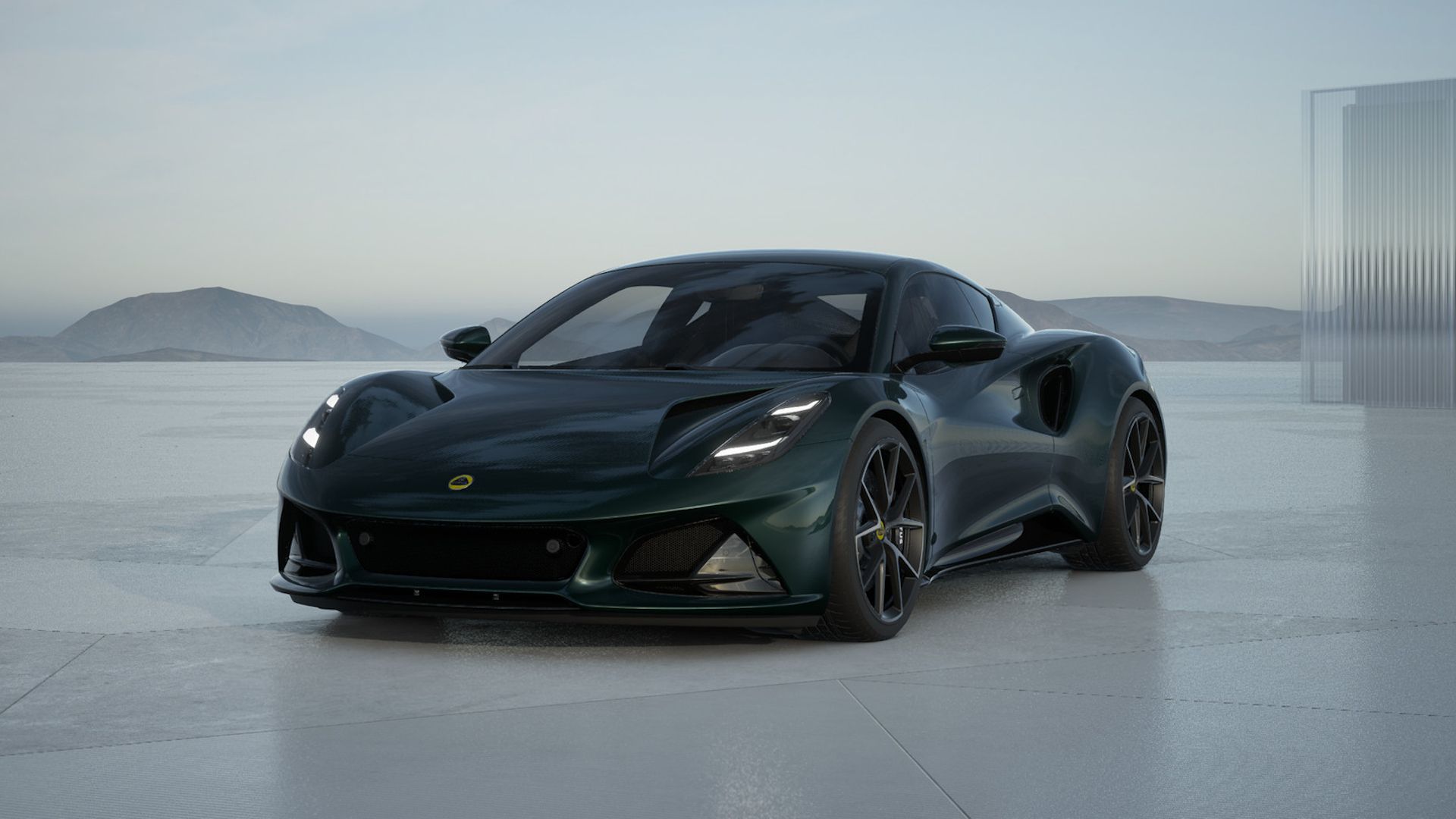
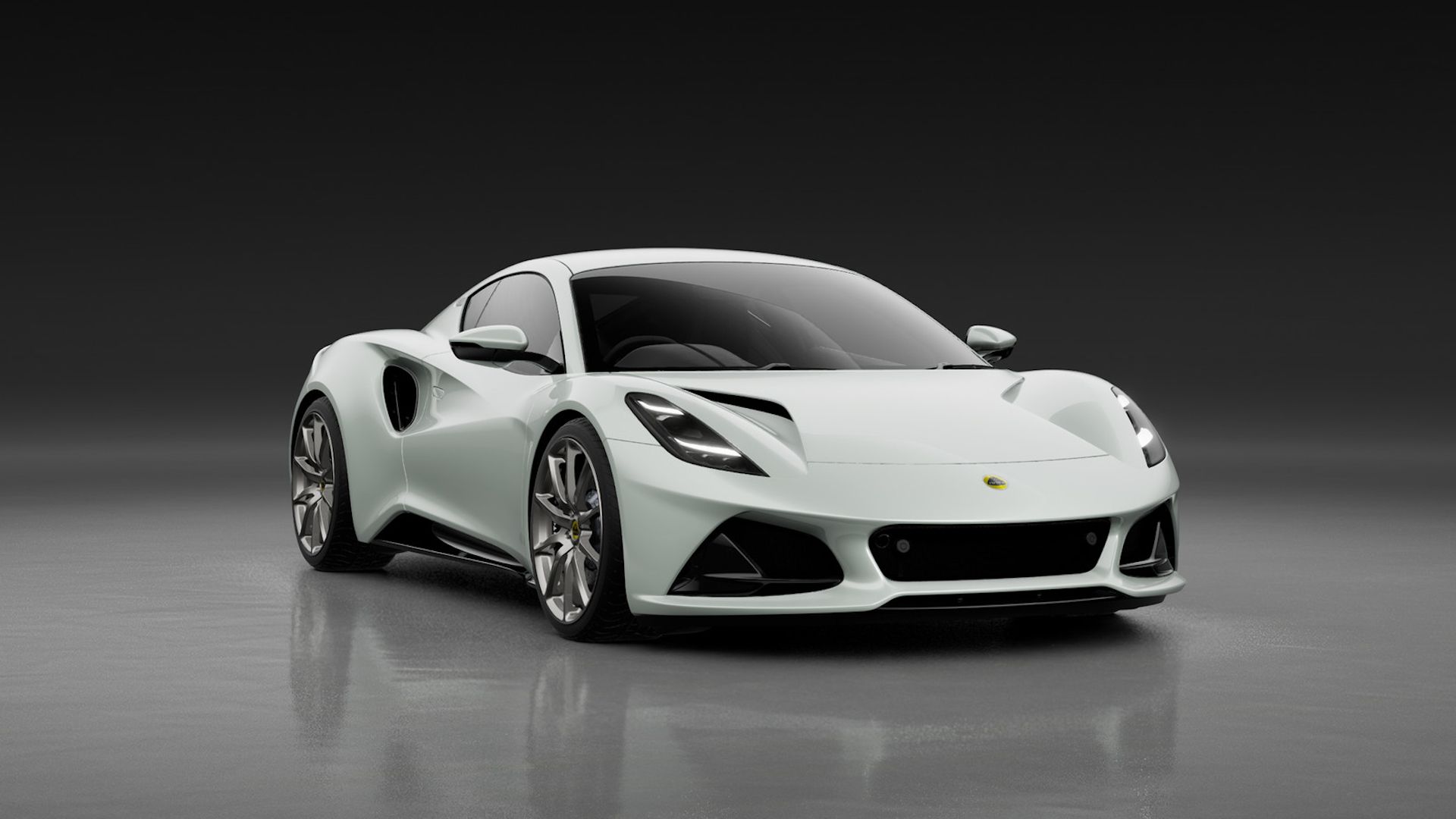
2025 Lotus Emira I4 First Edition
- MSRP
- $99,900
- Engine
- 2.0-liter I4
- Transmission
- Eight-Speed Dual-Clutch Automatic
- Horsepower
- 400 hp
- Torque
- 354 lb-ft
- 0-60 MPH
- 3.8 seconds
- Top Speed
- 182 mph

We recently spent a few days behind the wheel of the Lotus Emira First Edition I4 in the UK, and the experience wasn’t as exhilarating as expected. It felt like a missed opportunity because the Emira’s lightweight design and Mercedes-AMG’s sweet turbocharged four-pot seemed like a match made in heaven. We expected a Caterham Seven that went to private school, but ended up with a car that didn’t quite work on several levels.

Related
Lotus Quietly Makes More Powerful Emira First Edition Available In America
Those buying the AMG-powered Emira will get more horses and pull for the same price.
Thankfully, Lotus in the US might have the solution. The First Edition I4 quietly appeared on Lotus’ US website recently, boasting more power than its counterpart across the pond. Instead of 350 horsepower and 317 lb-ft of torque, the US version of the First Edition I4 comes standard with 400 hp and 354 lb-ft of torque. It comes as quite a surprise because the supposed baby in the Emira range now has the same number of horses as the big boy supercharged V6 and 44 lb-ft more. The I4 also retails for $99,000, and while Lotus doesn’t list the price of the standard V6 model now that it’s no longer available in First Edition trim, its MSRP was listed at $104,500 a few months ago.
That’s close enough to not matter, so which version is best?

Lotus
The brainchild of Colin Chapman, Lotus Cars was the roadgoing arm of Lotus, founded in 1948. Priding itself on lightweight models with a driver focus, Lotus has become synonymous with the featherweight ethos promoted by Chapman of “Simplify, then add lightness.” Lotus also enjoyed great success in Formula 1, with seven world championships to its name. A controlling stake in Lotus was acquired by Geely in 2017.
- Founded
- 1948
- Founder
- Colin Chapman
- Headquarters
- Hethel, England
- Owned By
- Geely Holding, Etika Automotive
- Current CEO
- Qingfeng Feng
Engines: Two Different Versions Of Forced Induction
|
2025 Lotus Emira Head-to-Head |
||
|---|---|---|
|
Emira I4 |
Emira V6 |
|
|
Engine |
2.0-liter turbocharged four-cylinder |
3.5-liter supercharged V6 |
|
Gearbox |
8-Speed DCT |
6-Speed Manual / 6-Speed Automatic |
|
Power |
400 hp |
400 hp |
|
Torque |
354 lb-ft |
310 lb-ft |
|
0-60 MPH |
3.8 seconds |
4.2 seconds |
|
Top Speed |
182 mph |
180 mph |
|
Curb Weight |
3,158 lbs |
3,188 lbs |
Lotus doesn’t build its own internal combustion engines. As mentioned previously, the I4 comes in a box from Mercedes-AMG, while the V6 uses the same engine as the previous-generation Toyota Camry, albeit with a supercharger bolted on top. The supercharged V6 is already at a disadvantage because supercharging is quickly dying out. It’s simply not as efficient as turbocharging because it uses engine power to force more air into the combustion chamber. In contrast, a turbocharger uses gases from the exhaust, which would have been wasted anyway.
But discussing the merits of each method of forced induction misses the point because the Emira wasn’t built to be efficient. It wasn’t even built for straight-line speed because there are several cheaper cars that will get you to 60 mph much faster. The Emira was built for a back road blast or several 30-minute stints at the local track day. That’s where the mid-engine layout and sublime chassis come alive to provide the kind of thrilling driving experience that’s in short supply these days.
No matter what engine it’s equipped with, the Emira has three things going for it. The first is the sublime chassis and seating position. Secondly, Lotus engineered a little bit of lean into the car, which is surprising in an era where most automakers use adaptive damping to force a car to corner as flat as possible. Some lean is useful in a sports car, as it’s the most natural way of letting the driver know that they’re pushing a bit too hard. Finally, and perhaps the most important of all, is the hydraulic steering. We’ve driven several cars that have come as close to perfect as possible with EPAS, but nothing beats an old-school hydraulic setup. It’s like running the palm of your hand over the tarmac.

Add CarBuzz to your Google News feed.
Greatness Depends On The Gearbox
To be brutally honest, we’d be fine with either engine. The supercharged V6 whines and growls nicely, while the turbocharged four-cylinder sounds like it’s mincing squirrels right behind your left shoulder. The four-cylinder’s exhaust note is a bit monotonous, but it’s sort of nice listening to the spool, blow off and flutter if you happen to be a fan of turbocharged cars.
The main mechanical component separating these cars is the gearbox. You can have the V6 with a six-speed manual with a mechanical limited-slip differential, or a six-speed automatic gearbox. The I4 is only available with an eight-speed dual-clutch transmission, also borrowed from Mercedes-AMG. Naturally, we understand why both engines can be mated to an automatic gearbox. Some people just don’t want to change gear or are incapable of doing so. There are also some cool benefits, like launch control, and the ability to sit back and relax, especially if you opt for the Touring suspension setup. Not that we’d use the Emira for grand touring, but a bit more on that later.

Related
10 Modern Performance Cars That Wouldn’t Have Worked With A Manual Transmission
Manual transmissions are better for driver engagement, but when it comes to chasing performance, automatic transmissions are better.
Neither Automatic Is As Sharp as They Should Be
On the downside, both automatic transmissions are a bit dimwitted. You select neutral, reverse, and drive via a knob borrowed directly from Volvo, which is related to Lotus via their overlord, Geely. The knob is a quality item, but the response is slow. It takes a second or so to engage drive or reverse, which is annoying if you’ve experienced any modern automatic that does the same in a heartbeat. In the I4 we drove, the shift paddles behind the steering wheel were annoyingly sporadic. Sometimes the shift would happen instantly, other times it seemed like the gearbox was going through an existential crisis before it decided to drop a cog.
Some sports cars and supercars are better when equipped with an automatic transmission, mostly because they’ve become too powerful to enjoy otherwise. The 2019 Corvette ZR1 is a prime example, and imagine trying to shift gears manually in the all-new 1,064 hp model. The Emira is not one of those cars. Thanks to the neutral handling and lean, you always know exactly where you stand with the car, and the ability to row your own gears adds a delightful layer of self expression on top of that. It also helps that it’s one of the best manual shifts in the business, but this has been true dating back to the non-supercharged 2009 Evora. That shouldn’t come as a surprise, as it’s the same six-speed Aisin unit, but with more than 10 years of additional development.
When fitted with an automatic gearbox, the Emira is a good car. Not exactly what we were expecting from the last Lotus equipped with an internal combustion engine, but good enough. With a manual, it’s a sensational thing and arguably a worthy swansong for Lotus’ gas-guzzling era.
And The Rest Of The Package?
You can tell that Lotus wanted to steal some market share away from the Porsche 718 Cayman because the Emira is a lot more user-friendly than the Evora. The Evora was built for the kind of people who have a poster of Colin Chapman hanging above their bed, despite their spouse’s constant nagging to take it down. The Emira is softer, with a user-friendly touchscreen interface, and trim pieces that actually fit together properly.
But once you live with it for a few days, you realize that Lotus doesn’t spend nearly as much money refining and testing a car in the real world as Porsche does. There are all kinds of niggles that should have been picked up during real-world testing, such as accessing the storage behind the seats. The seatback folds forward, but you have to use an electric motor to move the rest of the seat forward or backward. Not too bad when the sun is shining, but a hassle when it’s bucketing down and all you want to do is store a big bag of chocolate behind the seat.

So you end up using the trunk instead, which is also a bad idea. Because it’s situated right next to the transversely mounted engine, the trunk is a mini-oven. So you arrive at your destination with everything melted. But wait, there’s more. When the trunk is open, the water runs down the rear windshield and falls directly onto those beautiful hips, resulting in water splashing into the storage space. Now you have a massive melted piece of chocolate and a semi-damp gas station sandwich.
The Emira is a blast, but we wouldn’t use it to cross several states in one day. That’s still very much Porsche’s thing.
Which Emira Is Best?
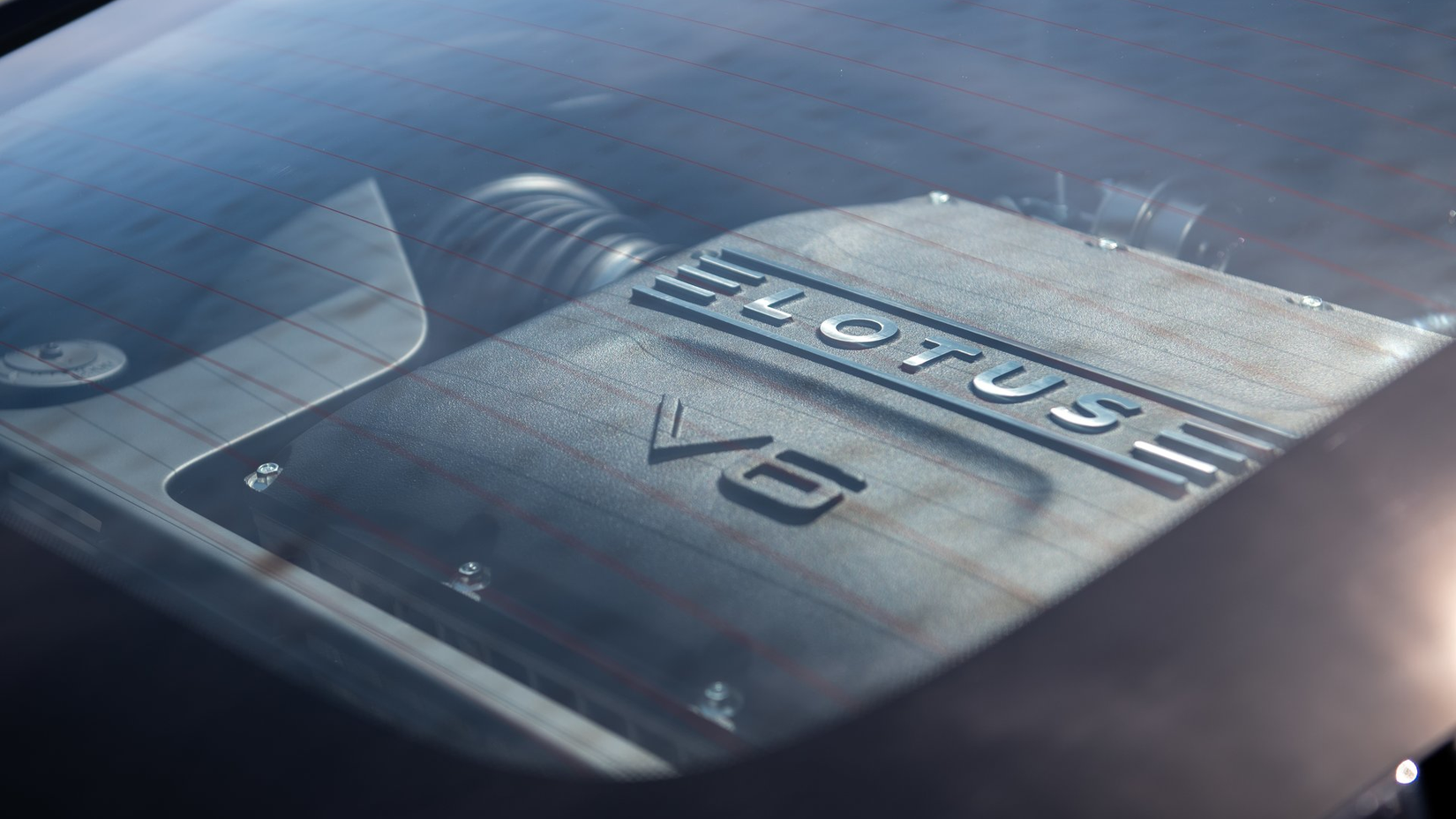
It’s obviously the V6 manual because it’s the closest in ethos to everything you want from a Lotus. While we appreciate Lotus wanting to put a bit more luxury into the car, it’s not what made the brand famous. You buy a Lotus because you want a raw sports car experience. Unfortunately, the sports car market is dying out and SUVs are all the rage.
Perhaps the question shouldn’t be which Emira is best, but how Lotus will cope in a world where cars have become everything the brand stood against. If Lotus struggled to make a sports car more suitable for everyday use, what would its all-electric heavy SUV be like?
But that’s a question for another day. For now, the answer you’re looking for is which engine to invest in, and our advice is to go as raw as possible. The Toyota 2GR-FE may date back to 2002, but the car feels old-school as a result and is all the better for it.
The Emira V6 is heavier, slower to 60, and has less torque. It’s even slower at the top end by a whole two miles per hour. But sports cars are about the experience, and as an experience, the V6 is simply better.