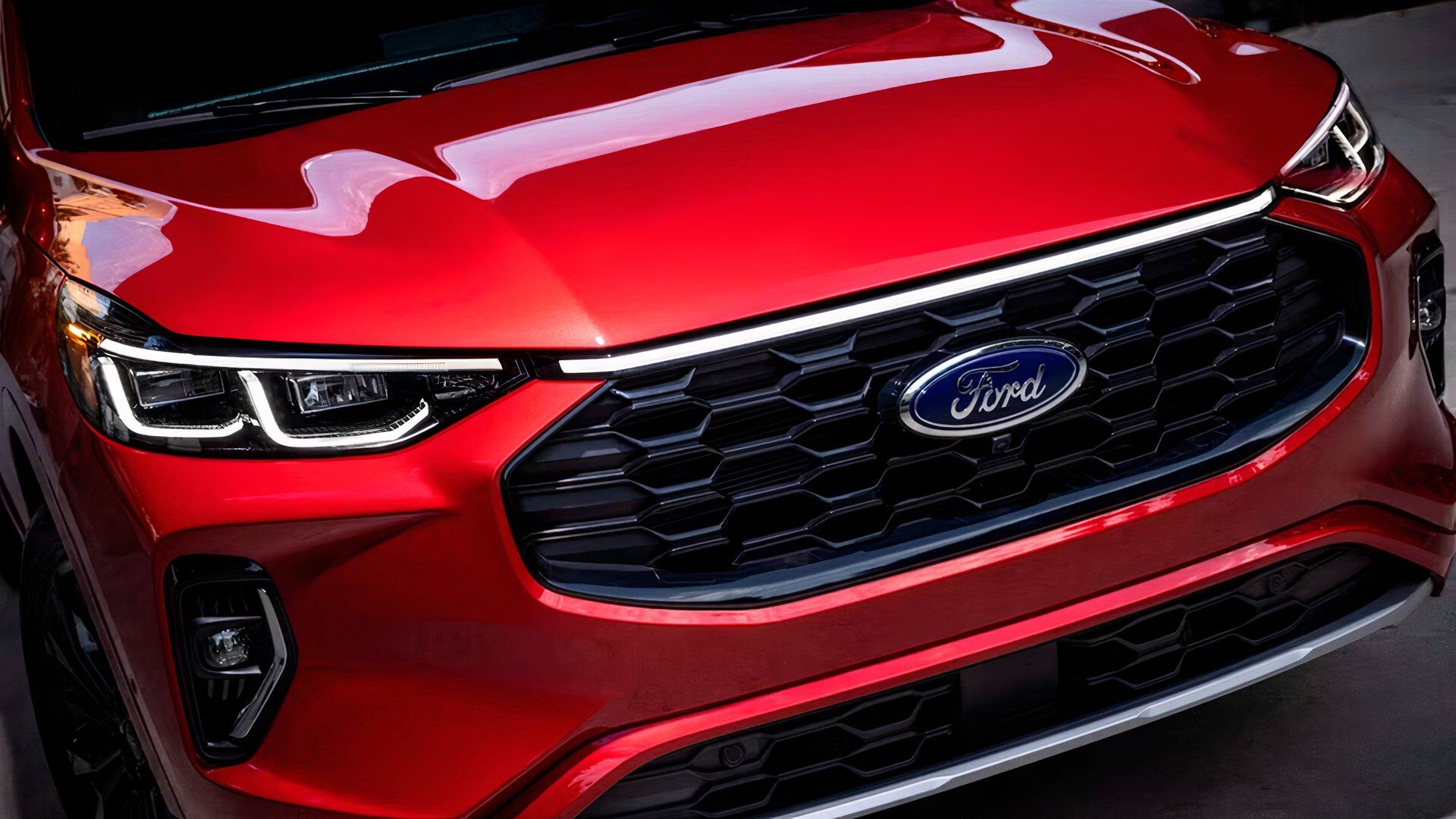
The Ford Escape has been a popular choice among compact SUVs since its debut for the 2001 model year. Having undergone multiple facelifts over four generations, it’s almost a shame the American brand is ending the Escape’s production this year, and the model might not be available to purchase in six states in 2026. With that being said, there are still plenty of other model years and generations to choose from that generally stand the test of time. Ford models’ reliability can be hit or miss, so how about the Escape? In this article, we explore the Escape’s overall reliability, how much you can expect to pay over your first five to ten years of ownership, common Ford Escape problems, and the worst model year to be avoided at all costs.

- Base Trim Engine
-
1.5L EcoBoost I3 ICE
- Base Trim Transmission
-
8-speed automatic
- Base Trim Drivetrain
-
Front-Wheel Drive
This article explores the common problems, maintenance costs, and price of repairs as reported by owners and local authorities. Information is correct at the time of writing and your mileage may vary.
Ford Escape Overview
Where The Escape Stands Today

The Ford Escape is nearing the end of its production life right now, but for some states, that end is now (in 2025) rather than in 2026, as it is supposed to be. While it will continue to sell in most parts of the country, stricter emissions laws in six states mean that it won’t be seen on dealership floors there. Consequently, Ford has started shutting down some factories to cut costs. That being said, the popular little SUV from the Blue Oval has had a good run, being sold for around 25 years, covering four generations and countless facelifts. But, with tighter regulations, and fierce competition from the likes of the Toyota RAV4, the time has come to put it out to pasture. After 2026, there will be a new electric SUV taking the car’s slot in Ford’s lineup, and it will definitely not have trouble meeting emissions standards.
Common Ford Escape Problems
What You Can Expect To Pay For While Owning One

The Ford Escape’s common problems vary depending on the model year and/or generation, but RepairPal’s list of the Escape’s most common problems gives insight into what you can expect as an owner across multiple generations. The most recent generation (2023–today) still hasn’t been on the road for long enough to pinpoint problem areas; there haven’t been a huge number of complaints from owners so far, so most of these common issues are related to older model years.
Ignition Misfires
One of the most commonly reported issues to RepairPal regarding Ford Escapes from 2001 to 2013 is the ignition coil packs failing. Most people have probably heard of a spark plug, the part inside an engine that ignites the air/fuel ratio inside the cylinder, but it’s the coil pack that supplies power to the spark plug. When one goes bad, the spark plug will not be able to initiate combustion inside a given cylinder, causing a misfire.
“Starting at 60,000 miles I have had a misfire code for one of the coils on plug (V6) every 20,000 miles or so. At 75,000 miles I had another one that I drove too much before repairing and it plugged up the Catalytic Converter – you’ll know because the car will be slow on acceleration and very poor on fuel economy.”
– 2002 Ford Escape owner, 15 October 2012, 150,000 miles
Hesitation Or Stumbling While Driving
Many owners report having issues with the Escape hesitating, stumbling, or feeling sluggish while accelerating. According to trusted mechanics at RepairPal, this issue has been tracked down to a faulty EGR valve. EGR stands for exhaust gas recirculation valve, and a bad unit could result in the valve being stuck open or closed. In this case, the check engine light will turn on and your car will not pass smog standards in most states that require testing.
Internal Transfer Case Problems On 4WD Models
Some four-wheel-drive Escape models from 2001 to 2016 experience an abnormal noise from the transfer case that starts out like a bearing grinding, then turns into a clicking noise at higher speeds. According to RepairPal, this noise is notably similar to the sound of mud tires driving on pavement. While it can be repaired, the transfer case’s gears inside tend to shred themselves apart or break the shaft that connected them to the rest of the drivetrain, which is an expensive repair or replacement.
Blower Motor Only Works On High
One of the most common issues faced by owners of 2005 to 2012 Escape models is the air conditioning blower motor only working on the highest setting. It’s a far step away from the expensive engine problems we’ve been talking about, but it could still be a nuisance. It’s usually caused by a failed resistor found behind the glove box next to the blower motor. Fortunately, this is one of the least expensive Ford Escape issues to deal with.
Coolant Pump On Hybrid May Fail
When talking about problems with the Ford Escape, we can’t forget the ever-so prevalent coolant pump failure on hybrid models that might result in the hybrid battery overheating. The hybrid Escape models have a pump that circulates coolant through the electronic components to keep them from overheating; this is just as important as circulating coolant through the engine itself. When it fails, the check engine light will come on, and the car will shut off.
“My 2008 Ford Escape Hybrid completely shut down…on the highway…during rush hour traffic…with four children in the car. It was a nightmare. I called AAA, had the car towed to the dealership. I had to replace the water pump, and it cost me $700 at the dealer.”
– 2008 Ford Escape Hybrid owner, 2 September 2012, 75,800 miles
How Much Does The Escape Cost To Maintain?
Nearly Average Overall

Despite having some relatively serious and expensive common problems, the Ford Escape is nearly average as far as repair and maintenance costs go. According to trusted sources, the average 10-year cost of repairs and routine maintenance for popular SUVs is $8,208 – the Escape comes in just over that at $9,440. It’s slightly below average (by about $660) in its first five years, though.
- Annual maintenance cost: $600 (RepairPal)
- 10-year cost: $9,440 (CarEdge)
- Industry average for popular SUVs: $8,208 (CarEdge)
- Escape repair costs for the first 5 years: $2,959 (CarEdge)
The Ford Escape has a 27.48% chance of requiring a major repair in its first ten years on the road, which is about 2.89% worse than other vehicles in its segment. It follows a similar pattern in its first five years as well – at a 27% chance of needing a major repair, which is 2% worse than other vehicles in its segment.
The Worst Ford Escape Year
You Don’t Want This Headache

If there are any Ford Escape years to avoid, the worst of the worst is 2013. As far as Ford Escape problems by year go, the 2013 model year has the highest number of complaints and recalls – and about half of the 2,692 complaints to the NHTSA are related to engine and powertrain problems. When we say you don’t want this headache, we mean it.
Starting with the 2013 Ford Escape’s common problems, the majority of complaints stem from the engine. There are vast numbers of owners reporting the engine stalling, leaking oil and coolant, overheating, and blowing head gaskets. Some owners even report the engine block itself cracking, which leads to coolant entering the cylinder walls and causing them to fail. These owners typically see a check engine light appear, hear banging or excess noise from the engine bay, smell something burning, and see smoke coming out of the exhaust. There are also hundreds of recorded complaints regarding electrical problems, and issues with the brakes, steering, and drivetrain,
As for recalls, the 2013 Escape is the runner-up for having the most of any Escape model year – the crown is taken by the 2020 Escape with 18 recalls, but the 2013’s seventeen recalls are more than enough to rank this one as the worst. There are too many to list in detail here, so these are some of the most severe and/or dangerous. The vehicle could unintentionally roll away due to a detached shift cable (two NHTSA campaigns affecting 2,925,968 units and 504,182 units); the doors could open while driving (three NHTSA campaigns affecting 2,147,323 units, 2,046,297 units, and 581,986 units, respectively), and the engine overheats, which may result in a fire (affecting 139,917 units).
Summary: About Average Overall…
…As Long as You Avoid Certain Model Years

The Ford Escape isn’t an unreliable car, for the most part, nor is it a particularly expensive car to own overall. However, there are some model years to look out for and some major problems that will cost big money to take care of. While the 2013 model year is the worst, we also suggest avoiding the 2008 and 2017 model years. There are problems with the 4WD variants’ transfer cases breaking internally, the hybrid version’s coolant pump failing, and many misfires in models from the first and second generations. At the end of the day, it’s only slightly worse than average, but be prepared for some expensive problems down the line.
Sources: Ford, CarEdge, RepairPal, NHTSA, CarComplaints